
I’ve worked on SEO from both sides of international search: managing the Korean market and working on English-speaking markets for the same global brand.
And one thing I’ve learned is that international SEO is not just about translating your website.
The way people search can change completely from one country to another. The search engines they use can be different. Their expectations are different. Even when two countries speak the same language, their search behavior and consumer behavior may not be the same.
That’s why I think international SEO best practices have to start with the local audience, not with an existing strategy copied into a new country.
What Is International SEO?

International SEO is basically about making sure the right version of your website shows up for the right person in the right country.
It involves deciding which markets you want to target, how your URLs are set up, which search engines people actually use in those markets, and what people type when they search.
It’s definitely not just about translating pages.
The work looks completely different depending on the audience you’re targeting.
How International SEO Works
I normally think about international SEO across a few different areas.
First, you need to decide which markets are actually worth targeting.
Then you need to understand how people in those markets search, what language they use, what search engines or platforms they rely on, and what kind of content they expect to find.
You also need to make sure your website clearly separates different regional or language versions so that search engines can understand which page should appear for which audience.
But the most important part is understanding that you cannot assume the same SEO strategy will work everywhere.
Why International SEO Matters for Global Brands
International SEO matters because people do not search or make purchasing decisions in exactly the same way across different countries.
If your SEO for international markets only covers one language, you can miss people who are actively looking for exactly what you offer.
Reaching High-Intent Audiences in New Markets
People searching in their own language can often have very strong intent.
For example, imagine a Korean traveler searching in Korean for what they need to prepare before traveling to Japan.
That person probably isn’t just casually browsing. They may already be preparing for the trip.
If you only exist in English, you may not show up for that person at all.
When we started building proper Korean content instead of relying mainly on the English side of the website, our Korean blog organic traffic grew by more than 300% within six months.
Before that, there were fewer than 20 Korean articles. We started producing much more content around travel topics and important keywords such as eSIM destinations.
That’s why I see local-language content as a big opportunity for global brands.
Serving the Right Page to the Right User
Another important part of international SEO is making sure the correct regional page ranks.
I’ve seen situations where US, UK, and Australian pages were almost identical, and Google ended up ranking the wrong country version.
It does not always choose the page you want.
Hreflang and canonicals can help with this, but I think the bigger fix is making sure every regional page actually has a reason to exist.
Building Trust Across Countries, Languages, and Cultures
Localization helps make your content feel like it was actually written for the audience you’re targeting.
Sometimes the differences seem very small, but they still matter.
For example, if I’m working on travel content for the US, I might use Fahrenheit. For other markets, I might use Celsius.
If we’re targeting the UK, we can also use UK spelling and expressions rather than American English.
For some markets, the language itself can be mixed. English content for Indian audiences may include expressions influenced by Hindi, while content for Filipino audiences may sometimes include Taglish where it feels natural.
Reducing Duplicate Content and Regional Ranking Confusion
If you have different pages for countries that speak the same language, you need to be careful about making them almost identical.
The fix isn’t only technical.
You should also give every regional page something that makes it genuinely useful for that market.
That could include:
Local currencies
Local prices
Local regulations
Different spelling
Different terminology
Different examples
Different units of measurement
If you create separate regional pages, there should be a reason for someone in that country to prefer their local version.
Best SEO Strategies for International Companies
There are plenty of global SEO strategies you could try, but these are the ones that stand out from my experience.
Use Data to Choose the Right International Markets
I would not choose a market based purely on gut feeling or because the CEO wants to expand there.
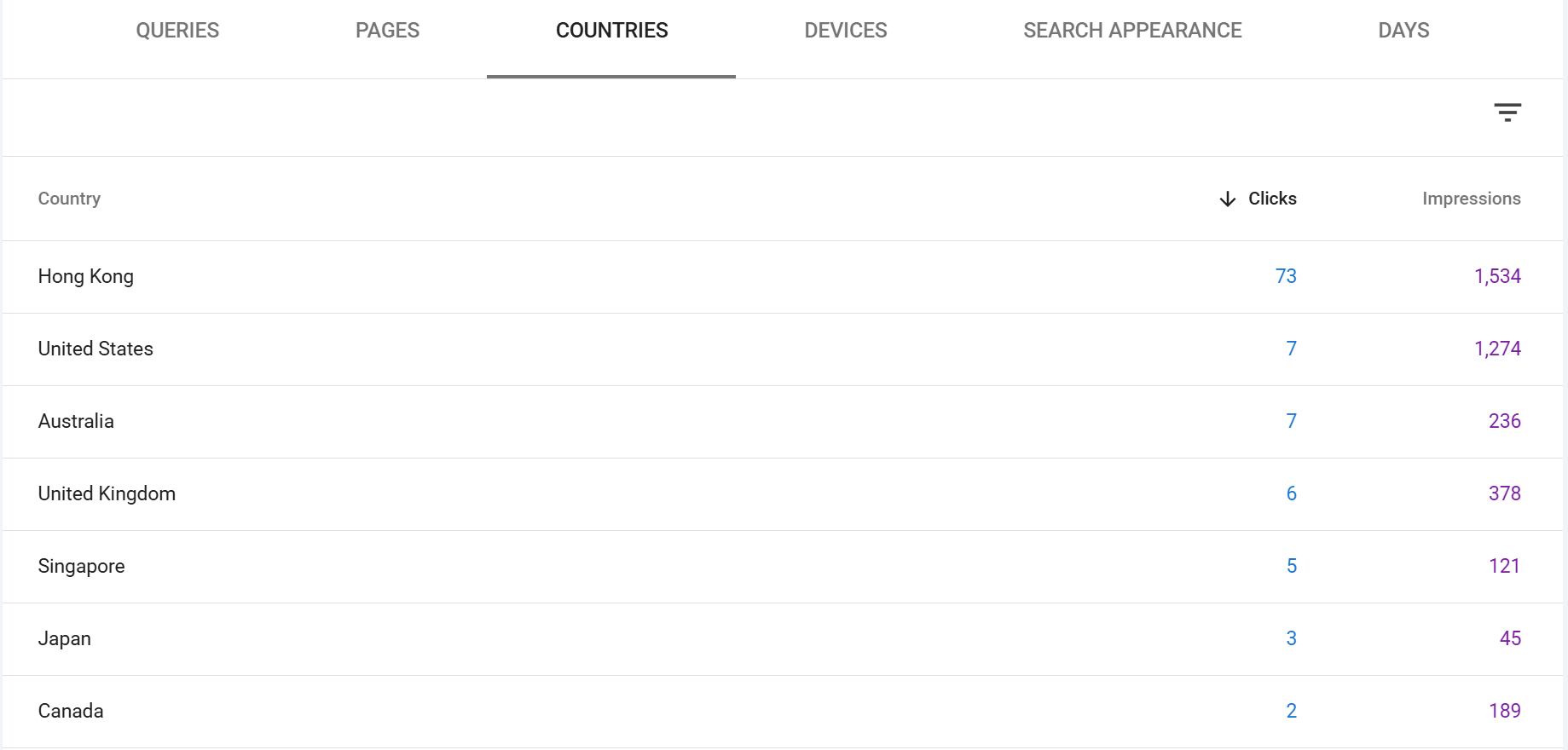
One of the first places I would look is Google Search Console.
Check where you are already getting impressions even though you have not actively targeted that country yet.
Then look at things such as search volume and how strong the competition is in that market.
If people in a particular country are already discovering your website, that can give you a signal that there may already be demand.
Map Country and Language Targeting
I think brands also need to be clear about which country and language every part of the website is targeting.
You cannot assume that two countries should use exactly the same content just because they speak the same language.
The US, UK, and Australia all use English, for example, but they can still have different vocabulary, spelling, consumer behavior, pricing, and expectations.
The same applies to other languages that are spoken across multiple countries.
When you create different regional versions, you need to understand who each page is actually for.
Conduct Local Keyword Research for Each Market
This is probably one of the biggest things I would emphasize.
Do not translate your keyword list.
Koreans do not necessarily search the same way Americans do, even when they are looking for exactly the same product or information.
For example, someone searching in English might type something like:
“Which taxi app should I use in Hong Kong?”
In Korean, people might simply search for the equivalent of:
“Hong Kong taxi app.”
The same thing happens with travel searches.
An English-speaking user might ask where they should visit in Osaka.
A Korean user may search using a much more compressed phrase that roughly translates to “Osaka travel essential course.”
That is why I think you need to understand how people actually search locally rather than translating English keywords.
I also look at what questions people are asking on local platforms.
For Korea, that can include Naver and Naver Cafe. Those communities can tell you a lot about the questions people actually have and the language they use when talking about them.
Choose the Right International URL Structure
Your URL setup is also part of international SEO because search engines need to understand how your different markets and languages are organized.
I think the important thing is that the structure makes it clear which version of the website is intended for which audience.
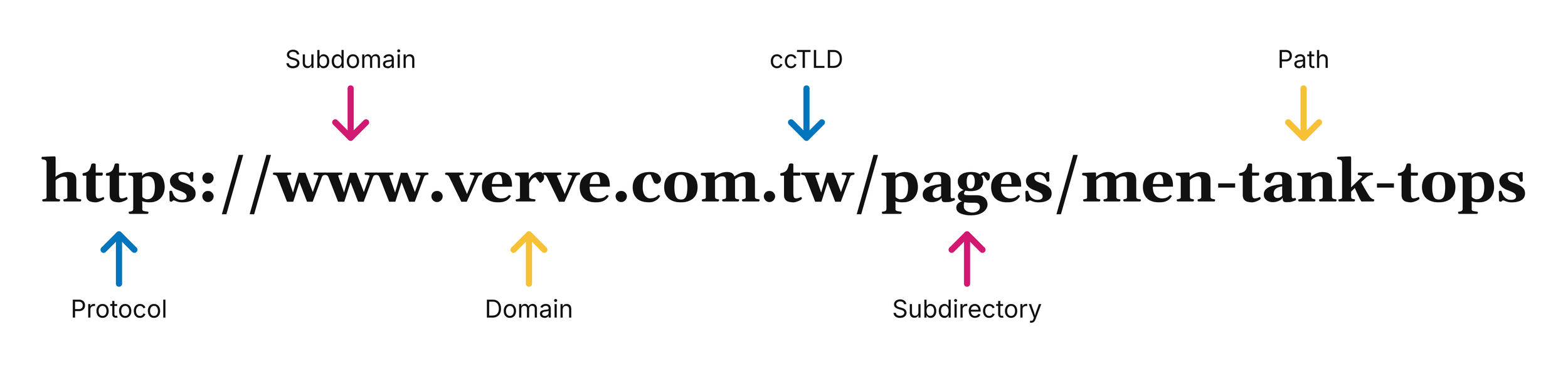
There are three common options: country-code top-level domains (ccTLDs) (example.kr), subdirectories (example.com/kr/), and subdomains (kr.example.com).
Domains with ccTLDs send the strongest local signal but are the most work to maintain.
Subdirectories are the easiest to manage and share your main domain’s authority. Whichever you pick, plan it up front instead of letting regional pages grow without a system.
Implement Hreflang Correctly
Hreflang can help when you have similar pages targeting different countries or languages.
This is especially relevant when you have markets such as the US, UK, and Australia, where a lot of the content may naturally overlap.
Each version should reference itself and its alternates; the references need to point back at each other, and an x-default tag covers visitors who don’t match any version.
But I would not rely on hreflang alone.
The content itself still needs to feel relevant to the local market.
Manage Duplicate Content and Canonicalization
Canonicals can help manage similar international pages, but technical tags alone are not enough. Each regional page still needs the local differentiators listed above.
That gives both users and search engines a clearer reason for the different pages to exist.
Localize Content Instead of Simply Translating It
Localization matters a lot to me because translation and localization are not the same thing.
When we built the Korean version of the Search SEOul website, I didn’t translate every section word-for-word.
The English site, for example, had a “Plan Your Trip” section for visitors flying in.
The Korean version put the spotlight on meeting people from other countries instead.
That is what localization means to me.
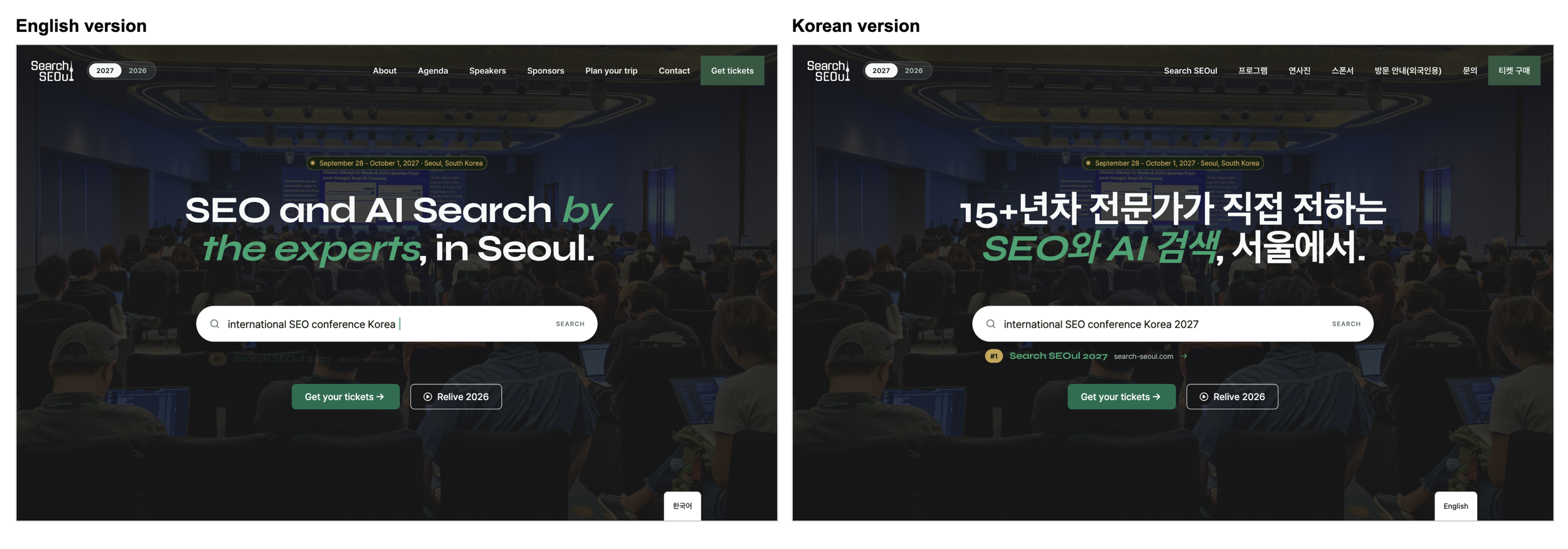
You have to think about what the audience actually needs rather than simply changing the language.
AI can help with translation, especially with creating an initial structure, but I would still review everything.
AI-generated translations can still sound robotic, so you need someone who understands the language to go through the details.
Build Regional E-E-A-T Signals
Real people who understand the market need to be involved in your content.
One of the mistakes I see is companies entering a market without anyone on the team who actually speaks the language.
I would not recommend doing that.
You need someone who understands how people communicate, search, and consume information in that market.
That becomes even more important when the market behaves very differently from the one your original SEO strategy was built around.
Optimize for Local Search Engines and Search Ecosystems
Another thing I always tell people is that Google is not the only search engine you need to think about.
In Korea, for example, Naver is very important.
And Naver works very differently from Google.
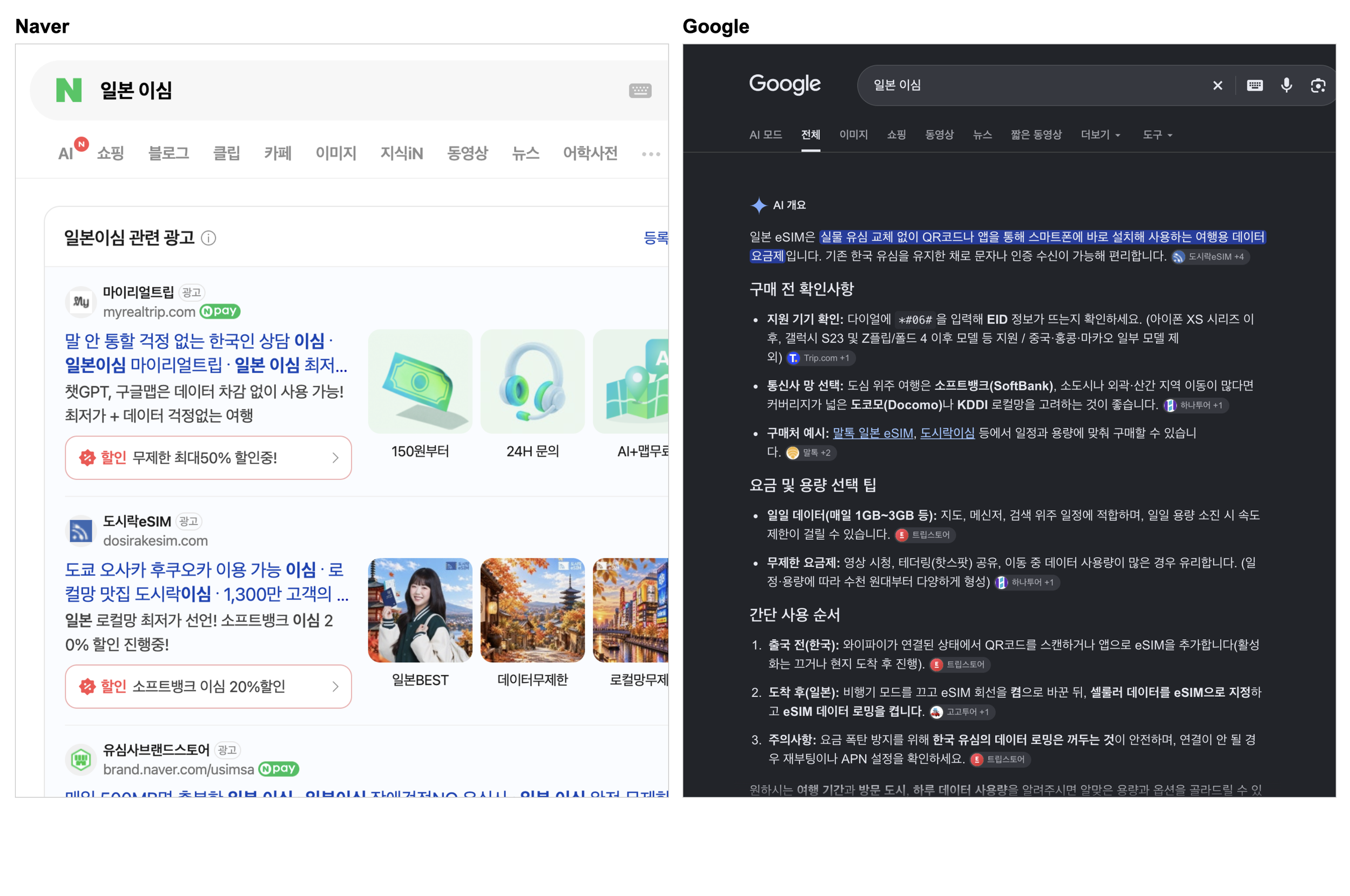
Naver and Google search results for the same Korean keyword, with Naver showing ads and Naver products first
When you search for certain commercial keywords, you can see Naver Shopping, Naver Plus Store, paid listings, Naver Blog, Naver Cafe, and other Naver products appearing prominently in the results.
Sometimes you have to scroll quite far before you even reach a traditional organic result from an external website.
That means your strategy cannot simply be:
“Let’s optimize our website for Google Korea.”
You may also need to think about Naver Blog, Naver Cafe, or other parts of the Naver ecosystem.
Your own domain can still appear, but it can be much harder to rank prominently for certain searches.
So before entering a market, I would always look at what search platforms people actually use there.
Build a Global Content Governance Workflow
Global content management is mostly a balancing act between a central strategy and what each market needs.
You can have a central strategy, but local teams still need room to adapt the global marketing content.
The keywords may be different.
The language may be different.
The search platform may be different.
Even the information users expect from the page may be different.
That is why I would not force every market to follow exactly the same content approach.
There needs to be enough consistency to keep the brand and overall SEO strategy aligned, while still allowing people who understand the local market to make decisions about localization.
Track International SEO Performance by Market
I also think it is useful to look at performance market by market instead of only looking at your total organic traffic.
Google Search Console can already tell you where your impressions are coming from, and I think that information can also help you decide where you should invest next.
For example, if a country is already generating impressions before you have created a proper local strategy, I would want to investigate that market further.
I would also pay attention to traffic coming from AI platforms because this is becoming more relevant to the way people discover content.
International SEO for AI Search, AEO, and LLM Visibility
My goal has changed a little with the rise of AI search.
Before, I was mainly thinking about ranking.
Now I also think about getting cited.
Create Content That Is Easy for AI to Cite
For platforms such as ChatGPT, Perplexity, and Google's AI search experiences, I think it helps to create pages that answer specific questions directly, have a clear structure, and show that there is a real author behind the content.
E-E-A-T still matters here.
I also think more specific content can become increasingly useful.
For example, instead of only creating a broad country-level page, there may be opportunities to create content for specific cities, audiences, trip lengths, or use cases.
Localize for AI Search, Not Just Google
What I find interesting is that AI search is not completely separate from the localization work we were already doing for Google.
If a Korean user asks a question in Korean, Korean sources can still become important.
So the localization work you do for international SEO can also help you appear in AI-generated answers.
For me, that means local keyword research, local-language content, and market-specific expertise are still relevant even as search behavior shifts toward AI.
Answer More Specific User Questions
I’ve also noticed people searching for increasingly specific information.
For a product such as an eSIM, someone may want to know exactly how much data they can use or how long the plan lasts.
We have products lasting up to 90 days as well as monthly plans, so making those details clearly available gives AI systems more specific information to understand and potentially surface.
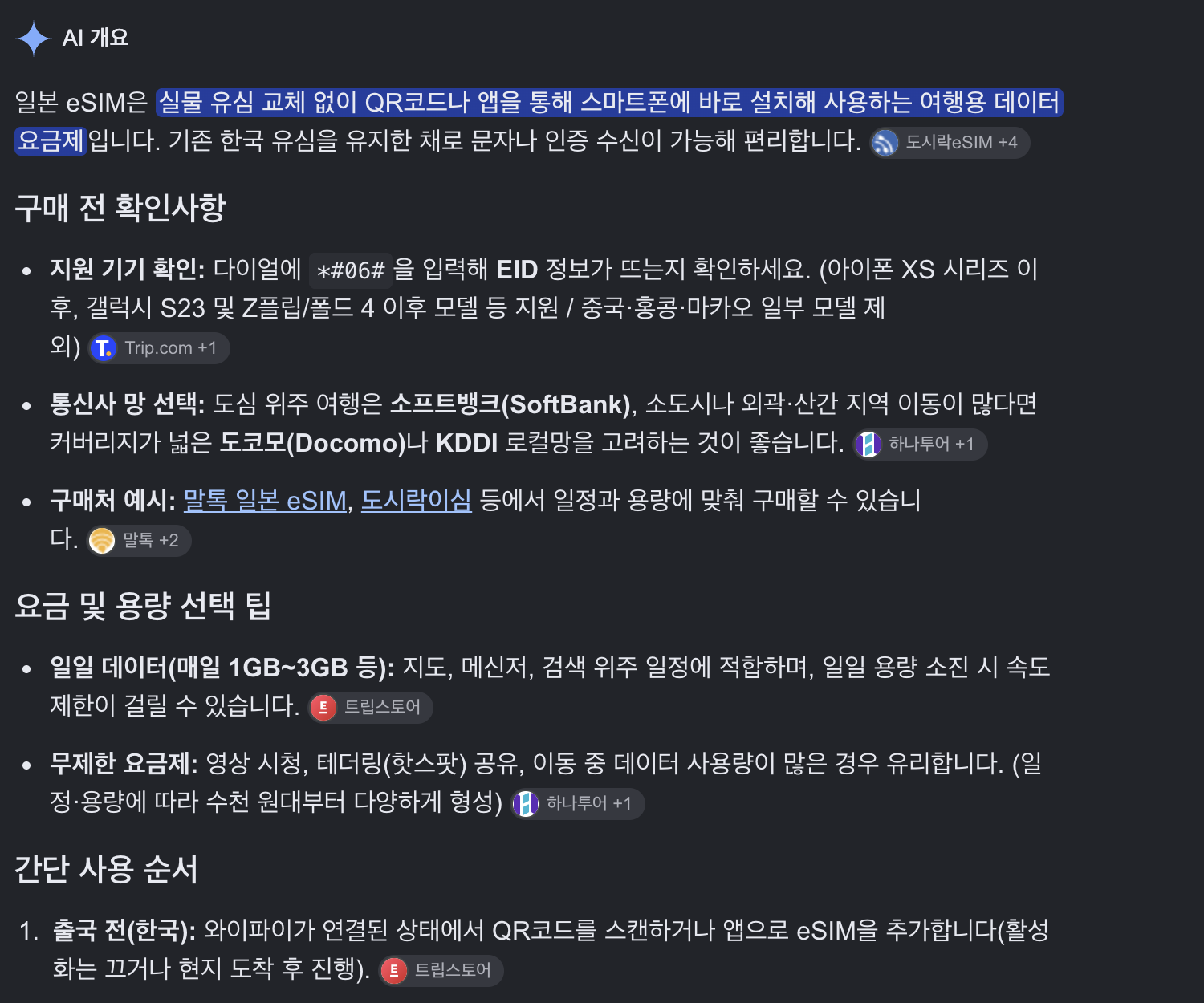
We also create content for more specific audiences, such as digital nomads, because their needs can be different from someone taking a shorter trip.
The way I see it, international SEO and AI visibility are becoming increasingly connected.
If you understand the questions people in each market actually ask and create content that answers them clearly, that can help you across both traditional search and AI search.
Common International SEO Mistakes Global Brands Make
There are a few mistakes I would definitely avoid when expanding into a new market.
Translating Keywords Instead of Researching Them
The first is translating your existing keyword list instead of researching how people actually search locally.
If people don’t use the translated phrase, you end up building content for searches nobody makes.
Korean search behavior is a good example. Users often search using much shorter, more compressed phrases than English-speaking users, even when the intent is the same.
That is why I would always conduct keyword research within the local market rather than treating translation as keyword research.
Entering a Market Without Local Language Expertise
Another mistake is launching into a new market without anyone on the team who actually speaks the language.
You need someone who understands how people communicate, search, and interpret information locally. They can also catch unnatural phrasing or assumptions that someone outside the market may miss.
Treating Countries That Share a Language as the Same Market
I would also avoid assuming that countries should use the same page just because they speak the same language.
Different countries can still have very different consumer behavior.
The US, UK, and Australia may all use English, for example, but people in those markets can differ in the language they use, what they expect from a page, and how they make purchasing decisions.
That is why I think separate regional targeting still matters even when the language is technically the same.
Build International SEO Around Local Relevance, Not Just Global Reach
If I had to sum up my approach to SEO for multiple countries, it’s that global brands need to stop treating localization as translating what they already have.
Every market is different.
People search differently. They use different platforms. They phrase questions differently. Even people who speak the same language can behave differently depending on where they live.
I would start with data to identify where the opportunity is.
Then I would research how people in that market actually search, understand which platforms they use, and create content that genuinely fits their needs.
The goal is not just to make your website available internationally.
It is to make your brand feel relevant locally.