Why I Left South Korea to Move to the U.S.
I left South Korea a year ago and moved to Savannah, Georgia, U.S. The short version is that my husband, a U.S. Army soldier stationed in Korea, got orders to move stateside. The longer version is that I had been looking for a way out since university, and by the time the orders came I was more than ready.
Before I go on, I want to say one thing clearly. I love Korea. Some of what follows will sound critical, but it's simply how life there felt to me, and I wouldn't be who I am without having grown up there.
This is the story of why I left, what surprised me in the U.S., what I still miss about Seoul, and how a year on the other side of the Pacific changed me.
Why I Decided to Leave Seoul for the United States
Why Do Koreans Move to the U.S.?
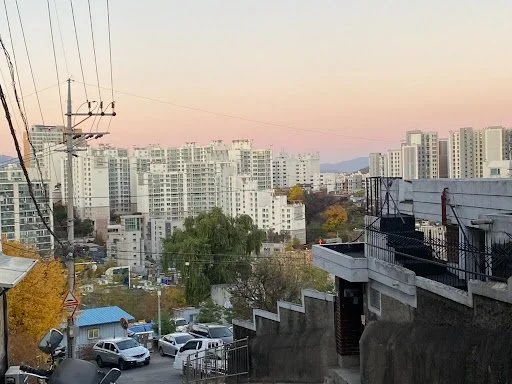
The area I used to live in Seoul, near Changsin Station (Line 6)
Koreans move to the U.S. for the same handful of reasons most people leave a country: a bigger job market, a partner, a slower pace of life, or a chance they couldn't get at home.
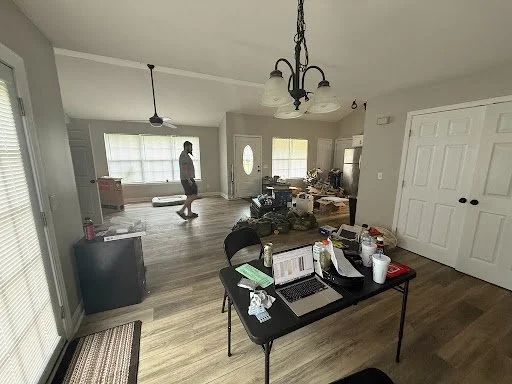
First day in Pooler, Georgia, USA
Mine was all four at once, but the trigger was my husband. He was serving in the U.S. Army in Korea, and when he got orders to Savannah, Georgia, the question wasn't whether I'd go. It was how fast I could pack.
This wasn't my first move for him. While we were dating I lived alone in Seoul. After we married I moved to Dongducheon, a small city near his base, so I'd already given up the capital once. Savannah was just the next, much longer, step.
The part I don't say often is that I'd been trying to get out for years. In university I looked at every route: study abroad, language programs, working holidays, jobs overseas. None of them were within reach at the time. So when the orders finally came, I wasn't only sad to leave. A part of me had been waiting.
Is the SEO Job Market in Korea Big Enough to Build a Career?
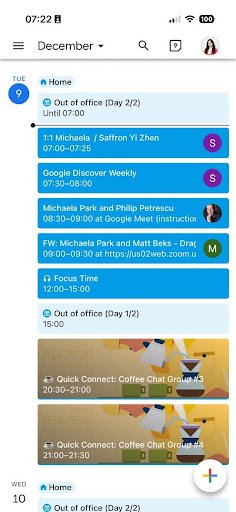
My typical day last December. I was busy with preparing conference + working for my corporate job at the same time
Not really, and that's the honest answer I give every junior who asks. The Korean SEO market is small. Naver still dominates domestic search, most companies treat SEO as an afterthought to paid ads, and pay and job titles for SEO specialists lag far behind the U.S. and Europe. You can build a career there, but the ceiling is low and you'll hit it early.
I've been working as the Korean market specialist at Holafly, a travel eSIM company. Around the time of the move I joined the English team, which is focused on the U.S. market. The timing lined up almost too well. My work is B2C, and living in the U.S. means I can understand American consumers directly instead of guessing at them from Seoul. That turned a relocation into a career opportunity.
The U.S. is the largest search market in the world. If I wanted to know how far I could go in SEO, this is where I had to find out.
What Is Korean Work Culture Really Like?
Korean work culture is built on long hours and the assumption that everyone else is working harder than you. Overtime isn't a rule so much as the water everyone swims in. I was lucky.
Holafly is a Spanish company, nobody pressures you to stay late, and my hours were humane. My friends at Korean companies weren't so lucky, and most of them are exhausted.
But the pressure doesn't stop at the office door. Korea is a competitive society from kindergarten onward, and even with a good job I felt it in the air. Everyone around me was producing something, all the time. There were stretches when I simply couldn't run at that pace. Instead of feeling motivated I kept asking myself, "Does it really have to be like this?"
Here's the thing I only understood after I left: the work-life balance I have now is the reason I could organize an international conference on the side. If I'd been working at a Korean company, I'd have burned out long ago and lost interest in all of it
What I Liked About the U.S. Compared to South Korea
My work barely changed because I stayed at the same company. I work from home and head to a coworking space in Savannah when I need to focus. What changed was everything around the work: the people, the space, and how openly I can talk about how my brain works.
Are Americans Really Friendlier Than Koreans?
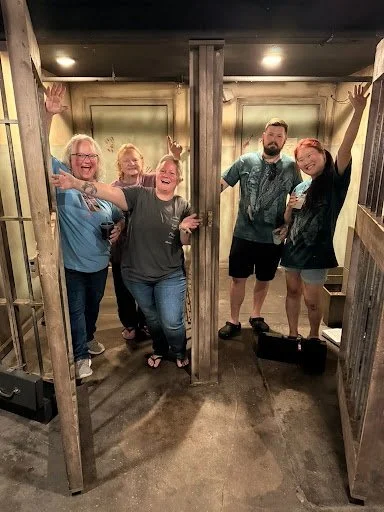
My friend Michelle (third from the left) that I met from a language exchange platform. She and her family made me feel welcomed.
Yes, and it isn't fake, whatever people say about American small talk. I've only been here a year and the difference is still startling. People hold the door when someone's behind them. If they brush past you in a store, they say "excuse me." In Korea, people push through and nobody expects an apology.
Make eye contact with a stranger here and you get a smile, a nod, a "how are you." Try that in Seoul. Most people look away fast, and in my whole life in Korea, not one stranger ever smiled back at me. It even shows up in traffic. When I need to merge after a right turn, drivers here actually stop and wait.
Coming from a society that can feel harsh, I love living somewhere people ask how you're doing. As an immigrant, it made me feel welcomed before I'd done anything to earn it.
Why Is Personal Space So Different in Korea?
Crowded subway platform in Seoul. Source: Shutterstock
Korea is dense, and personal space is a luxury the culture never developed. Stand in line for coffee with a backpack on and you'll feel the person behind you touching it. Nobody thinks twice. That simply doesn't happen in Georgia, where a line at the grocery store has an arm's length between every person.
For me this was more than a cultural quirk. I have strong tactile sensitivity, so crowded places drain me physically. The Seoul subway at rush hour was hard even with noise-cancelling earbuds in. Looking back, the stress of other people's bodies was one of the heaviest things I carried in Korea, and I didn't notice the weight until I set it down.
What Is It Like Living in a House After Years in a Korean Apartment?
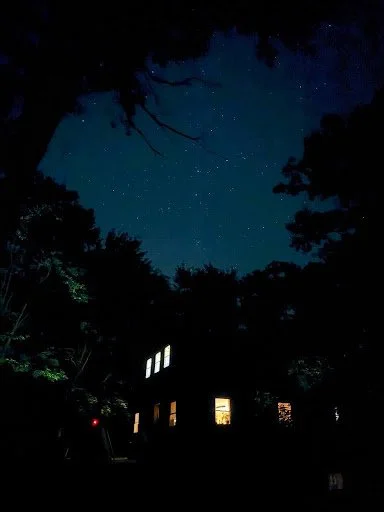
My in-law’s place under the sky.
It's quiet, and the quiet is the first thing you notice. Most Koreans live in apartment towers, and noise between floors is a genuine social problem there. It has led to lawsuits and even violent incidents. We had our own small version: at six in the evening, hardly late, my husband played his drums and a drunk neighbor from upstairs came down to complain.
Now we live in a single-family house. After my birthday party this year, a friend and I did karaoke until four in the morning and nothing happened. I stepped outside to check and could barely hear it from the driveway.
The air is cleaner too. Last summer at my in-laws' place I saw fireflies for the first time, and at night the sky looked like someone scattered glitter across it. I have a small garden bed where I grow whatever I want, and gardening has turned into a stress reliever I never expected. Next house, I want a fenced backyard so I can tan at home.
How Is ADHD Viewed in Korea Versus the U.S.?
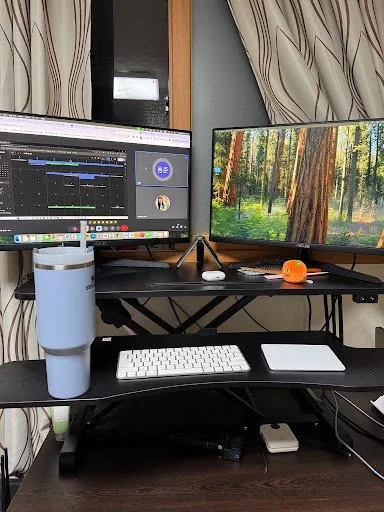
My desk in Korea (Dongducheon)
In Korea, ADHD is something you keep to yourself. If you say "I have ADHD" out loud, people will nod and say "sure, that happens," but the label follows you. You know you're being judged behind your back, and that knowledge is its own layer of stress on top of the condition itself.
In the U.S., the most common reaction I get is "oh, so you must be creative." Half the people around me have it or know someone who does. It's treated as one of many ordinary conditions, nothing to shrink from and nothing to hide. That shift alone lowered my baseline stress more than I can explain.
What I Still Miss About Seoul
Why Is Eating Out So Expensive in the U.S. Compared to Korea?
Because the price on the menu isn't the price. In Korea, what you see is what you pay. In the U.S., sales tax and a tip get added at the end, and neither one is printed anywhere. The same dish easily costs more than double what it would in Seoul once the bill arrives.
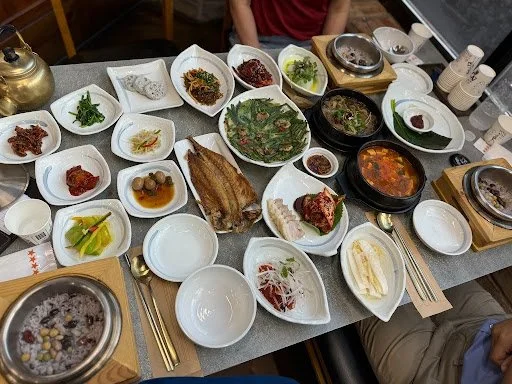
These whole things are literally only $10 (Restaurant in Daegu, my hometown)
Tipping isn't optional either, because servers here aren't paid a full minimum wage. I understand why, but I still miss sitting down for a bowl of kalguksu without doing math. My workaround is ordering ahead and picking up takeout, which cuts the tip and gets me back to my own kitchen faster.
Food is the thing I miss most about Korea. Not just the taste, but the ease of it: a good, cheap meal on every corner, any hour of the night.
Is Public Transportation in Seoul Really That Good?
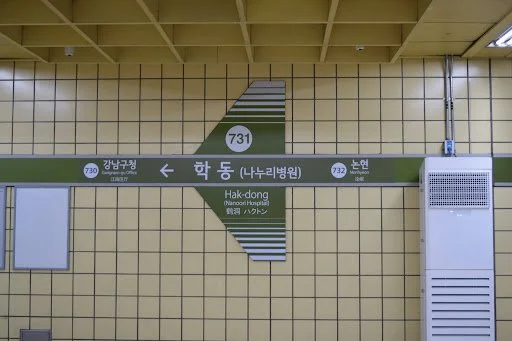
Subway platform in Korea
Yes. Seoul's public transit reaches everywhere, runs late, and in the city center is often faster than driving. You never plan a trip around whether transit goes there, because it does. I won't pretend I loved a packed train, but even in my hometown of Daegu you can usually get a seat, and the network is just as reliable.
Where I live now there is no bus. I don't know where the nearest stop is. The closest convenience store is a 40-minute walk, so I bought a car the month I arrived. By U.S. standards my location is convenient: 20 minutes to the gym, 15 to Costco and a Korean restaurant, 30 to an Asian grocery. Gas is cheaper than in Korea, but insurance and upkeep add up fast, and my best friend lives an hour away. Two round trips to see her empty the tank.
Why Is Nightlife in Korea Better Than in the U.S.?
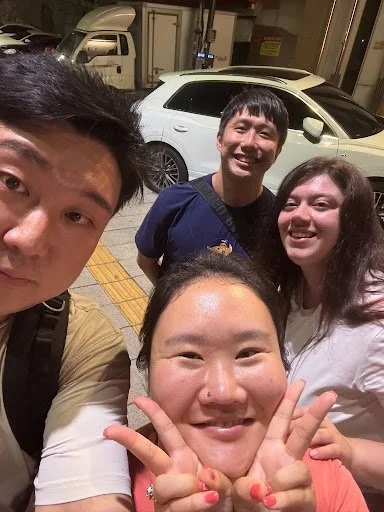
We took this picture around 12AM. Itaewon, Seoul. It was totally safe to walk around.
Because it's spontaneous and it's safe. In Seoul you can decide at six in the evening to meet a friend, stay out past midnight, and take the train home without thinking about it. Here, meeting a friend at night means driving to her house and sleeping over.
There are bars and clubs in Savannah, but I've never felt comfortable out late at night in the U.S. Gun violence is frequent enough here that it changed my habits within months. I don't say that to scare anyone. It's simply a trade I made without realizing it was part of the deal.
With fewer places to go, I picked up watercolor painting, something I'd never done in my life. You really never know who you'll become when you change countries.
What Is the Best Night View in Seoul?
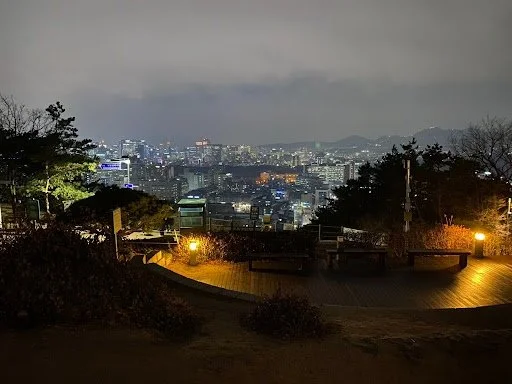
Naksan park at night.
Everyone goes up N Seoul Tower for the night view, but Naksan is free, uncrowded, and sits on the old fortress wall on the east side of the city. From the top you see all of Seoul spread out in front of you, with the tower itself in the frame. It's the one hidden gem I still recommend to every friend who visits.
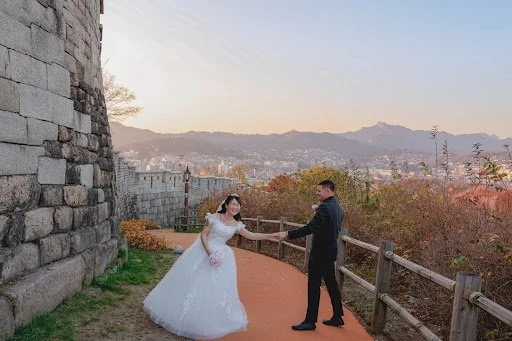
Wedding snap we took at Naksan park
It's also personal. Naksan is near the neighborhood where I lived alone while my husband and I were dating, and we took our wedding photos there. Of everything I left behind, that view is the place I miss most.
What I Learned From Moving to The U.S.
How Do You Stop Comparing Yourself to Others?
For me, the answer was leaving the environment that ran on comparison. In Korea I measured myself against everyone, constantly, and backed myself into a corner doing it. It took a year in a slower place to understand that I'm allowed to move at my own speed and define my own value.
This is the thread that ties back to the beginning. The pace I couldn't keep up with turned out to be the problem. It was never me.
Does Moving Abroad Make You More Confident?
It did for me, and the mechanism was simple: I stopped worrying about how other people saw me. Confidence and that worry are directly connected. The less attention I paid to the outside, the more I had left for taking care of my inner life, and somewhere in there I learned to live positively.
I think the environment did most of the work. Small setbacks used to hit hard. Now most challenges feel manageable, and I can't point to a single moment where that flipped. It just accumulated.
Can an Introvert Learn to Start Conversations?
Yes, if you're dropped somewhere that talks to you first. I'm an introvert who never liked speaking up, and approaching strangers was close to impossible for me. In Korea, even greeting your neighbors is nearly a lost custom.
Here, total strangers compliment my dress, my nails, my hair. Someone sees my T-shirt of a certain rock band and starts telling me about the band they like. A year of that rewired something. It still drains me, but I've learned to enjoy the moment while it lasts.
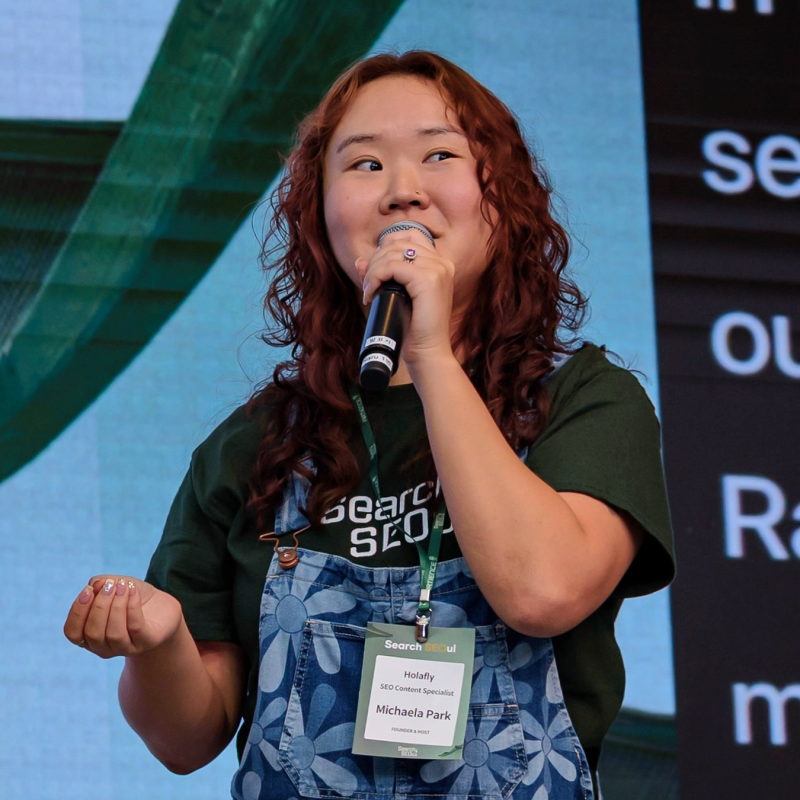
The proof came this September. At Search SEOul 2026 I gave the opening keynote in front of more than 230 people, and I wasn't nervous at all. If anything, I was a little moved.
How Moving to The U.S. Has Changed My Life
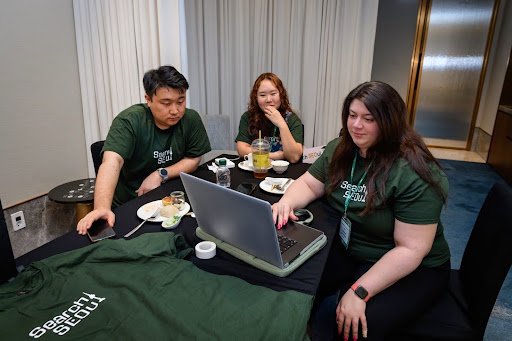
Three of us working together during lunchtime at the venue of Search SEOul (Conference day 2)
A year after leaving Korea, I ran a sold-out international conference in Seoul without living there. Search SEOul 2026 drew 231 attendees from 21 countries and 121 companies, up from 120 the year before.
Three of us built the whole thing over Google Meet across three time zones: Spain, Korea, and the U.S. Eastern coast. It still surprises me when I say it out loud.
I could pull that off because of what the move taught me. My own pace instead of everyone else's. Less worry about being judged. And the nerve to walk up to a stranger and start a conversation, which is how half the speakers ended up on that stage.
Korea made me. The U.S. gave me room to find out what that meant. I don't know yet where the next move takes me, but for the first time I'm sure it'll be at my speed.