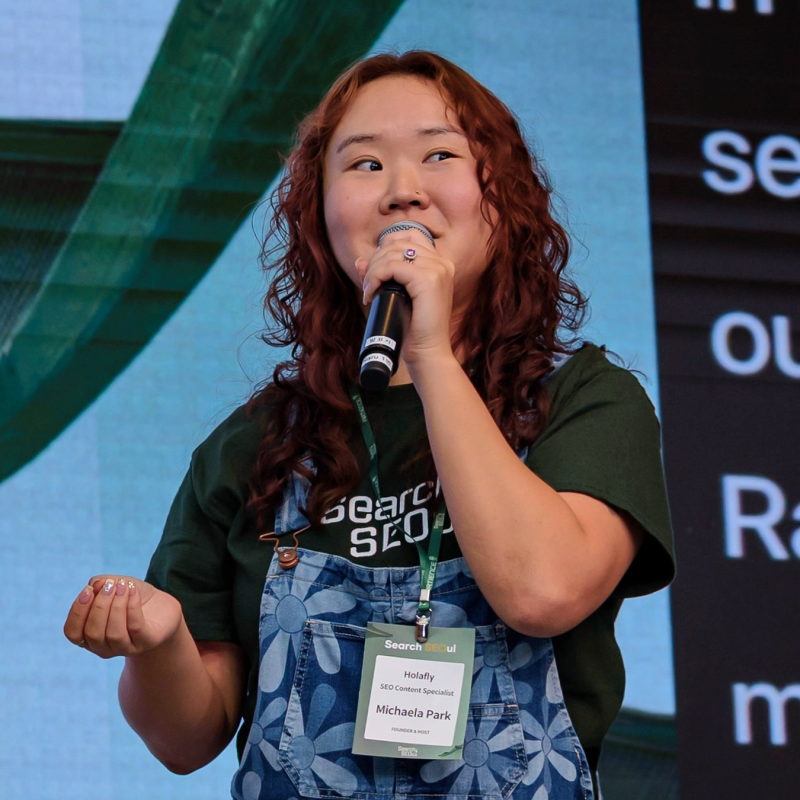
Marketing an international conference is very different from promoting a local event.
When we created Search SEOul, Korea's first international SEO conference, we were not marketing to one audience in one language.
We had Korean marketers deciding whether the conference was worth attending, but we also had international SEOs deciding whether it was worth flying to Seoul.
Those audiences had different motivations and concerns, so they needed different messages.
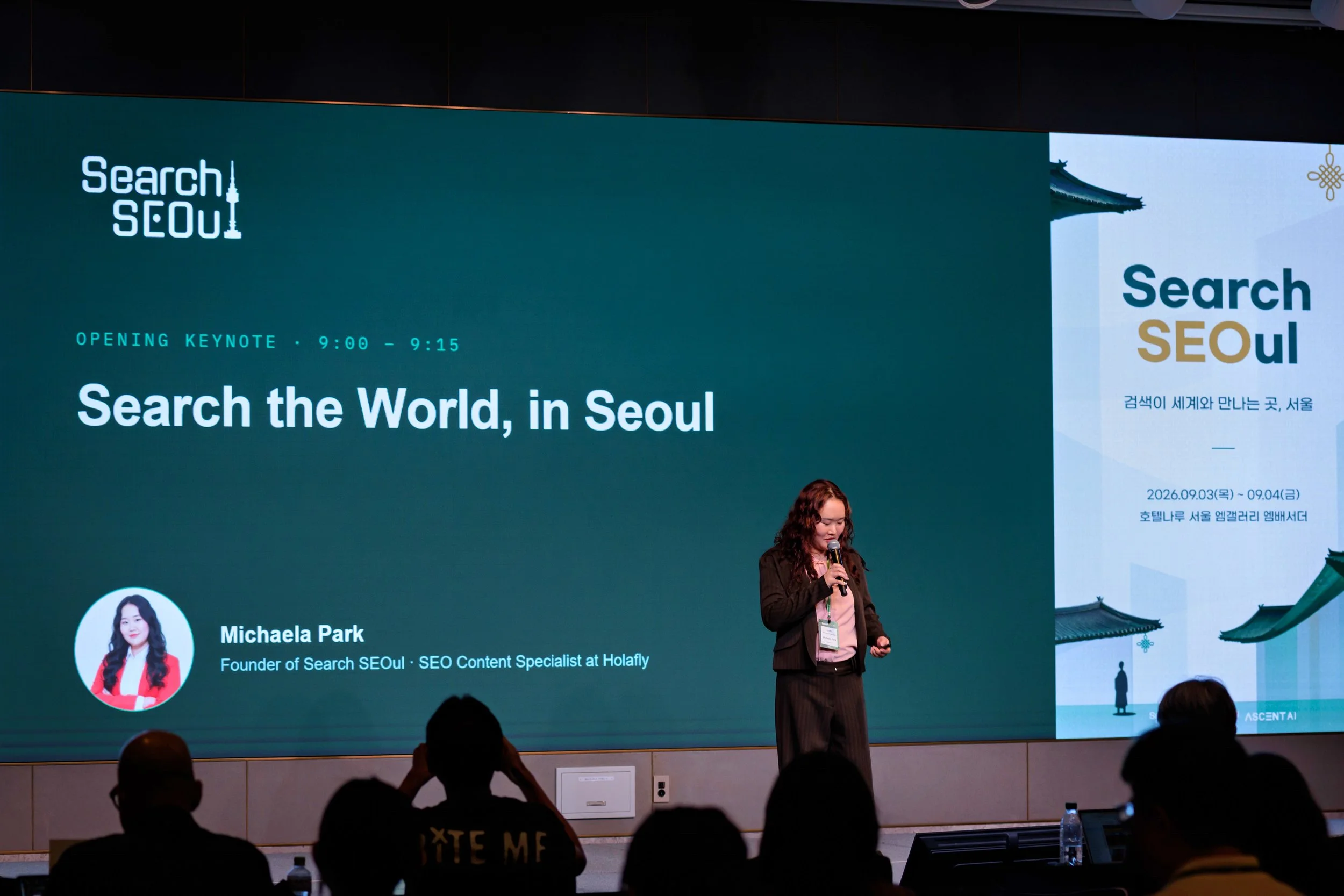
By the second edition of Search SEOul in 2026, we had sold out the conference with 231 attendees representing 21 countries and 121 companies. And the entire conference was organized by just the three of us working remotely across different countries.
If you’re figuring out how to market a conference for an international audience, these are the conference marketing ideas that worked for us.
How Conference Marketing Differs From Local Event Promotion
A local event normally has one main audience, one language, and one time zone. With an international conference, all of those things multiply.
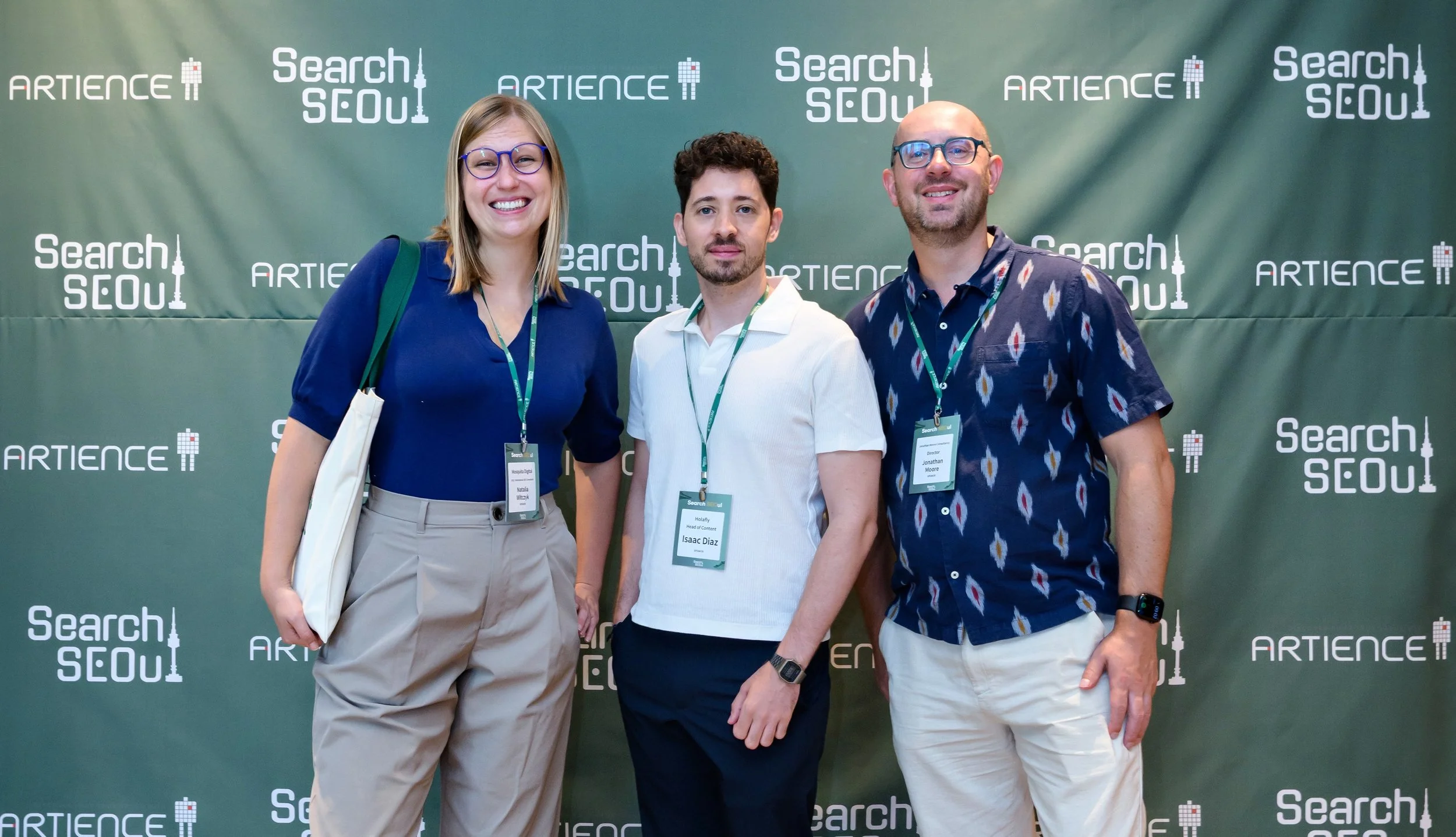
For Search SEOul, I was essentially marketing to two very different audiences.
The first was Korean marketers who had never attended an international SEO conference.
The second was SEO professionals from places such as Europe and the US who were deciding whether Seoul was worth traveling to for a conference.
They needed different channels and different reasons to attend.
You cannot create one marketing campaign and assume it will work equally well for both.
Why International Conferences Need a Market-by-Market Strategy
For Korean attendees, one of our strongest selling points was access.
Normally, they might have to take a 14-hour flight to attend an SEO conference in the US or Europe.
With Search SEOul, we were bringing international speakers directly to Korea.
For overseas attendees, that message would not work.
They were already the ones taking the long flight.
So for them, I needed to sell Seoul and Korea as part of the experience.
It was not only about attending the conference. We also had activities such as a city tour and a pre-conference networking event in Itaewon.
The value proposition changed depending on where the audience came from.
Here’s How We Marketed Our International SEO Conference in Seoul
Set Clear Goals Before Promoting Your Conference
Before we started promoting Search SEOul, we decided what success actually meant.
Our goals were quite simple.
We wanted to sell out the room, create a genuinely international mix of attendees rather than a Korean event with a few international speakers, and make the experience good enough that people would want to return the following year.
We were not primarily organizing the conference to maximize profit.
That influenced a lot of the decisions we made because we prioritized attendance and the attendee experience over margin.
Define your goals before you start marketing, because they decide what you optimize for.
If your priority is profit, your strategy may look very different from ours.
Define Your International Target Audience
We had two main audiences.
The first was Korean in-house marketers and agency professionals who wanted to learn SEO and GEO directly from international experts.
The second was international SEO professionals who wanted to learn more about the Asian market and also had an interest in visiting Seoul.
Almost everything we wrote was aimed at one of those two groups.
If a message did not speak clearly to either audience, we removed it.
This matters even more for international conferences, because "international audience" is too broad to be useful as a marketing persona.
You still need to understand exactly why each group would attend.
Build a Strong Conference Brand and Value Proposition
We also wanted Search SEOul to have a very clear identity.
Our slogan was:
“Search the World in Seoul.”
The idea was simple enough that we could repeat it across our marketing.

We also incorporated Seoul into the visual identity of the conference, including elements inspired by N Seoul Tower in the logo.
For Korean attendees, the value proposition was essentially: you no longer need to fly overseas to access international SEO speakers.
For international attendees, it was: attend an SEO conference while also getting access to Korea and the wider Asian SEO community.
A strong conference brand makes marketing easier because you aren’t reinventing your message every time you publish.
People start seeing the same idea repeatedly.
Create a High-Converting Conference Website
For me, a conference website has one main job.
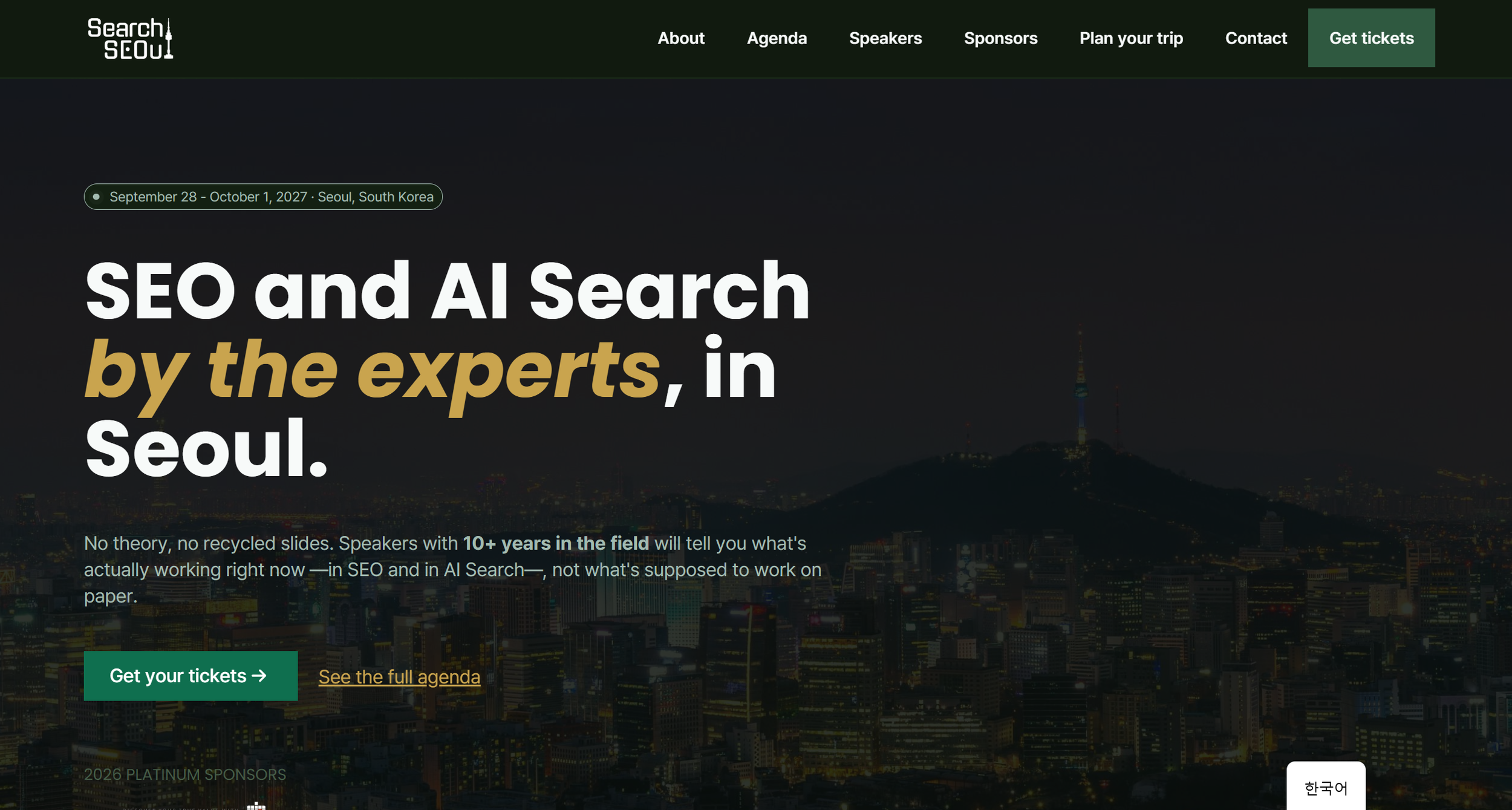
Someone arrives curious about the event, and the website needs to move them toward registering.
That means the important information should be extremely easy to find.
We made sure people could quickly see:
Speaker faces
Talk titles
The conference agenda
Ticket information
Registration buttons
You should not make someone search through the website just to figure out who is speaking or how to buy a ticket.
UI and UX matter a lot here.
Localize Your Conference Website Instead of Simply Translating It
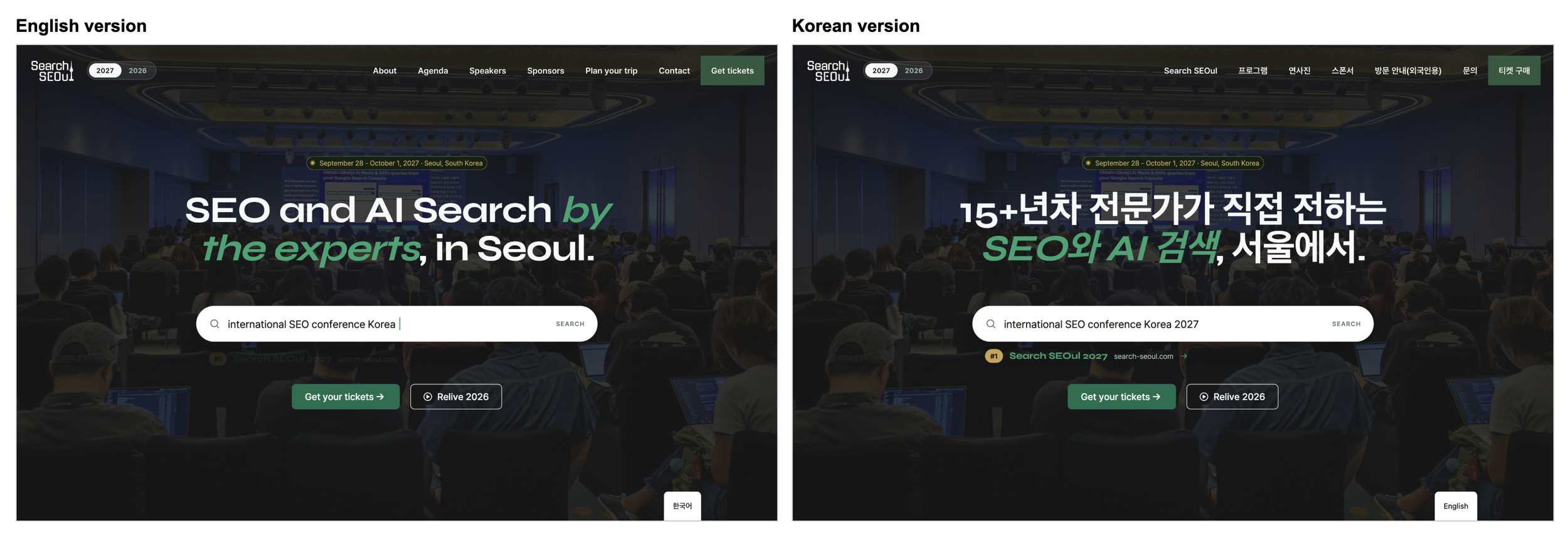
We built a full Korean version of the Search SEOul website.
But I did not simply translate every English page word for word.
The Korean audience needed to feel that the website was actually made for them.
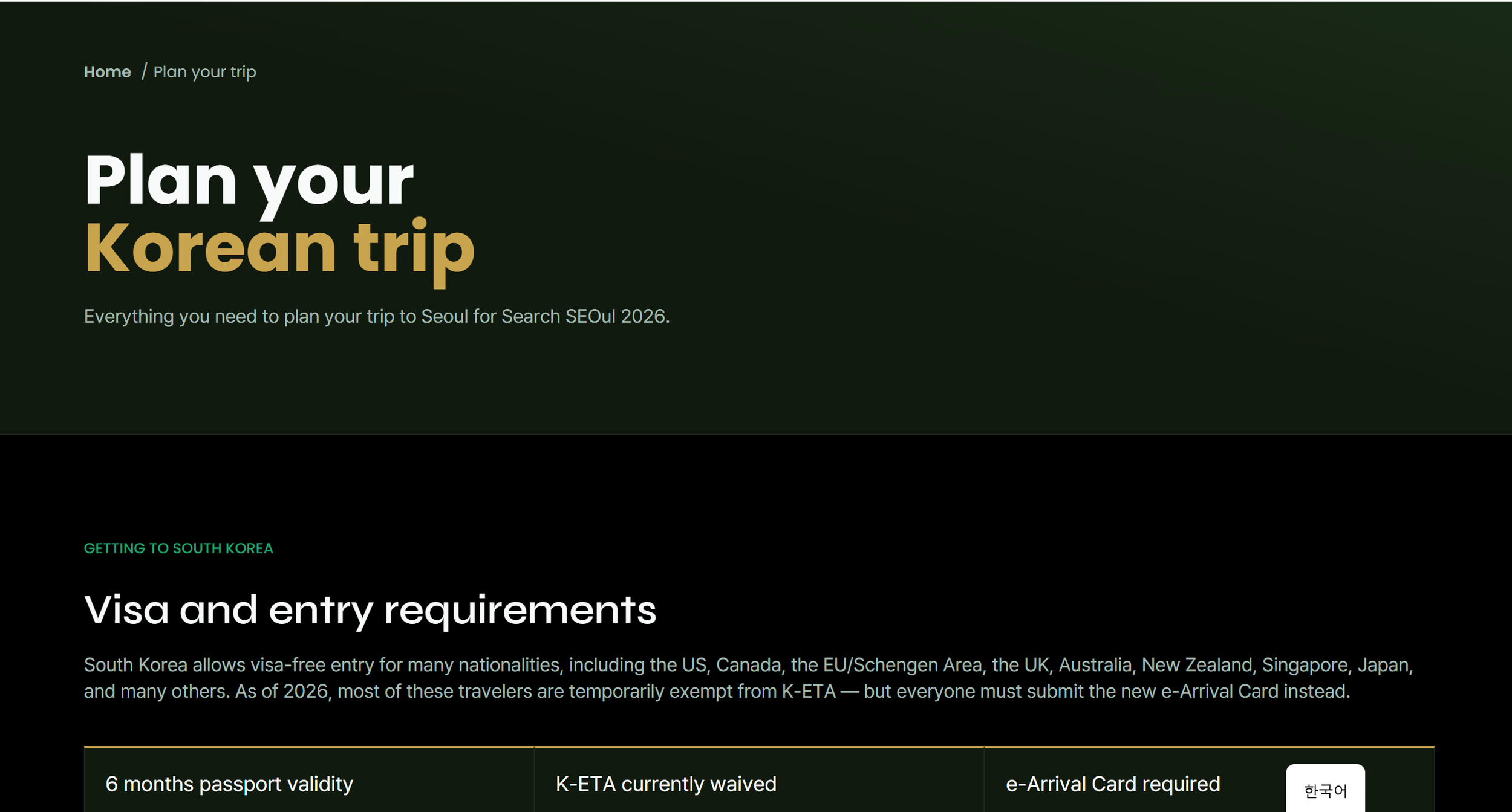
For example, international visitors needed a “Plan Your Trip” section because they were traveling to Korea.
Korean attendees obviously did not need that information.
So instead of directly translating it, I could emphasize something that mattered more to them, such as the opportunity to network with SEO professionals coming from other countries.
That is the difference between translation and localization.
Localization means changing the message to fit what that audience needs.
Use AI to Support Localization, Not Replace Human Review
I do use AI when working on translations.
It can be useful for creating the initial structure.
But I never publish the output without a native-speaker review.
It can still sound robotic once you get into how people actually talk.
For a conference, that matters even more because your website may be the first impression someone has of your event.
Promote the Conference Through Social Media and Word of Mouth
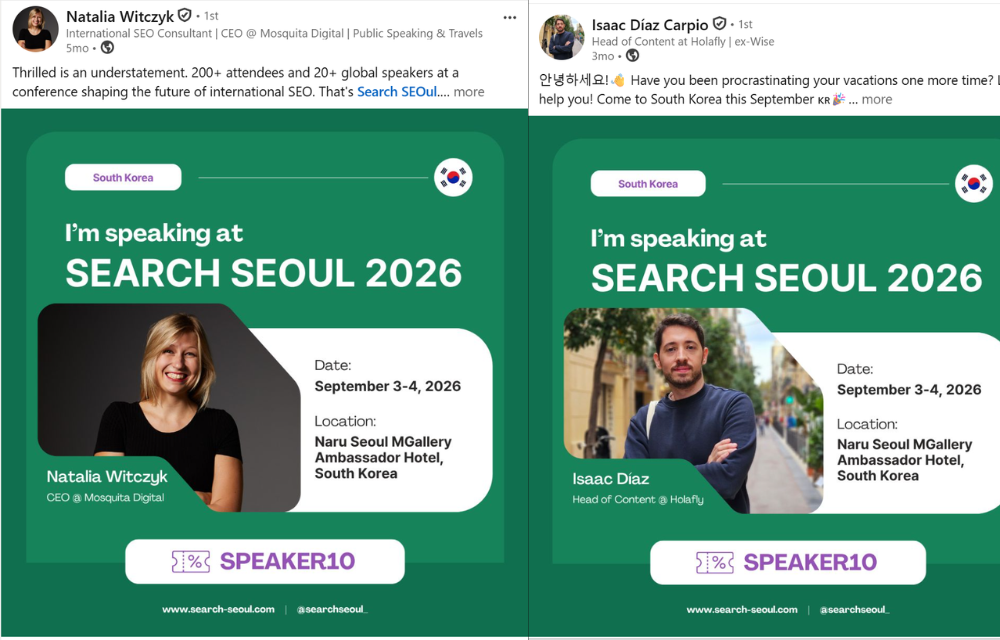
Social media was one of our main marketing channels.
But honestly, word of mouth was also extremely important for us.
We did not rely heavily on paid advertising.
A lot of awareness came through people within the SEO community talking to each other, sharing the conference, and recommending it.
The SEO industry is relatively close-knit, so genuine relationships can create a lot of distribution.
For a niche international conference, I think community can sometimes be much more valuable than simply trying to buy reach.
Build Relationships Before You Need Promotion
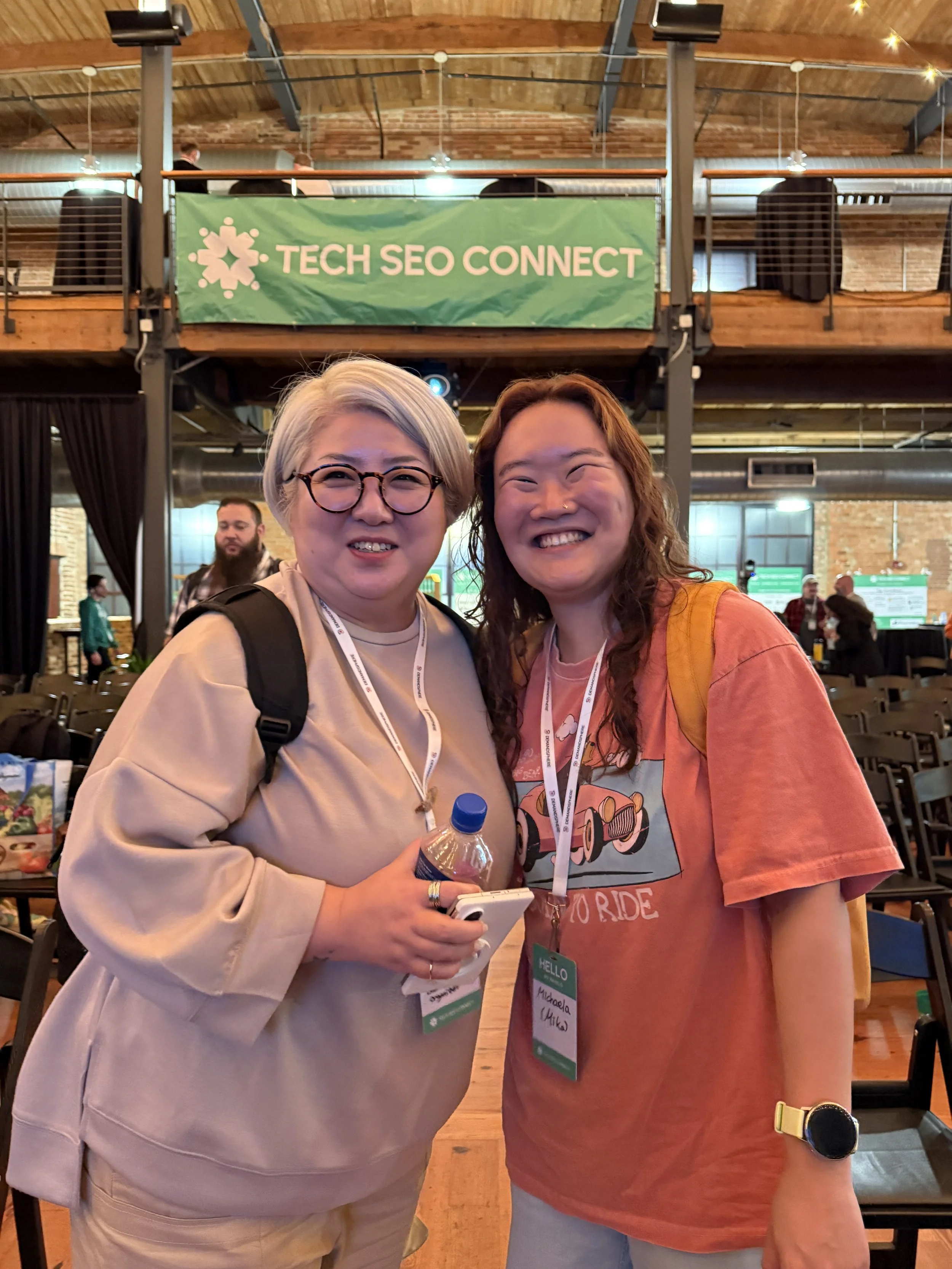
A lot of the speakers and people involved with Search SEOul came through relationships I had built by attending other SEO conferences and participating in the community.
For example, I met people at events such as Tech SEO Connect.
Other speakers came through recommendations from people I already knew.
One person would recommend someone else, and those relationships gradually expanded our network.
That is something I think conference organizers sometimes underestimate.
Marketing does not necessarily start when you announce the event.
It can start months or years earlier when you are attending industry events, meeting people, and becoming part of the community yourself.
Use Speakers and Community Members as Distribution Channels
Bringing international speakers to Search SEOul also helped extend the conference beyond our own immediate audience.
Because the SEO community is relatively small, those networks helped information about the conference travel organically.
I think this works best when the relationships are genuine.
People are much more likely to support or share an event when they actually know the organizers or believe in what the event is trying to do.
Market the International Experience, Not Just the Agenda
For overseas attendees, I knew I could not market Search SEOul only as a list of SEO talks.
They were considering flying across the world.
The destination had to become part of the value proposition.
That is why we also promoted experiences around Seoul, including a city tour and a networking event in Itaewon.
The message was not simply:
“Come to an SEO conference.”
It was closer to:
“Come to an SEO conference, experience Seoul, and connect with the Asian search community while you are here.”
For international events, I think the destination itself can become part of your marketing.
Let PR and Community Coverage Grow Credibility
We did not have a large formal digital PR campaign.
But we benefited from people in the industry covering Search SEOul organically.
For example, SEO-related websites featured the conference, and someone in Korea also wrote about the event on Brunch, a Korean publishing platform, which created additional exposure and links.
A lot of this happened naturally through the community rather than through us running a structured PR campaign.
That kind of third-party coverage can be valuable because someone else is introducing your conference to their own audience.
Be Careful With Paid Advertising
We did experiment with paid media for an earlier edition.
It did not work particularly well for us.
Part of the reason may simply have been that none of us were PPC specialists. Our team was much stronger in SEO.
So I would not say that paid advertising does not work for conferences.
I would say that you should understand whether you actually have the expertise to run it effectively before allocating a lot of budget there.
For us, social media, community relationships, and word of mouth were much stronger.
Do Not Create Content Just Because You Think You Should
One interesting thing about Search SEOul is that we did not build a large blog as part of the conference marketing strategy.
The main reason was very practical.
We did not have time.
All three organizers had our own jobs and other professional commitments, so we had to prioritize what we could realistically execute.
I think that is an important marketing lesson too.
There are always more channels you could use.
That does not mean you need to use all of them.
It is better to execute a smaller number of channels properly than create a huge marketing plan your team does not have the resources to maintain.
Use Sponsors to Make the Conference Possible Without Letting Them Control the Experience
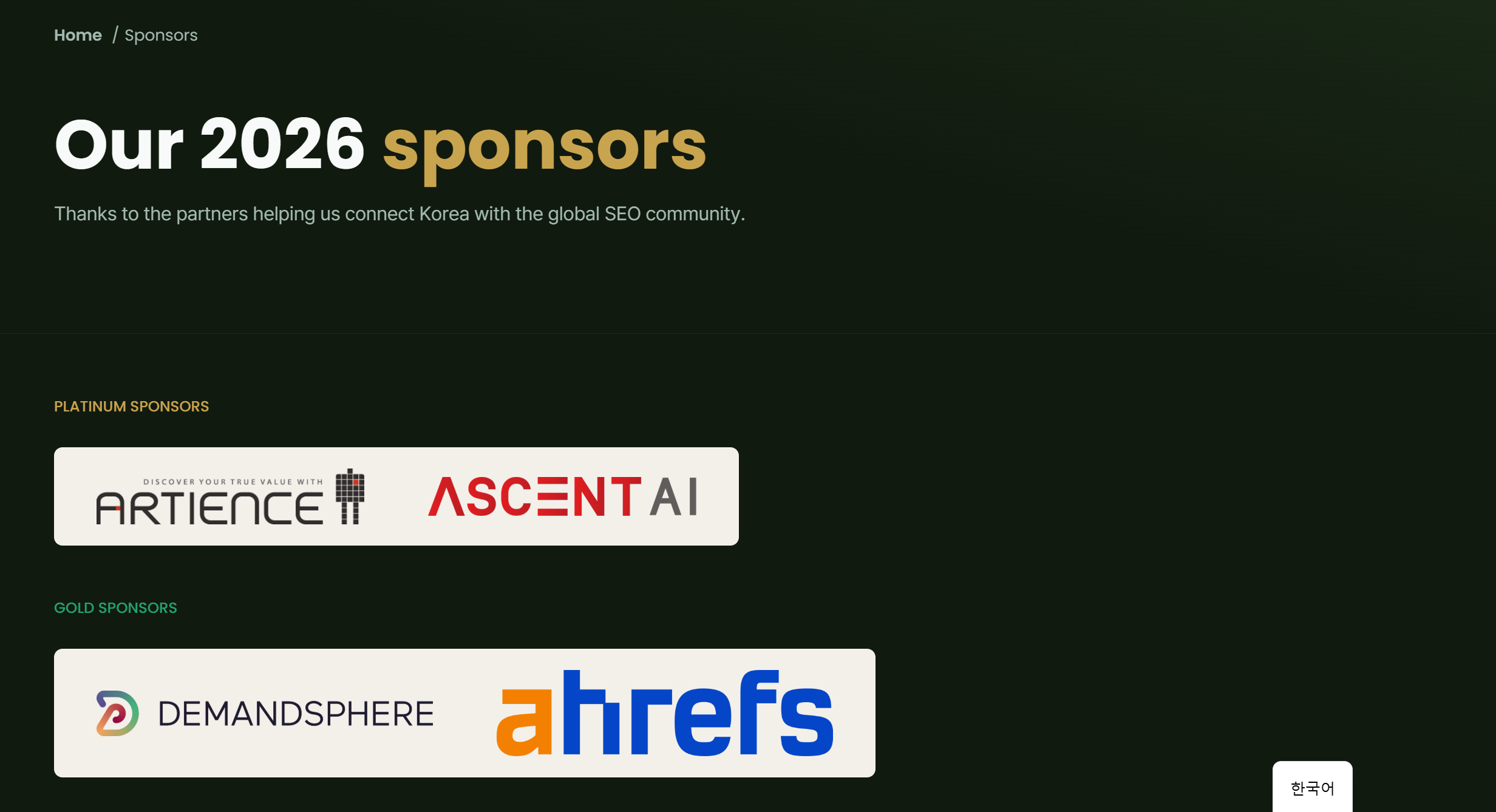
Sponsors were important financially because we mainly relied on sponsorship money rather than fundraising.
But we were also very conscious of the type of conference we wanted to create.
I had seen other marketing conferences where most of the speaking slots were effectively tied to sponsorships and speakers mainly used their sessions to sell products.
That was not the experience we wanted Search SEOul to become.
Sponsors can help make an international conference financially possible, but I think you still need to protect the quality of the event and the trust of your audience.
Build an International Conference Marketing System, Not a One-Off Campaign
For me, the biggest lesson from marketing Search SEOul is that international conference marketing is not one campaign.
It is a system of different messages, audiences, relationships, channels, and experiences working together.
We had one message for Korean attendees and another for international attendees.
We localized the website instead of simply translating it.
We relied heavily on social media, community relationships, speakers, and word of mouth rather than assuming paid advertising would solve everything.
And we treated Seoul itself as part of the experience we were selling.
Most importantly, the marketing worked because we knew who the conference was for.
If you understand why each audience would travel, pay, and give up their time to attend your event, the rest of the marketing becomes much easier to build around them.