
Getting people to show up to your event is harder than it looks, especially when you're organizing a 500-person conference.
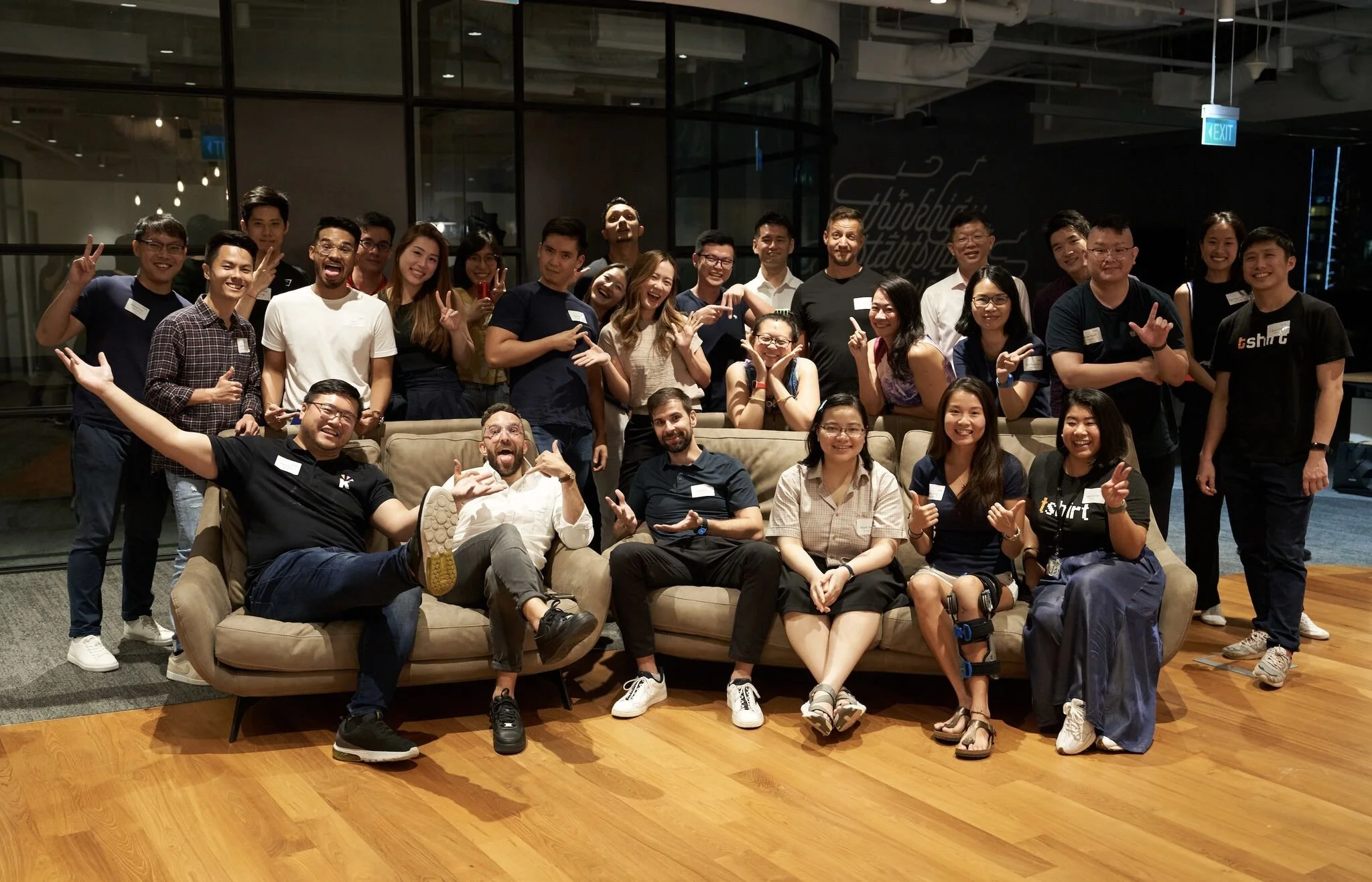
Attendees of one of the early renditions of the mini SEO networking sessions at Ahrefs
I joined Ahrefs as its first dedicated events hire. We started small, with networking sessions and product workshops across Asia-Pacific. A few years later, we ran Ahrefs Evolve in Singapore. It sold out with more than 500 attendees and turned a profit.
Before that, I worked on international events at RICS, including a virtual conference that drew around 10,000 registrations across four time zones.
The biggest lesson from all of it? Good event marketing isn't about running the biggest event. It's about knowing your audience, giving them a reason to show up, and making sure the event supports a business goal.
In this guide, you'll learn the types of event marketing, how to plan an event, the tactics we used to sell out Ahrefs Evolve, and how to measure whether it all worked.
What Is Event Marketing?
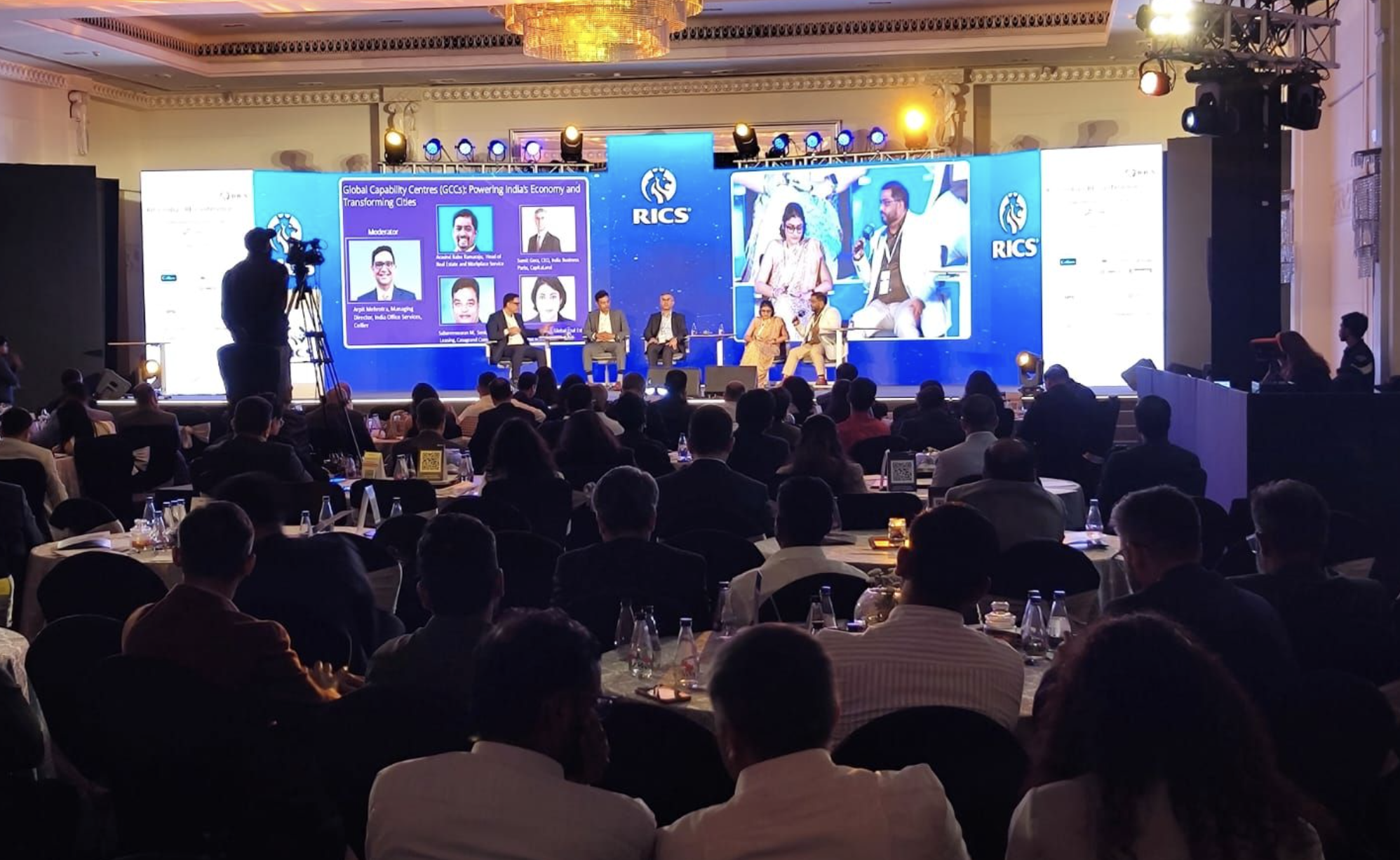
Event marketing is the process of planning, organizing, and promoting events to achieve business goals like brand awareness, customer relationships, lead generation, and sales.
It covers everything from your event strategy and attendee acquisition to promotion, coordinating with other teams, and keeping people engaged after the event ends.
When I joined Ahrefs, my main job was to grow brand awareness across Asia-Pacific. As the events function grew, we started working closely with the sales team to reach enterprise prospects.
That's why I see event marketing as both a brand-building and a business development function. The balance between the two depends on your company's goals.
Benefits of event marketing
Events let people meet the team behind a brand, which builds a kind of trust that digital marketing alone often can't.
Here's what they can do for your business.
1. Build Trust and Strengthen Customer Relationships
At events, customers can ask questions, try your product, and put faces to your brand.
At Ahrefs, we hosted invitation-only executive dinners where our enterprise sales team could talk directly with prospects and decision-makers.
2. Educate Audiences and Demonstrate Product Value
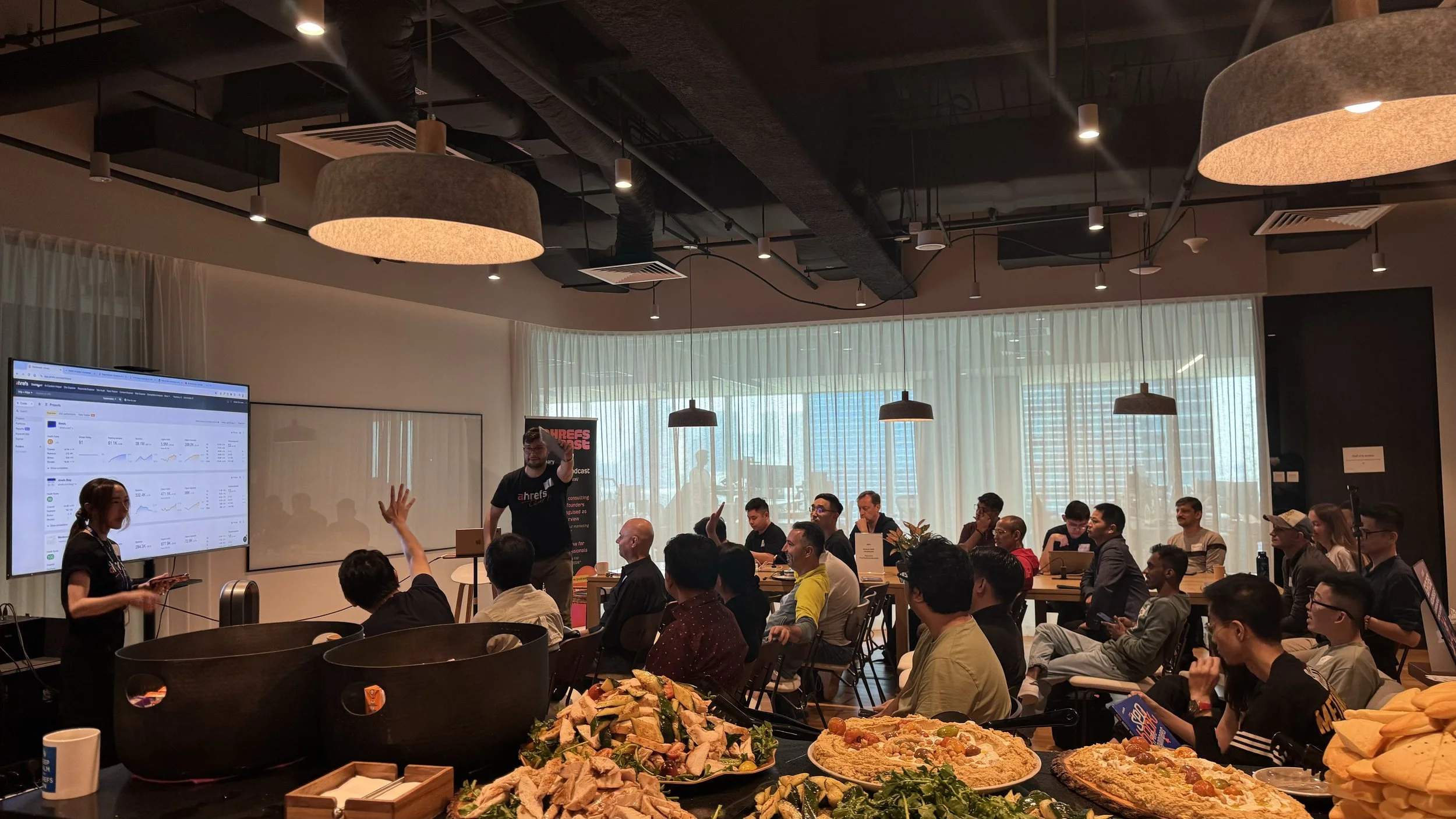
Alt text: An Ahrefs product workshop.
Workshops and demos let people see how your product solves their problems. You also get firsthand insight into their challenges.
3. Increase Brand Awareness and Generate Business Opportunities
Events can also help you:
Increase brand awareness: Reach new audiences and enter new markets.
Generate qualified leads: Meet prospects and create sales opportunities.
Build industry communities: Bring professionals together to share knowledge and connect.
Extend your reach: Turn photos, videos, testimonials, and attendee posts into content that keeps working after the event.
Want to go deeper? Read my full guide to the benefits of event marketing.
3. Increase brand awareness
Events help you reach new audiences, enter new markets, and strengthen brand recognition.
4. Generate qualified leads
Events put you in front of prospective customers and create new sales opportunities.
5. Build industry communities
Events bring professionals together to share knowledge and make connections.
6. Extend your marketing reach
Photos, videos, testimonials, and attendee posts keep attracting attention long after the event ends.
Want to go deeper? Read my full guide to the benefits of event marketing.
Event marketing formats: in-person, virtual, and hybrid
Events come in three delivery formats, and the right one depends on your audience, budget, and goals.
In-Person Events
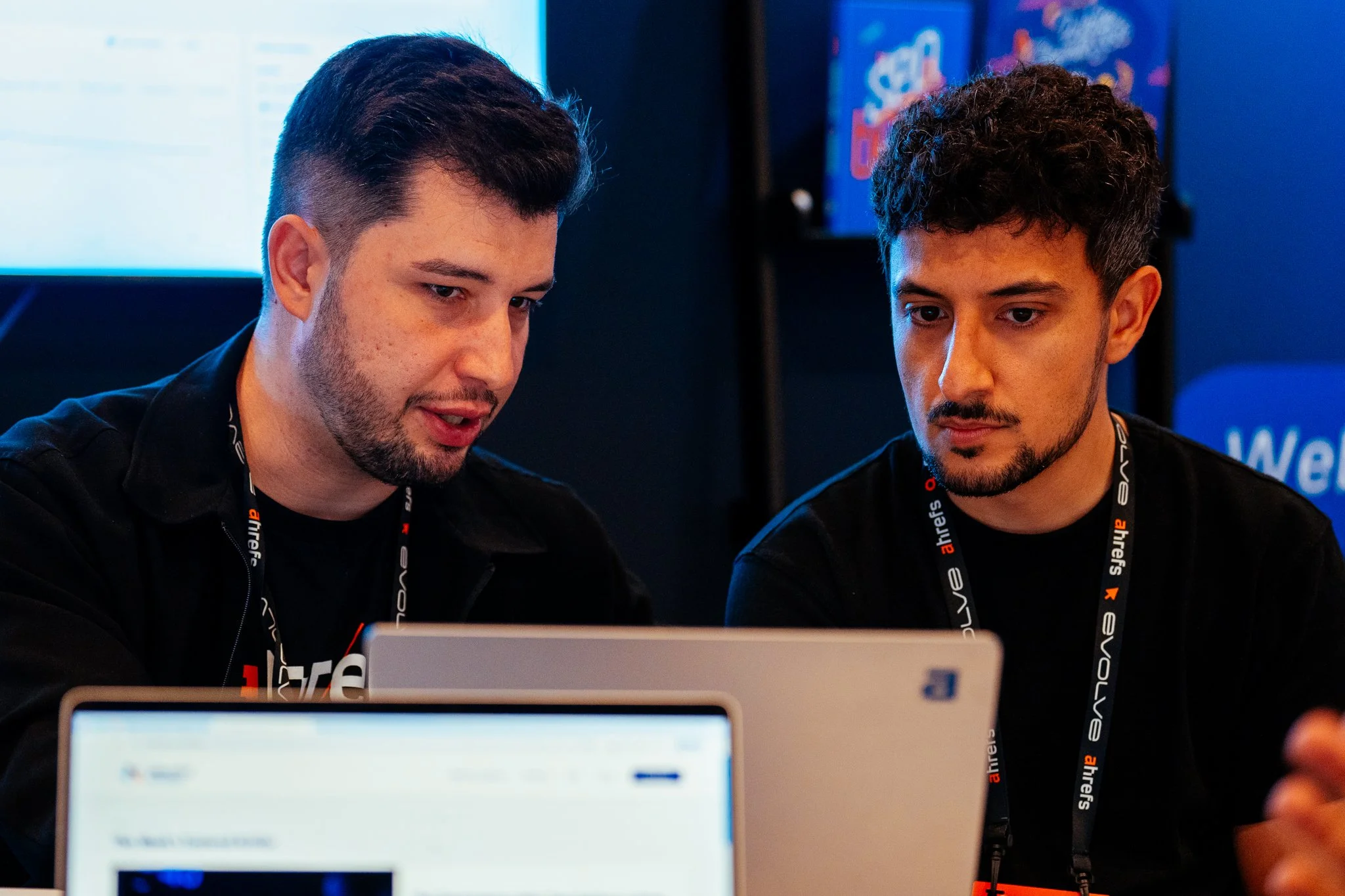
In-person events bring attendees together at a physical venue. Think conferences, workshops, networking sessions, seminars, and private dinners.
In my experience, they're the best format for building relationships. Attendees meet your team, ask questions, and connect with peers who share their interests.
Use in-person events when:
Building trust and long-term relationships is a priority.
Your product benefits from live demos or hands-on learning.
You want to help industry professionals network.
Your sales team needs face time with prospects.
The catch is cost and logistics. You'll need to coordinate venues, catering, staffing, travel, and production.
Virtual Events
Virtual events, like webinars, online workshops, and digital conferences, let people join from anywhere.
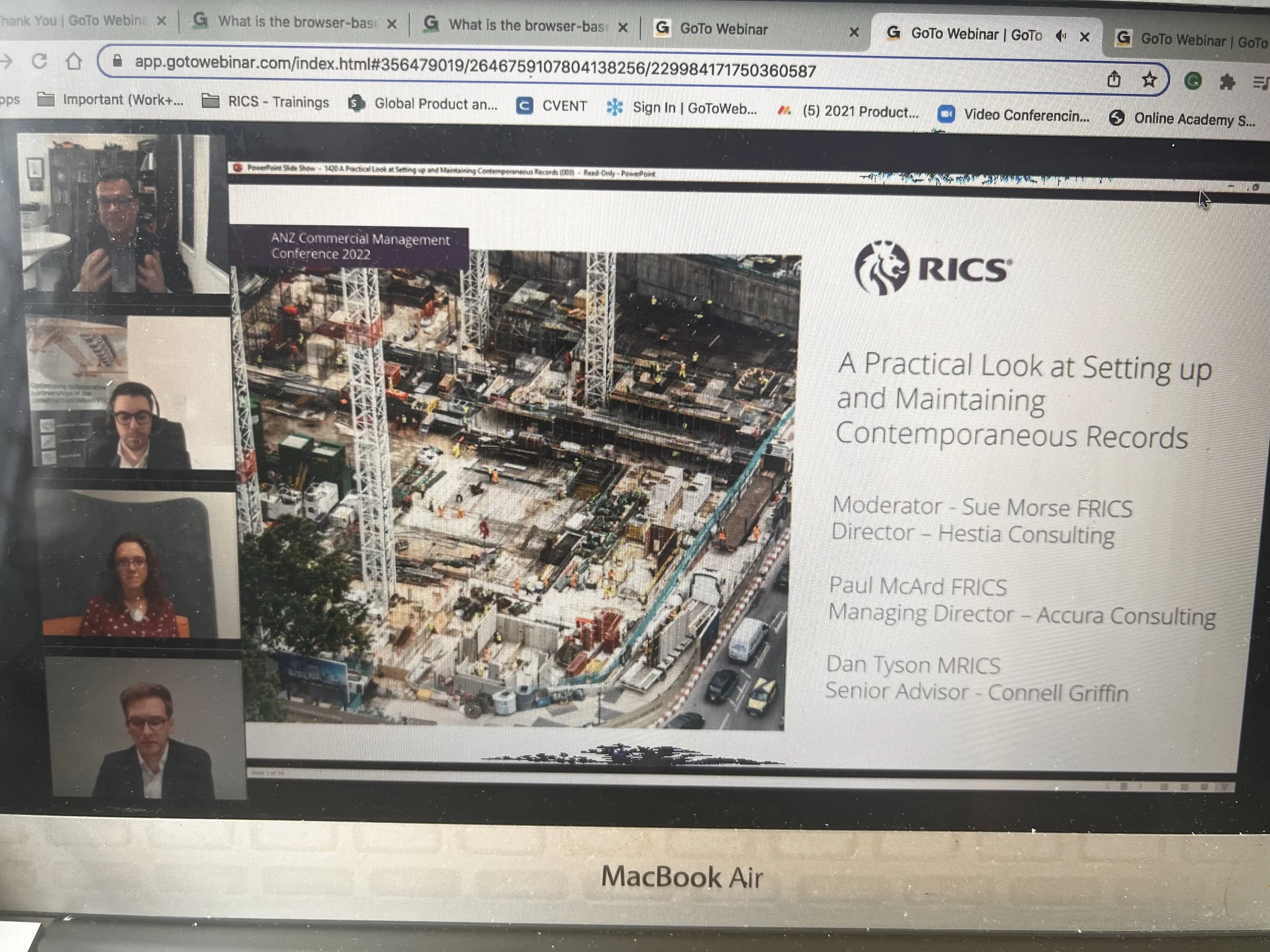
During the COVID-19 pandemic, I helped run a virtual conference at RICS that drew around 10,000 registrations across four time zones. No physical venue could have held that audience.
Virtual events are cheaper, more flexible, and more accessible. They make it easier to book international speakers, cut travel emissions, and offer on-demand recordings. They also open the door to people who face travel, mobility, or financial barriers.
Use virtual events when:
Your audience is spread across several countries.
You're running educational webinars or product demos.
Your speakers can't easily travel to one place.
You need a cost-efficient way to reach more people.
The hard part is keeping people engaged. Use live Q&A, polls, and interactive discussions. For international audiences, plan around time zones, keep sessions short, and add live captions and on-demand recordings.
Hybrid Events
Hybrid events combine in-person and virtual participation.
At RICS, I worked on hybrid events where speakers gathered in person while much of the audience joined online. This widened our reach and made the events accessible to people who couldn't travel.
But hybrid is the most technically demanding format. You're running two environments at once: venue AV on one side, a livestream platform on the other. Both need smooth presentations and clear audio.
A good hybrid event isn't just an in-person conference with a livestream. Both audiences should be able to take part meaningfully, wherever they join from.
Use hybrid events when:
You want an in-person experience for speakers or a core group, but much of your audience can't travel.
You have the AV and production capacity to run both experiences well.
Types of Event Marketing
Within those three formats, here are eight common types of B2B events, with real examples from Ahrefs.
1. Conferences and Summits
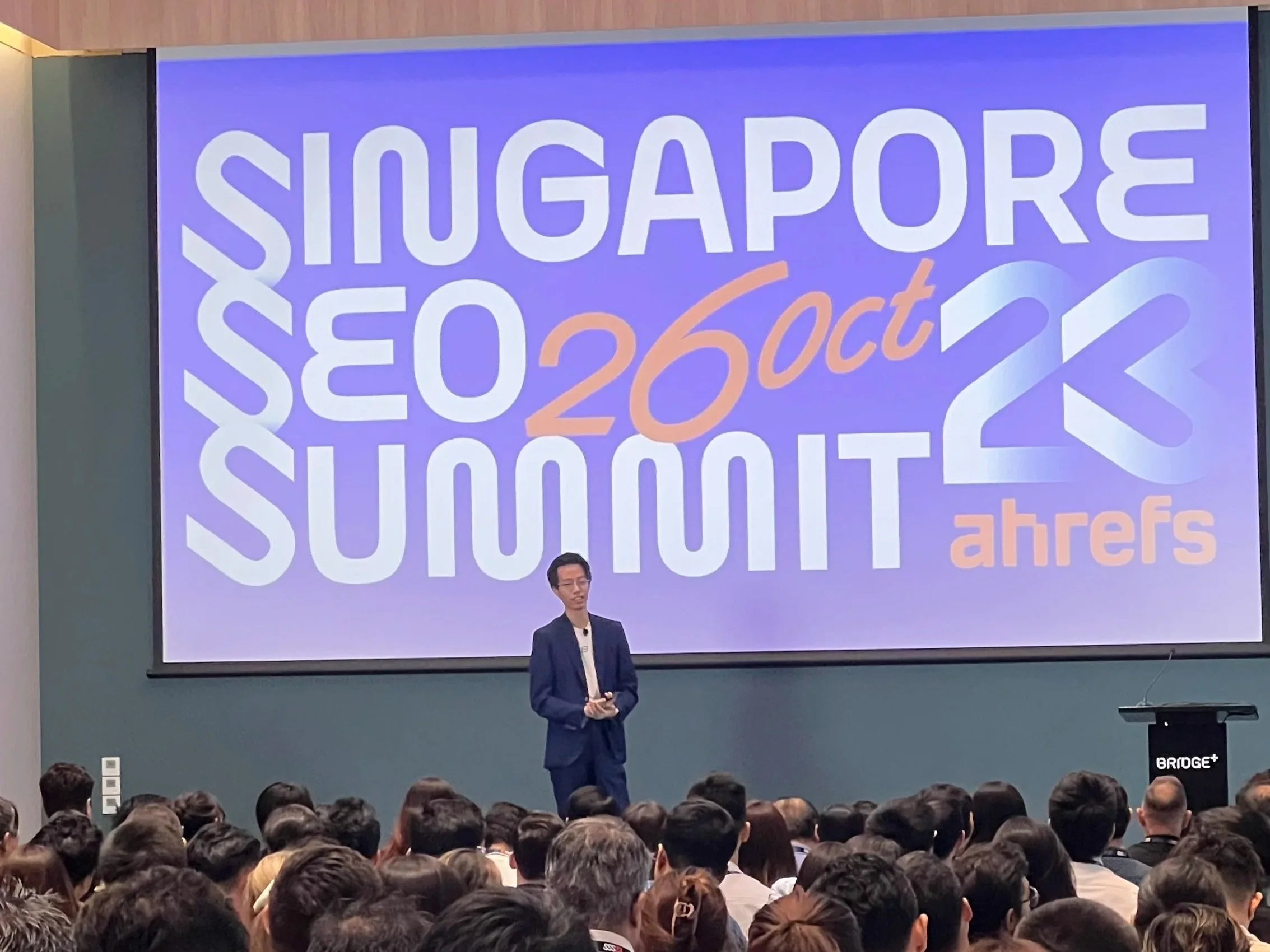
Conferences bring professionals together for keynotes, panels, workshops, and networking. They're great for brand awareness, thought leadership, and community building.
We started with the Singapore SEO Summit in 2023, which drew more than 200 attendees from Singapore and other Asia-Pacific markets.
The international interest encouraged us to grow it into Ahrefs Evolve Singapore in 2024. That year, more than 500 attendees came from over 50 countries. The conference sold out and turned a profit through ticket sales and sponsorships.
In 2025, we took Ahrefs Evolve to San Diego to reach our growing North American audience and prospective enterprise customers.
2. Trade Shows, Exhibitions, and Industry Sponsorships
Sponsoring a third-party event puts you in front of an established audience without the work of running the whole show.
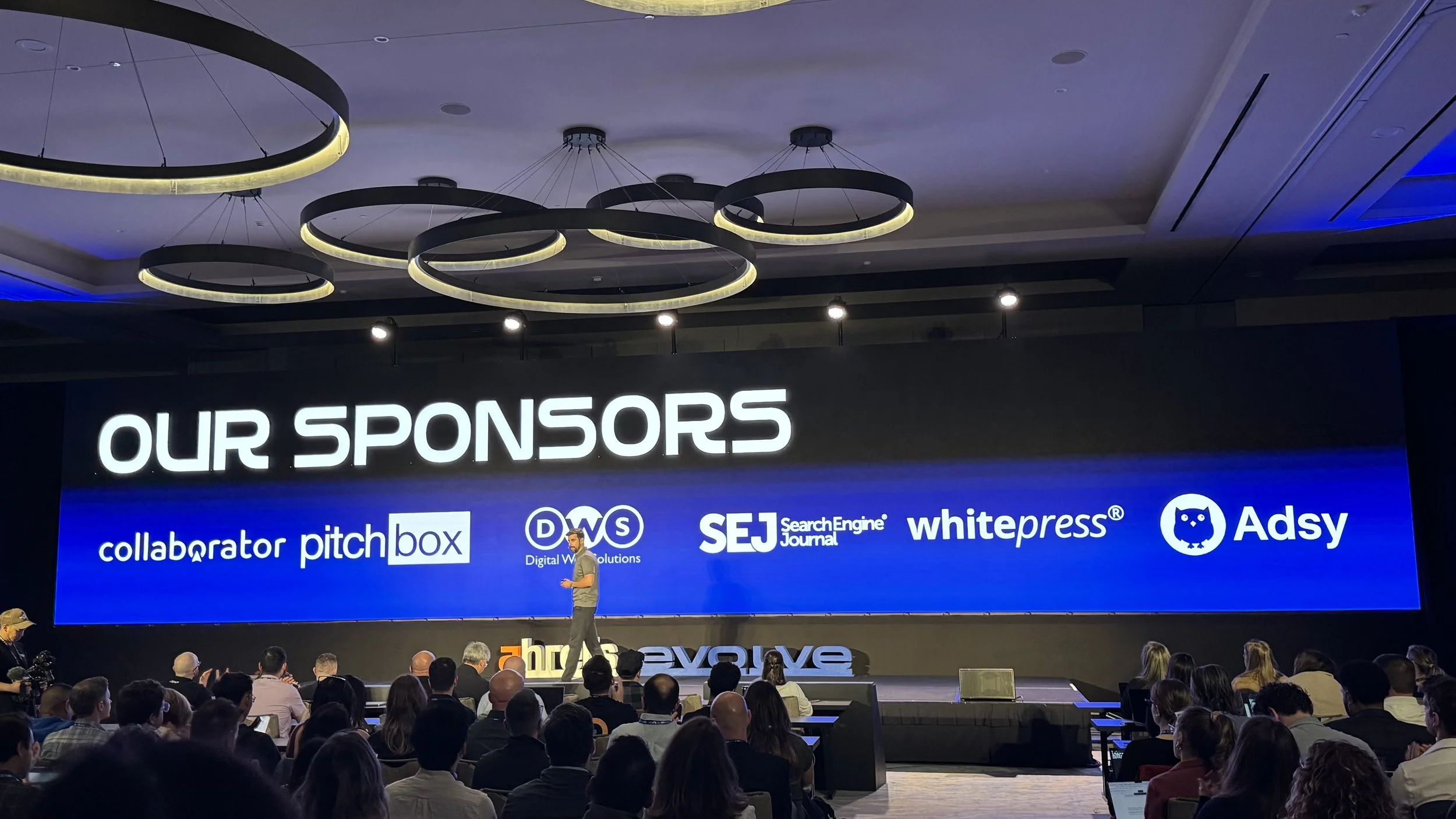
At Ahrefs, we sponsored and took part in conferences like Chiang Mai SEO and BrightonSEO.
This works well if you want to enter new markets, generate leads, or raise your visibility with less operational load. Just make sure the event actually attracts your target customers. Otherwise, you're paying for logo placement and little else.
3. Regional and Localized Events
Regional events target specific cities, countries, or markets. They can be roadshows, workshops, networking sessions, or smaller local conferences.
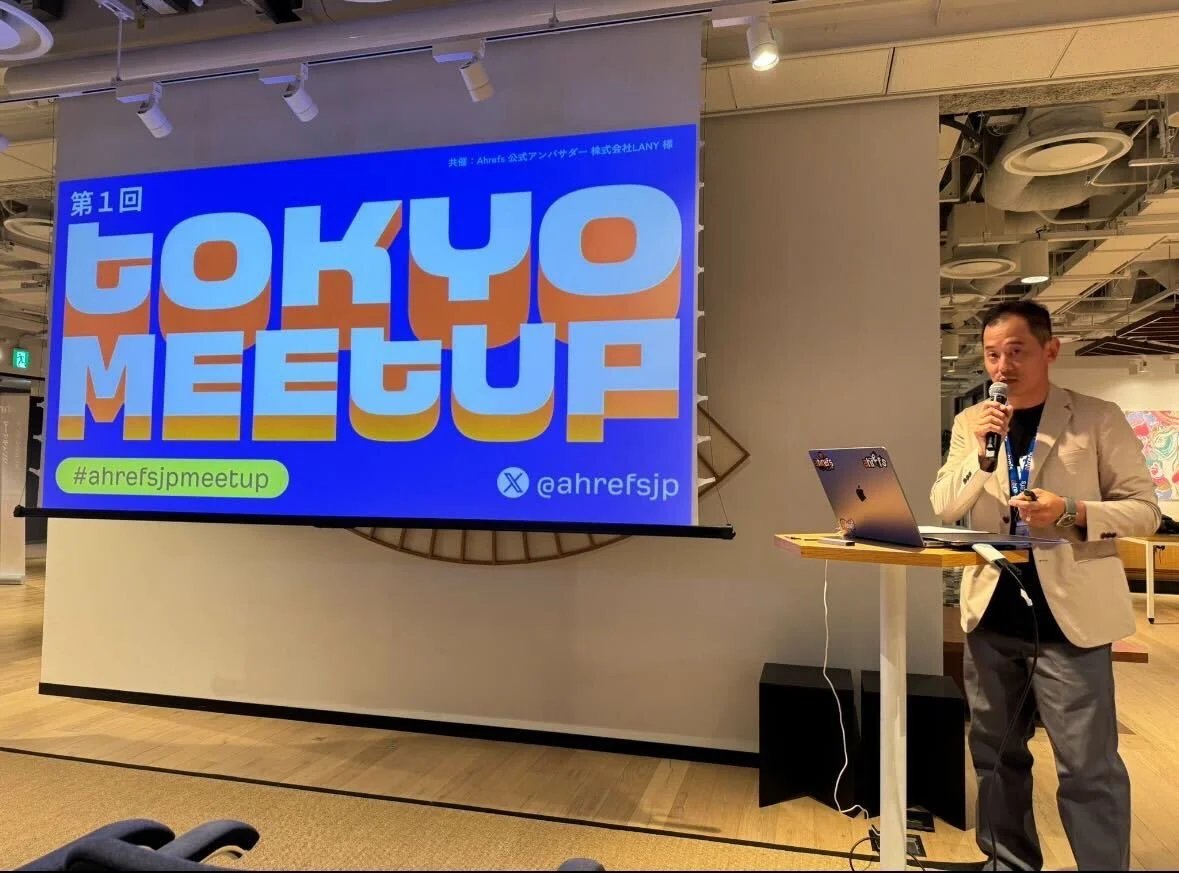
We ran local events across Asia-Pacific to strengthen our regional presence. Some markets, like Japan, needed extra thought around language, local marketing practices, and audience expectations.
Regional events are especially useful when you're entering a new market, supporting local sales teams, or reaching people who don't respond to one-size-fits-all international campaigns.
4. Workshops, Masterclasses, and Product Experiences
Workshops and masterclasses teach practical skills. Product experiences let attendees explore your product through demos and hands-on activities.
At Ahrefs, we ran SEO workshops in different markets to show marketers and business owners how to improve their websites with our tools. We also hosted six pre-conference workshops at Ahrefs Evolve Singapore.
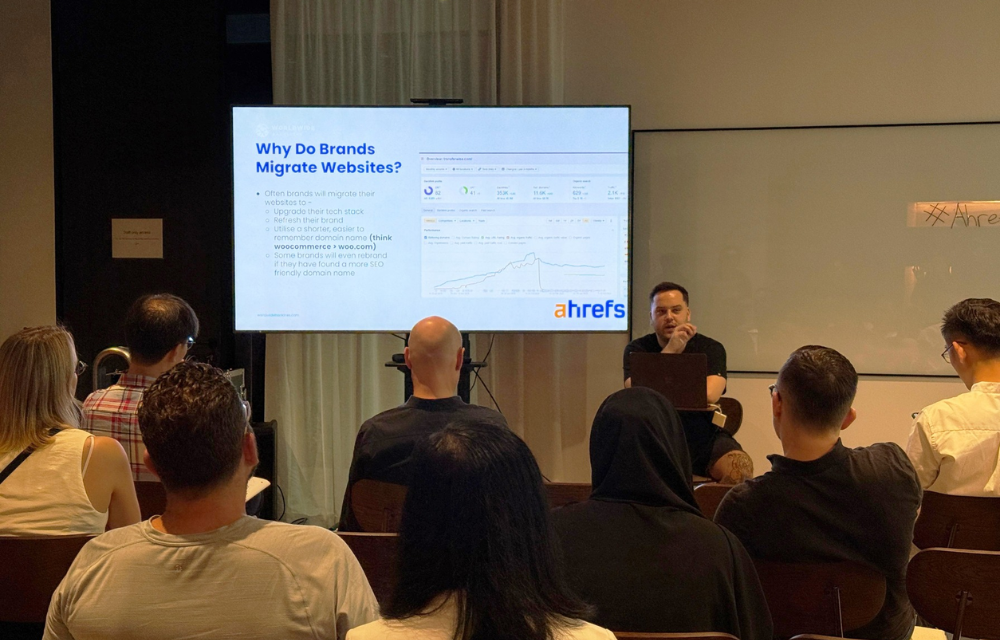
For B2B SaaS companies, these formats are ideal for educating customers, introducing new features, and driving product adoption. Unlike a sales pitch, they let people see how your product solves real problems.
5. Executive Events, Roundtables, and Networking Experiences
These are smaller, often informal gatherings built around conversation.
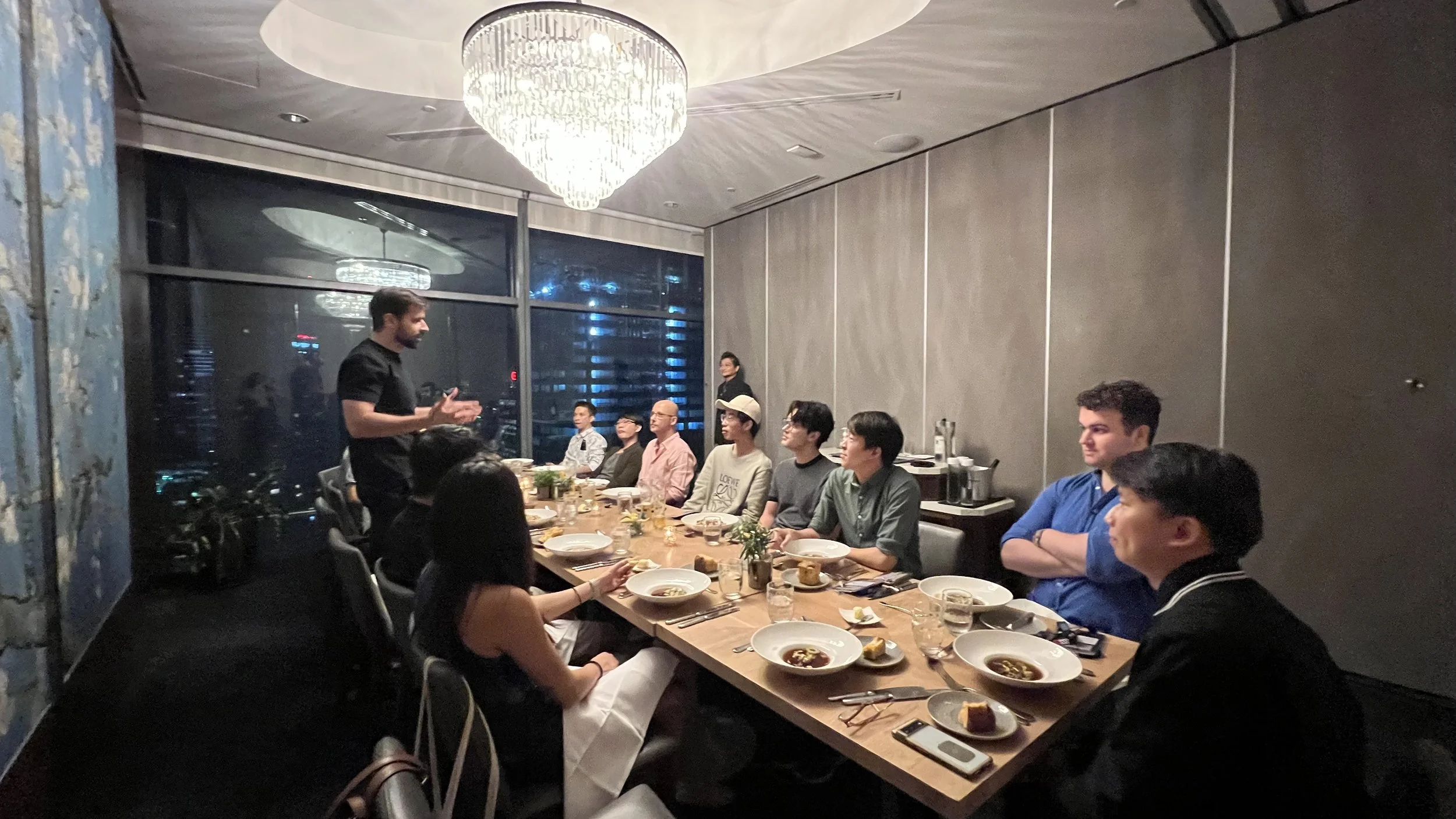
At Ahrefs, we ran CMO networking events in Singapore and the US, bringing senior marketing leaders together to swap ideas.
We also hosted executive dinners to support enterprise deals. For example, a dinner in London held alongside BrightonSEO contributed to closing a deal worth around $300,000.
At larger conferences, networking can also take the form of VIP receptions, speaker dinners, and after-parties. We ran all three at Ahrefs Evolve Singapore.
These events suit account-based marketing and engaging senior decision-makers. Their value comes from the quality of connections, not attendance numbers.
6. Community, Customer, and User Events
Community events bring people together around shared professional interests. Customer and user events focus on people who already use your product.
Examples include meetups, user groups, customer appreciation events, and educational sessions.
Our early SEO meetups and workshops helped us build relationships in local communities and gave existing customers a chance to meet our team. More recently, I founded Curate, a community for B2B event marketers, field marketers, and community professionals.
These events support retention, product adoption, and feedback gathering. You don't need a big budget, either. Small, recurring gatherings work just as well for building long-term relationships.
7. Partner and Co-Hosted Events
Co-hosted events let two or more organizations share audiences, expertise, and costs.

At Ahrefs, we partnered with HubSpot and HEPMIL Media Group on Beyond AEO: Why Authentic Voices Win in AI Search, a panel on how AI is changing search and content marketing.
We also supported APAC Marketers' AI Demo Day at our Singapore office in August 2025, which brought together around 40–50 marketers. And we backed gatherings run by communities like Sponsors In Tech and Women Devs SG.
Partnerships can range from fully co-organized conferences to simply lending your venue.
8. Experiential Events and Brand Activations
Brand activations use interactive experiences to get people engaging with your brand. Think installations, personalised merch, interactive booths, and branded photo spots.
At Ahrefs Evolve Singapore, we set up a custom keychain station where attendees made personalised keepsakes.
We also added giant 3D Ahrefs letters, branded photo spots, and an interactive sticker wall to encourage social sharing.
Activations don't have to be expensive. A simple, creative idea that fits your brand can leave a lasting impression.
How to Choose the Right Type of Event
Pick the event based on the outcome you want, not on how big or popular it is.
| Your main goal | Event type to consider | Ahrefs example |
|---|---|---|
| Customer education | Workshops and product experiences | SEO workshops across Asia-Pacific |
| Brand awareness and community | Conferences and community events | Ahrefs Evolve Singapore |
| Enterprise relationships | Executive dinners and roundtables | London dinner alongside BrightonSEO |
| New markets | Regional events and sponsorships | Workshops in Japan, BrightonSEO |
| Reaching new audiences | Partner and co-hosted events | Beyond AEO panel with HubSpot |
You can also combine them. At Ahrefs Evolve Singapore, we paired conference talks with workshops, networking events, and brand activations.
Whatever you choose, ask yourself one question: will the likely outcome justify the investment?
How to plan your event marketing in 8 steps
This is the planning process I've refined over years of running events at Ahrefs and RICS. I've included the mistakes to avoid at each step too, because I've run into most of them myself.
1. Define Clear Event Goals and KPIs
Start by deciding what the event is for. Is it brand awareness, lead generation, customer engagement, or ticket revenue?
For one Ahrefs conference, we set a target of around 500 attendees and aimed to break even through ticket sales. Having measurable goals gave us a clear way to judge performance.
Then get every stakeholder to agree on those goals. Marketing might measure success by attendance and awareness. Sales might care more about strategic accounts. Leadership might focus on revenue. These goals don't have to conflict, but you need to prioritize them before you commit serious resources.
Avoid this mistake: Don't move forward without agreed KPIs. Pick one primary KPI and a few secondary ones, so you know which goal wins when trade-offs come up.
2. Define and segment your audience
Different attendees come for different reasons. Someone at a beginner workshop wants practical product knowledge. A CMO at a conference wants industry insights and networking.
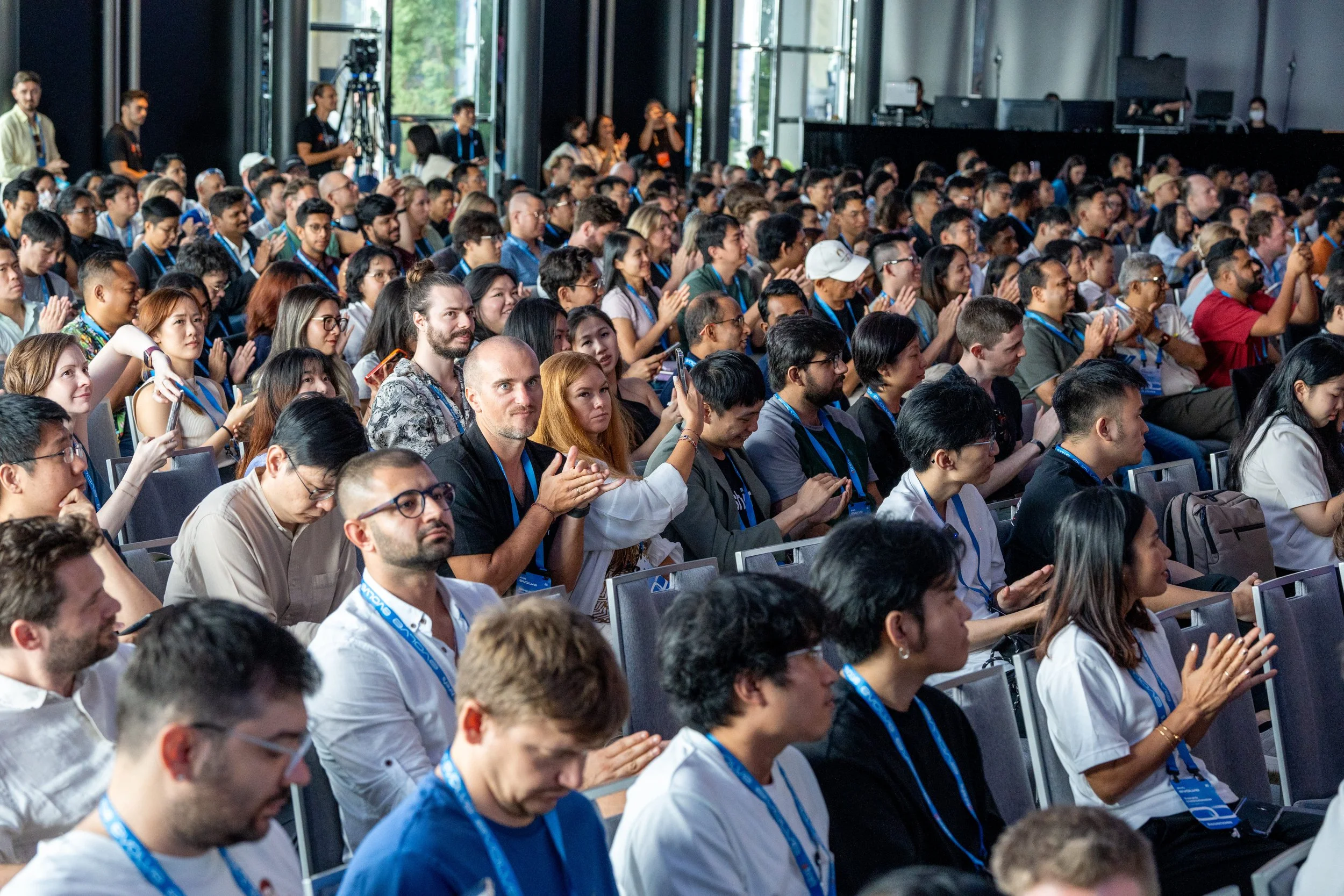
At Ahrefs, we also distinguished between enterprise prospects and other attendees.
Define your audience by job role, industry, company size, interests, and location. Then decide who you're really after: new prospects, existing customers, partners, or a broader professional community.
At Ahrefs, we separated enterprise prospects from other attendees. We used a company size threshold of at least 1,000 employees to segment leads for our enterprise sales team.
Avoid this mistake: Don't chase registration numbers. Hundreds of attendees don't mean much if they're not the people your event was built for. And one generic message for everyone usually makes the event less relevant to the people you want most.
3. Choose an Event Format That Matches Your Objectives
Your agenda should reflect what your audience wants to learn, discuss, or achieve, at their level of experience.
At Ahrefs, we kept the content beginner-friendly in markets where people were still building their SEO knowledge.
Leave room to breathe, too. Back-to-back talks leave attendees little time to meet each other or process what they've learned.
When we wanted to educate users who were relatively new to SEO, hands-on workshops were valuable because people could ask questions and learn how to use our tools.
For broader industry awareness and community building, conferences allowed us to bring together larger audiences.
When our objective was to engage enterprise decision-makers, smaller private dinners created more focused opportunities for conversation.
My advice is to select the format based on the outcome you want rather than assuming bigger events are always better.
4. Build an agenda that gives people a reason to come
Your agenda should reflect what your audience wants to learn, discuss, or achieve, at their level of experience.
At Ahrefs, we kept the content beginner-friendly in markets where people were still building their SEO knowledge.
Leave room to breathe, too. Back-to-back talks leave attendees little time to meet each other or process what they've learned.
5. Set a realistic budget and revenue model
Build a detailed budget covering venue, catering, production, staffing, and marketing. Don't forget the easy-to-miss costs: equipment rental, transport, payment processing fees, and contingencies.
For ticketed events, work out how many tickets and sponsorships you need to break even. Then review expected revenue against projected costs throughout planning. For Ahrefs Evolve Singapore, our revenue came from ticket sales and sponsorships.
That said, not every event needs to make money. For awareness, education, or relationship-building events, what matters is that the investment supports your wider marketing goals.
Avoid this mistake: Don't treat your budget as one estimated total. Know where the money goes, which costs are fixed, and where you have flexibility. Venue commitments, catering minimums, AV production, fabrication, and onsite surprises can all change your final bill.
6. Work backward to a realistic timeline
A small networking session might need only a few weeks. An international conference needs far longer, because attendees must arrange travel and you need to lock in speakers, sponsors, venues, and suppliers.
Work backward from the event date to set milestones, deadlines, and owners. A central project management system helps everyone track progress and dependencies, especially across countries.
Watch out for the domino effect. A late agenda can delay website updates, promo campaigns, printed materials, and production.
Avoid this mistake: Don't underestimate the workload. At Ahrefs, I worked with a lean team that handled most planning, creative, and marketing in-house while outsourcing specialist production. A single event could involve several departments, each with its own workload. Assess your team's capacity early and outsource where you need to. It's better to run fewer, high-quality events than to stretch your team too thin.
7. Bring sales in early
Event marketing shouldn't happen in a silo. At Ahrefs, I worked closely with sales, performance marketing, and go-to-market colleagues.
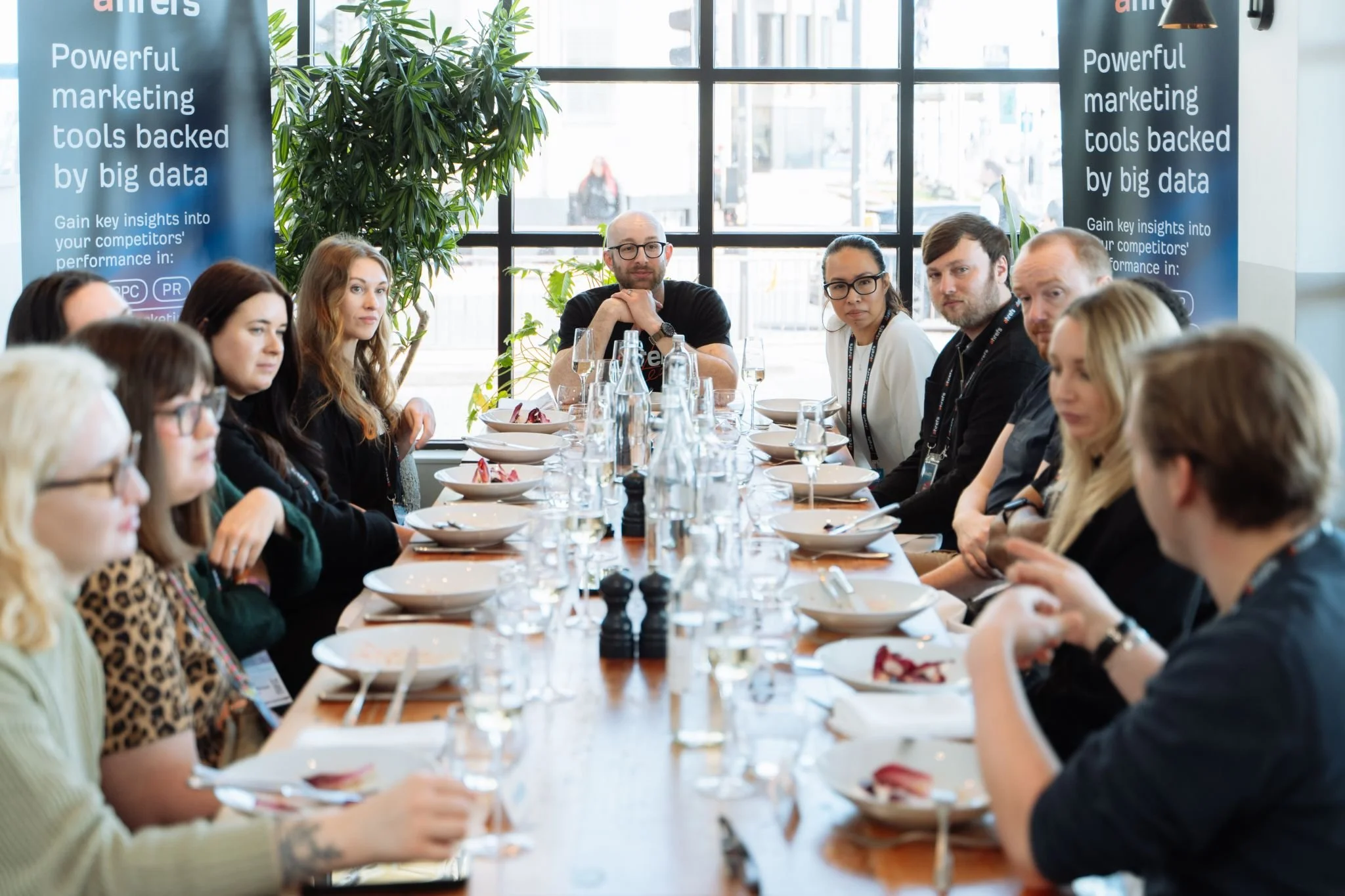
For enterprise-focused events, our sales team helped identify prospects and curate invitations for decision-makers.
If your event has lead or revenue goals, agree with sales on three things upfront: who you're targeting, what counts as a qualified lead, and who follows up afterwards.
8. Work with local teams for international events
International events add complexity, from time zones to cultural expectations.
At Ahrefs, we worked with regional colleagues, local partners, and existing users to promote events in their markets. This mattered most in countries where we had little on-the-ground presence.
Adapt to local languages, cultures, and preferences. That might mean inviting regional speakers, translating promo materials, or tailoring the program. The goal isn't to copy-paste the same event into a new country. It's to create something that resonates with the local audience.
9. Plan the Attendee Experience and Post-Event Follow-Up
Your event has to live up to the promises you made while promoting it. Pay attention to registration, speaker coordination, venue setup, networking time, and session quality.
After our conferences, attendees posted on LinkedIn about the content, the food, and how well-run the event was.
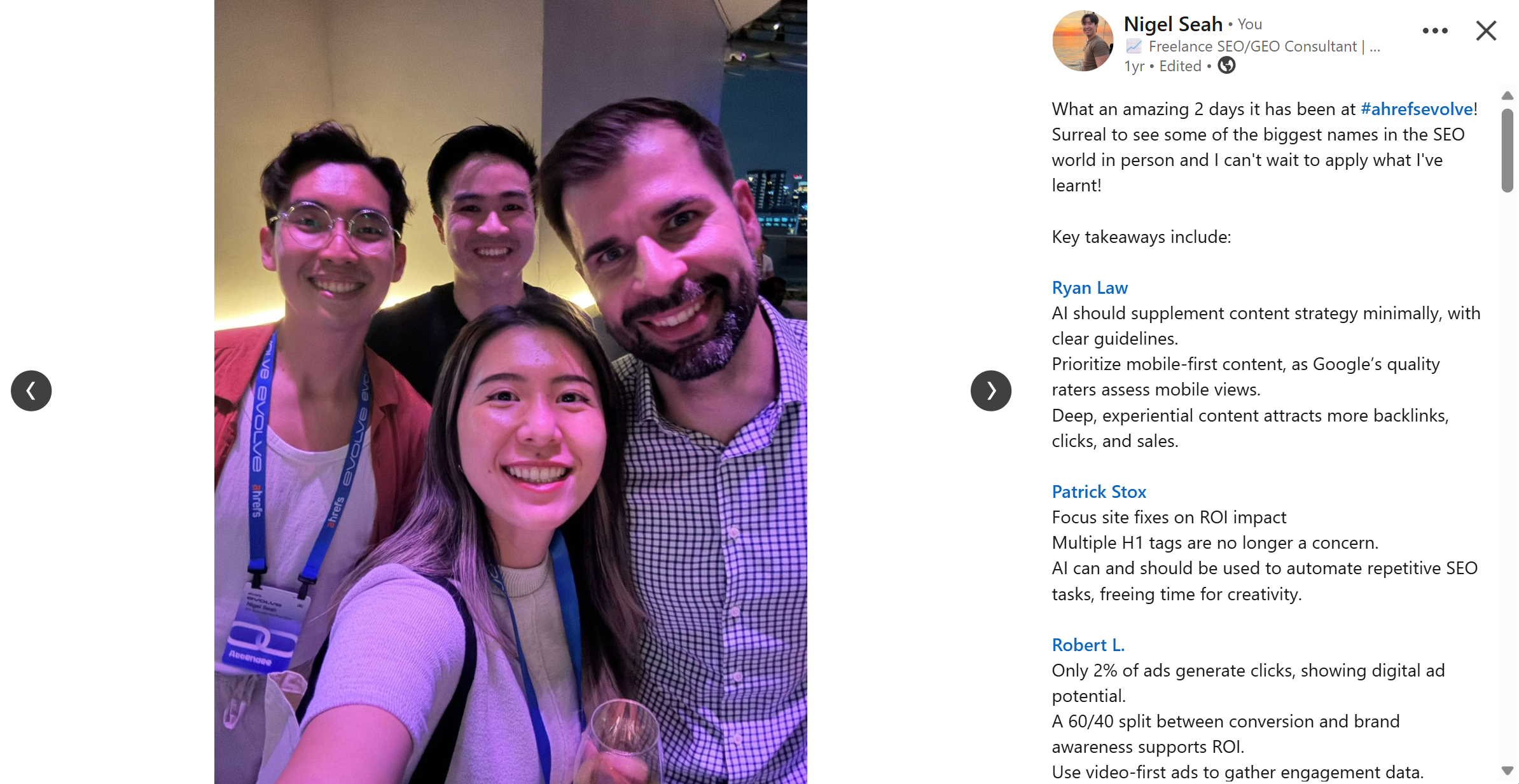
Small details matter as much as headline speakers. A great speaker might draw people in, but smooth registration and well-planned networking are what they remember.
Avoid this mistake: Don't let the relationship end when the event does. Plan your follow-up before the event and tailor it to each group:
Enterprise prospects: A personal follow-up from sales.
Workshop attendees: Extra learning resources or a session recording.
Community members: An invite to the next gathering.
Event Marketing Tactics to Promote Your Event
At Ahrefs, we used a combination of organic marketing, paid advertising, partnerships, and creative campaigns to promote our conferences.
For Ahrefs Evolve 2024 in Singapore, we applied several of these tactics to sell out a 500-person conference.
Here are ten approaches I've found useful.
1. Create a Dedicated Event Website and Registration Page
A dedicated event website gives prospective attendees a central place to learn about your conference and register or purchase tickets.
For Ahrefs Evolve Singapore, we initially hosted our event pages on the Ahrefs website, featuring:
Event details: Conference overview, agenda, speakers, and workshops.
Ticketing information: Prices, registration options, and FAQs.
Sponsors and venue: Sponsor information, venue details, and logistics.
Travel information: Local attractions and travel tips for international attendees.
When we expanded to San Diego, we built a standalone conference website to better support performance marketing, visitor behaviour tracking, and remarketing campaigns.
I'd recommend launching your website early, even if some details are still being finalised. At Ahrefs, we initially marked certain information as "TBD" and updated it as plans progressed. This also gave search engines more time to discover and index our event pages.
Finally, prioritise mobile usability, prominent registration buttons, and a simple checkout process. Visitors should immediately understand who the event is for, why it's worth attending, and how to register.
2. Promote the Event Through Your Existing Marketing Channels
Your company's existing audience is a natural starting point for event promotion.
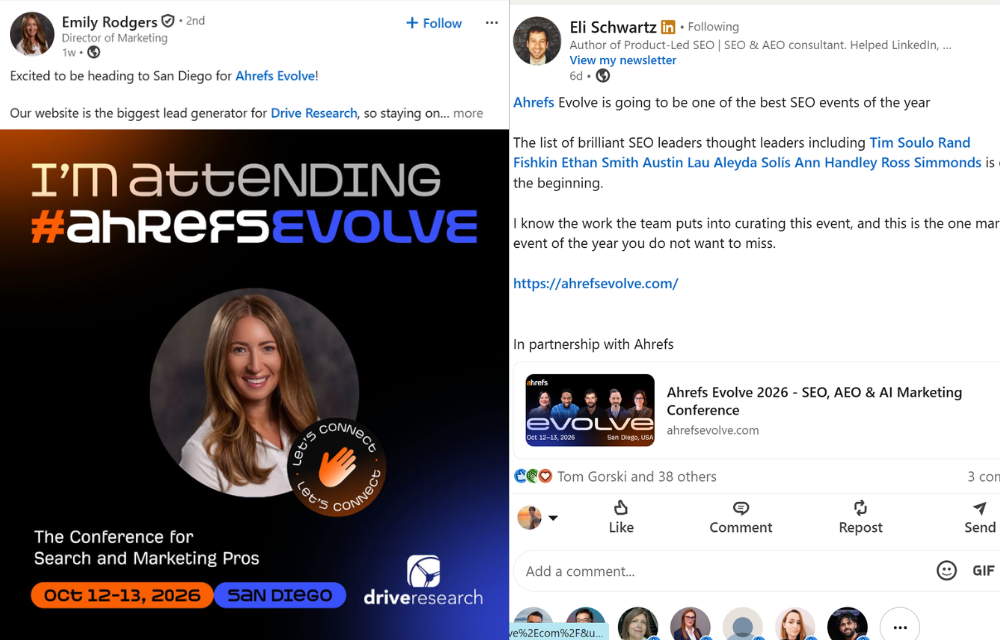
Participants of Ahrefs Evolve 2026 sharing about it on their LinkedIn pages
At Ahrefs, we made use of our website, email newsletter, social media accounts, and in-app messaging.
For Ahrefs Evolve 2024, we:
Sent multiple emails to our newsletter list of around 260,000 subscribers.
Posted announcements on LinkedIn and X.
Encouraged employees to share posts on their personal accounts.
Added event banners to high-traffic Ahrefs blog posts.
Sent targeted in-app messages to existing customers.
Don't assume everyone saw your announcement the first time. Promote the event several times, but change the angle each time. One post can introduce the conference. The next can spotlight a speaker, a workshop, or a ticket milestone.
3. Personalise Outreach to Customers and Prospects
For B2B events, personal invitations help you reach high-value prospects your usual channels might miss.
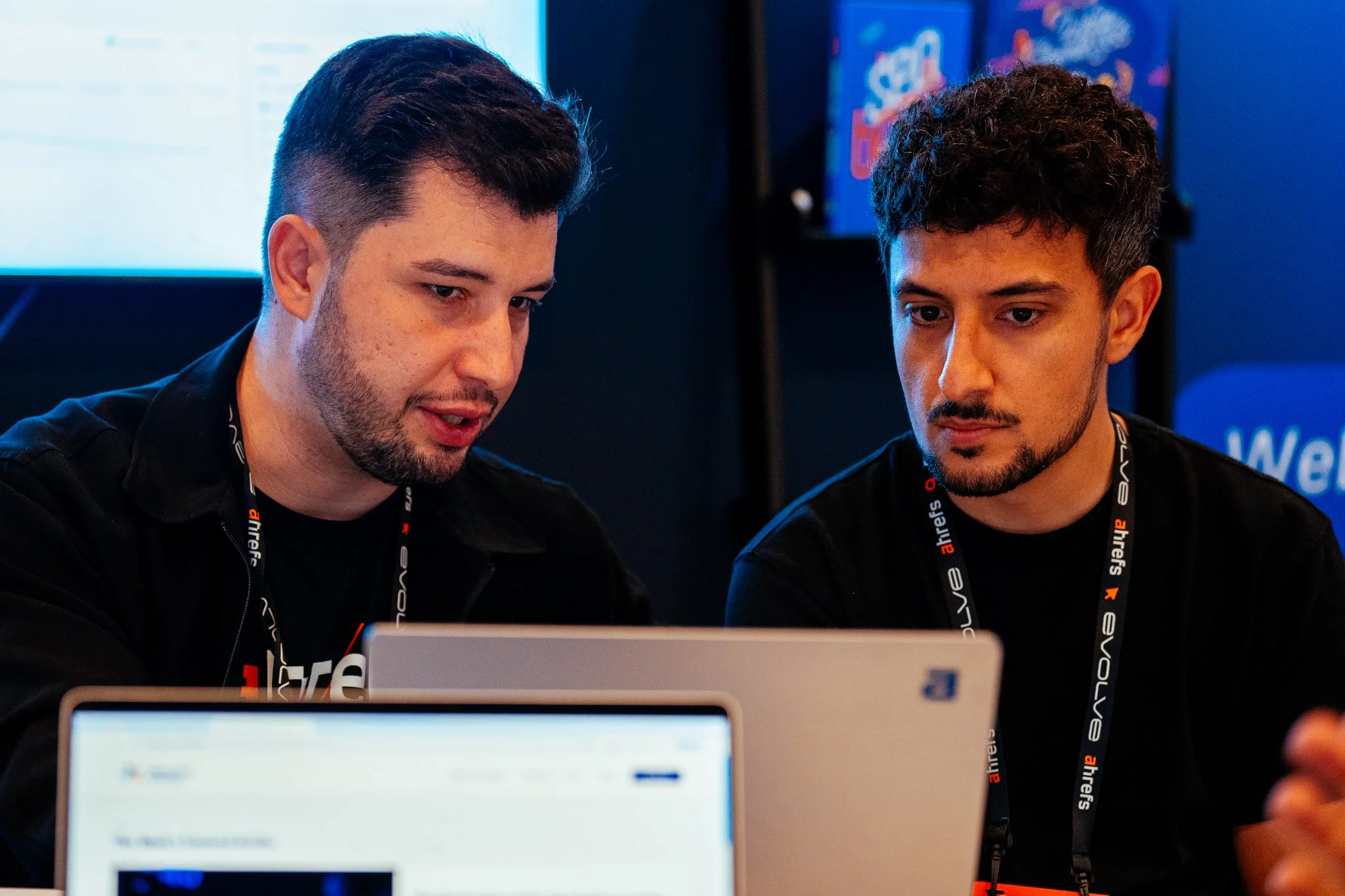
Our Singapore conference focused mainly on paid registrations from the SEO and digital marketing community. For San Diego, we added a targeted invitation strategy with our enterprise sales team. Each salesperson got 10 complimentary tickets to invite selected customers and prospects.
We used HubSpot, LinkedIn Sales Navigator, and HeyReach to support this outreach.
Work with sales early to pick priority accounts and tailor invitations to what would make each one want to attend. Just remember that free tickets aren't free.
When venue capacity is limited, every comp ticket is one you can't sell, so weigh ticket revenue against the business value of getting the right people in the room.
4. Offer Early-Bird Pricing and Group Discounts
Early-bird pricing gets people to register sooner. Group discounts encourage companies to send several employees.
For Ahrefs Evolve Singapore 2024, we offered early-bird pricing on regular and VIP tickets, plus group discounts of up to 20%.
For San Diego in 2025, we used four pricing tiers: Super Early Bird, Early Bird, Standard, and Last Chance. Each price increase gave us a natural promotional milestone.
When setting prices, factor in your target audience, expected attendance, costs, and revenue goals. You want registrations to grow without giving away your margin.
5. Use Speakers, Sponsors and Industry Partners to Promote Your Event
Speakers, sponsors, and partners can take your event far beyond your own channels.
For Ahrefs Evolve, we gave speakers personalized graphics, promo videos, and exclusive discount codes for their audiences. For example, SEO consultant Aleyda Solis promoted the conference in her SEOFOMO newsletter. Other speakers shared it on LinkedIn and TikTok.
We also worked with sponsors and industry communities through paid promotions and existing partnerships. Some sponsorship packages included complimentary tickets that sponsors could give to their own customers and contacts.
Give partners ready-made promo materials, but let them post in their own voice. A personal recommendation feels more authentic than a generic ad. And agree on promotional commitments early so partners can fit the event into their content calendars.
6. Use SEO and Content Marketing to Reach New Audiences
Content marketing helps you reach people who may be interested in your event but don't already follow your brand.
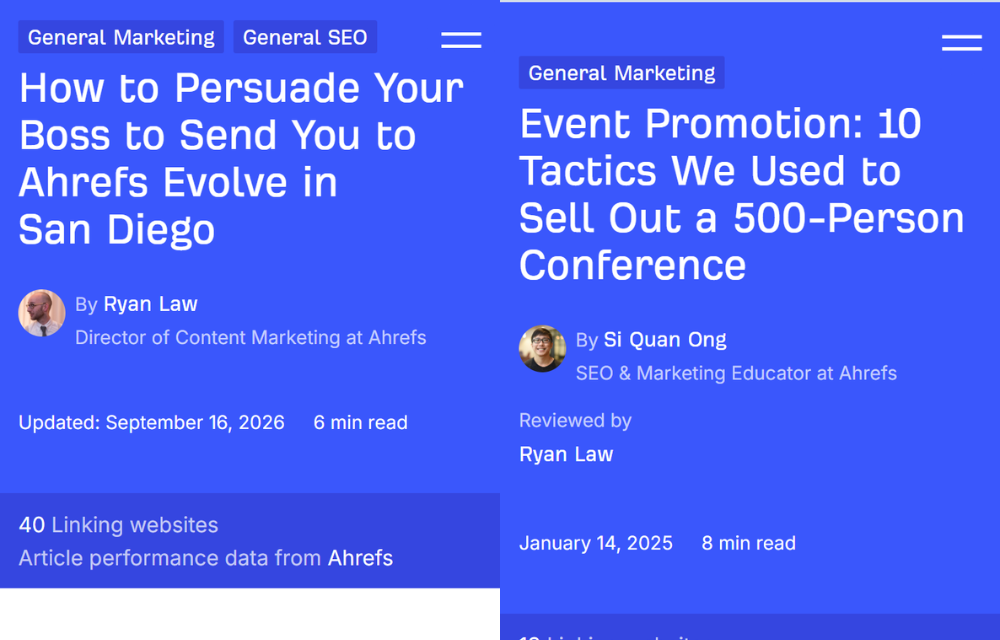
At Ahrefs, we published articles around relevant conference-related searches, including lists of SEO and content marketing events.
These articles created opportunities to introduce Ahrefs Evolve to people actively researching industry conferences.
We also published content addressing practical barriers to attendance.
For example, we created a guide explaining how professionals could persuade their employers to approve their attendance at Ahrefs Evolve, including an email template they could adapt.
This is an approach I'd recommend because it helps prospective attendees solve an actual problem instead of simply asking them to buy a ticket.
You can also use YouTube videos, podcasts, and other educational content to introduce your event to relevant audiences.
7. Cross-Promote Through Industry Events and Communities
If you're already organizing or sponsoring smaller events, use those opportunities to promote your larger conferences.
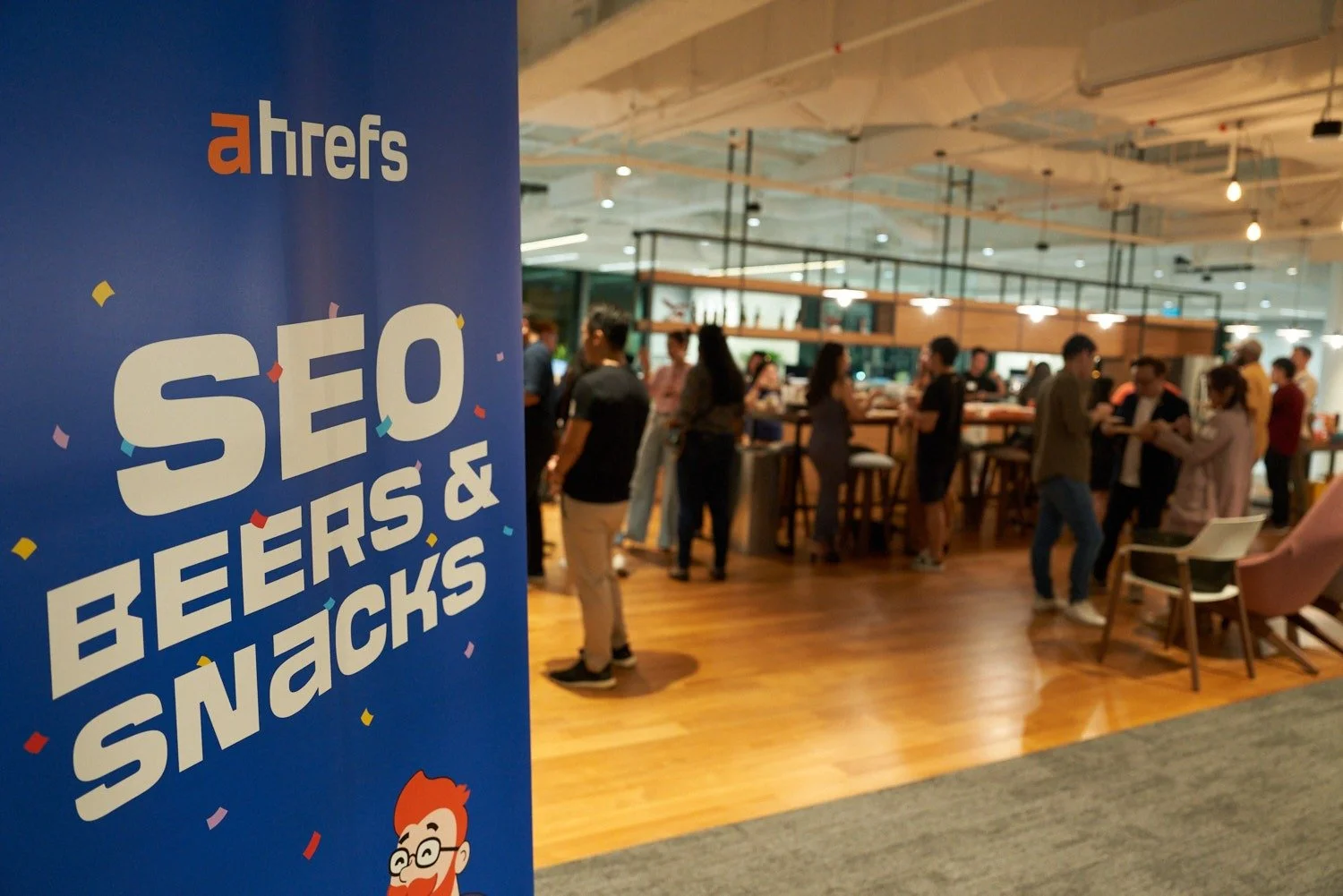
At Ahrefs, we regularly held networking sessions, workshops, and panel discussions alongside our flagship event.
During these gatherings, we promoted Ahrefs Evolve using banners and QR codes that attendees could scan to purchase tickets.
Our hosts could also mention the upcoming conference during the event.
We extended this approach to industry conferences we sponsored or attended.
For example, participating in B2B marketing events allowed us to introduce Evolve to professionals who were already interested in industry learning and networking.
I'd recommend focusing on events with audiences that overlap with your own target market.
7. Showcase Your Venue and Event Experience
Content helps you reach people who are interested in events like yours but don't follow your brand yet.
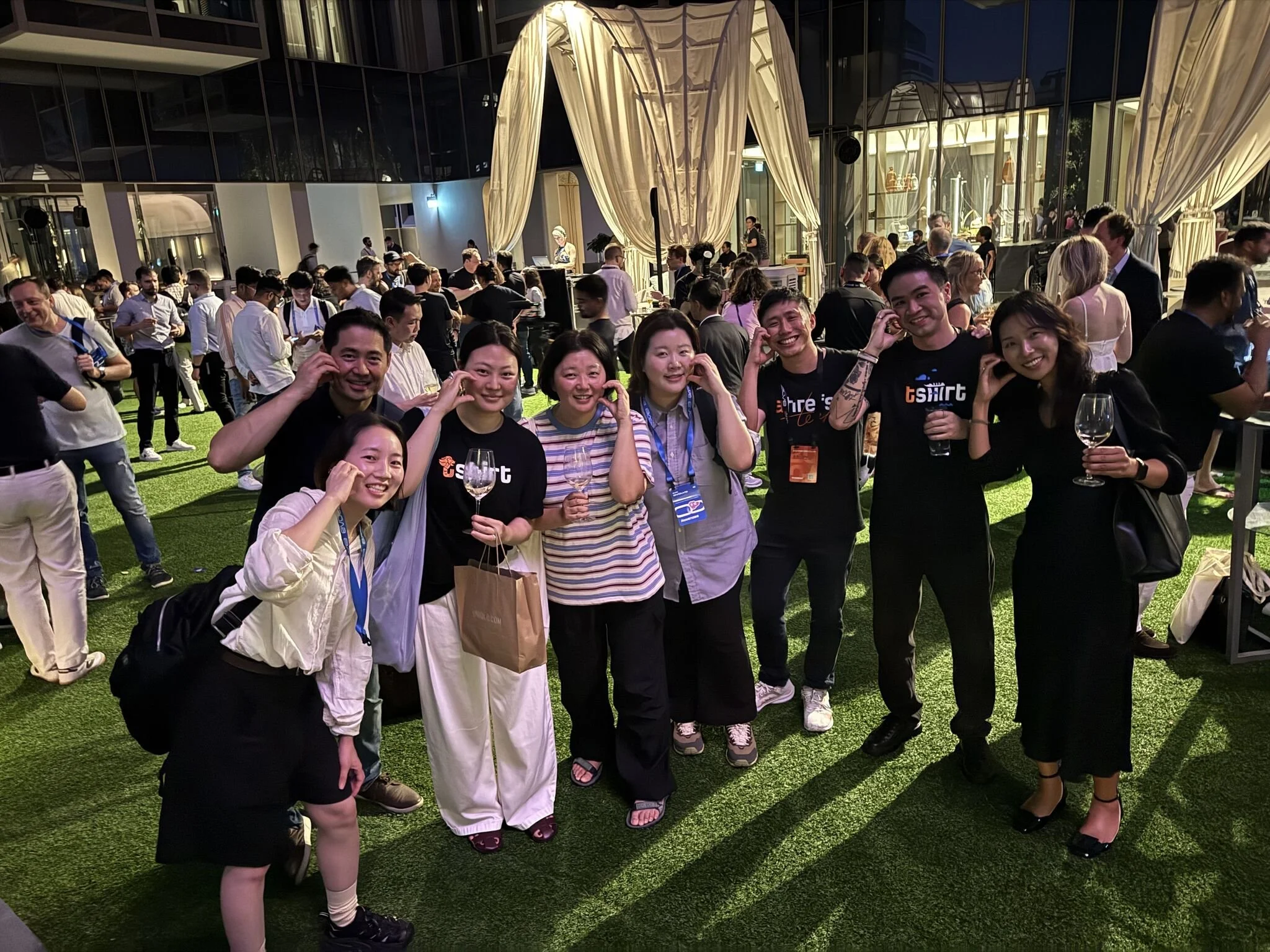
We published articles targeting conference-related searches, like lists of SEO and content marketing events. Each one was a chance to introduce Ahrefs Evolve to people actively researching conferences.
We also created content to remove barriers to attending. For example, we wrote a guide on how to convince your boss to approve your Ahrefs Evolve ticket, complete with an email template.
I love this approach because it solves a real problem for prospective attendees instead of just asking them to buy a ticket. You can do the same with YouTube videos, podcasts, and other educational content.
8. Show off your venue and build anticipation
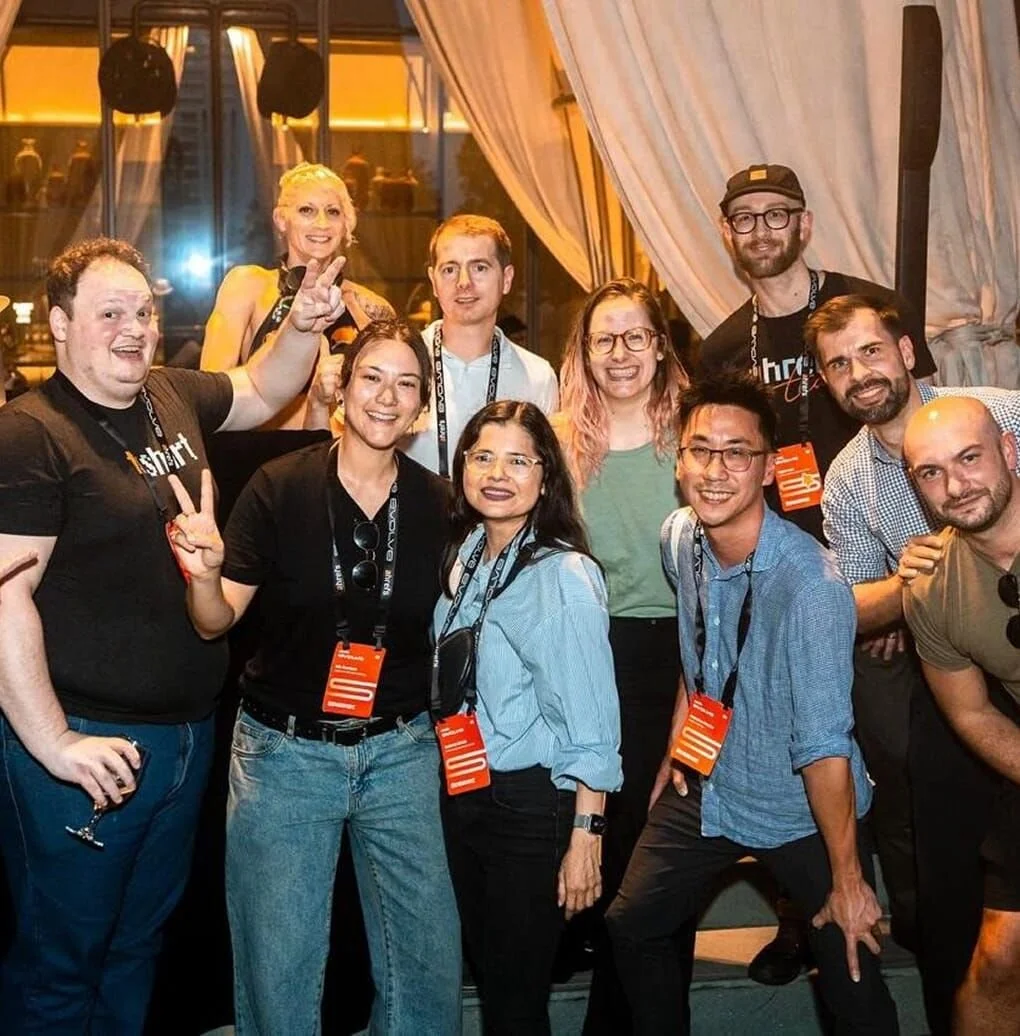
For in-person conferences, the venue is part of what people pay for. That matters even more for international events, where people have to book flights and hotels.
Ahrefs Evolve 2024 took place at Pan Pacific Orchard in Singapore. Instead of just listing the venue name, we made a video showing off its architecture, high ceilings, and networking spaces. Our team also filmed content while exploring the venue so people knew what to expect.
As the event got closer, we built momentum:
We announced when tickets were selling fast or a ticket category sold out.
We highlighted how international our attendee list was.
We made social graphics attendees could use to announce they were going.
We ran a giveaway for extra buzz.
This only works if the excitement is real. Actual speaker announcements, attendee posts, and ticket milestones give people a genuine reason to talk about your event.
9. Experiment With Creative Offline Marketing
Not all event promotion needs to happen online.
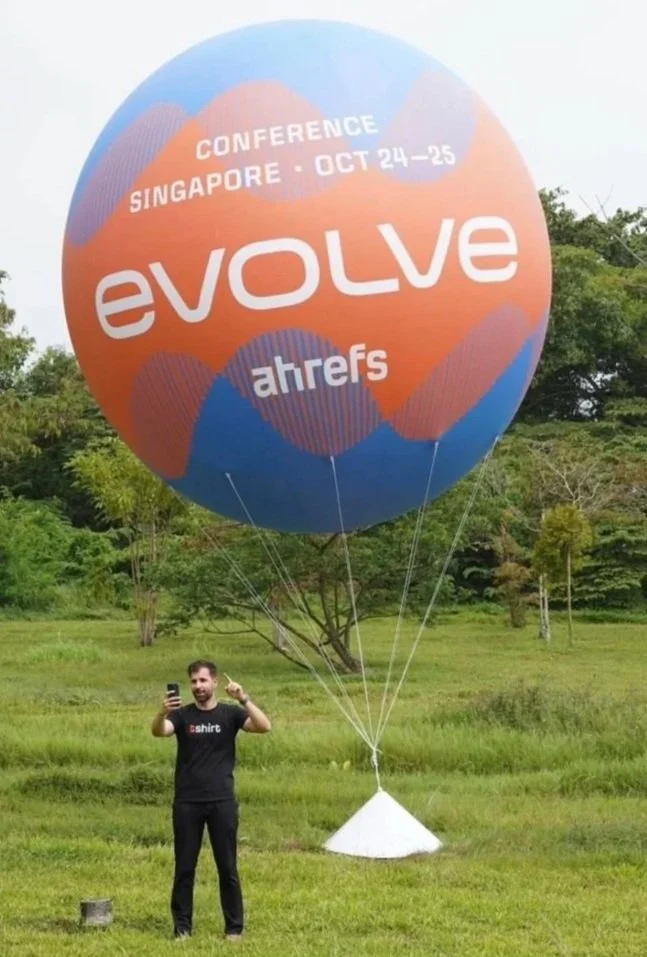
For Ahrefs Evolve Singapore, we tried something unusual: a giant branded helium balloon. We flew it, ran a photoshoot, and used the visuals as promotional creatives. It looked nothing like the event ads people usually scroll past.
This is one of my favorite parts of event marketing. You can bring a creative idea into the physical world, then turn it into content that reaches people online.
You don't need a giant balloon for every event. The point is to find creative ways to stand out that still fit your audience and brand.
10. Use Paid Advertising to Expand Your Reach
We tried to squeeze as much as we could out of organic promotion. But paid ads helped us reach people outside our existing audience.
For Ahrefs Evolve 2024, we spent around $8,000 on Facebook and Instagram ads.
Paid campaigns are useful when you need to reach new audience segments or push ticket sales in a short window. Just don't rely on them as your only source of registrations. Your website, content, partnerships, and existing audience should all work together.
How to Measure Event Marketing Success
1. Registrations and Attendance
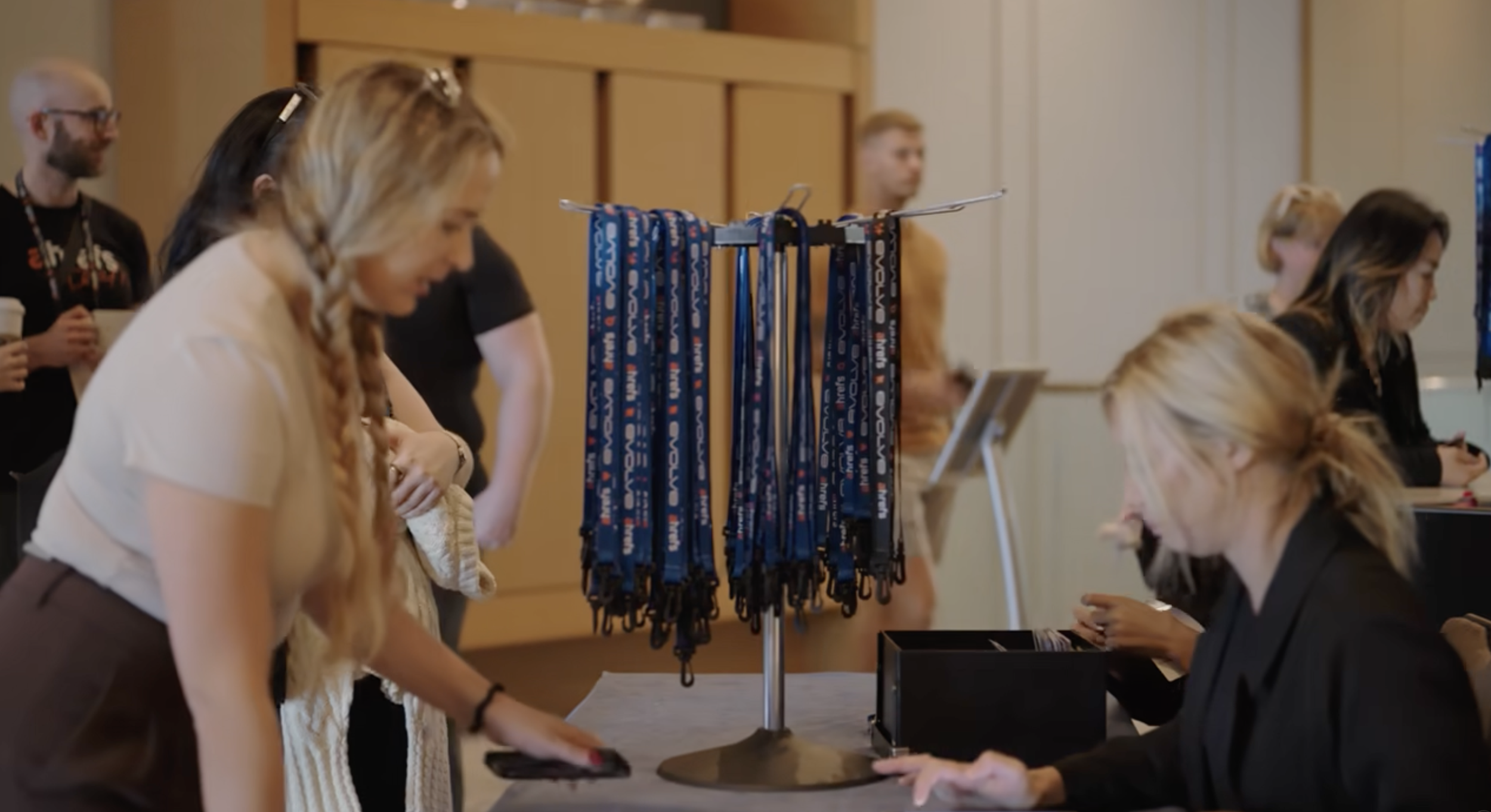
Alt text: Participants registering for Ahrefs Evolve San Diego
Attendance is the simplest measure of how an event performed.
Track registrations, actual attendance, and whether the people who showed up match your target audience.
2. Ticket Revenue, Sponsorships, and Profitability
For paid events, financial performance is a key metric.
Track ticket and sponsorship revenue against total event costs, and compare actual spending with your approved budget.
Keep an eye on ticket sales during the promotional period too. They'll tell you when to adjust pricing, marketing, or spend.
3. Qualified Leads and Sales Opportunities
For business development events, lead quality matters far more than lead quantity.
Depending on your goals, track:
Qualified leads: Attendees who match your ideal customer profile and show real interest.
Target account engagement: Which priority accounts attended and talked to your sales team.
Meetings and conversations: Meaningful business discussions during or around the event.
Pipeline generated: New sales opportunities that came from the event.
Pipeline influenced: Existing opportunities that moved forward after the event.
Closed-won revenue: Deals that closed with a clear contribution from the event.
Know the difference between pipeline generated and pipeline influenced. A prospect who discovers your product at a conference is a new opportunity. An existing prospect who moves closer to buying after an executive dinner is influenced pipeline.
And be careful with attribution. Events work alongside your other marketing and sales activities, so don't credit an entire deal to one event without looking at the whole customer journey.
4. Brand Awareness and Social Engagement
Awareness is harder to measure than ticket sales, but organic conversations are a good signal.
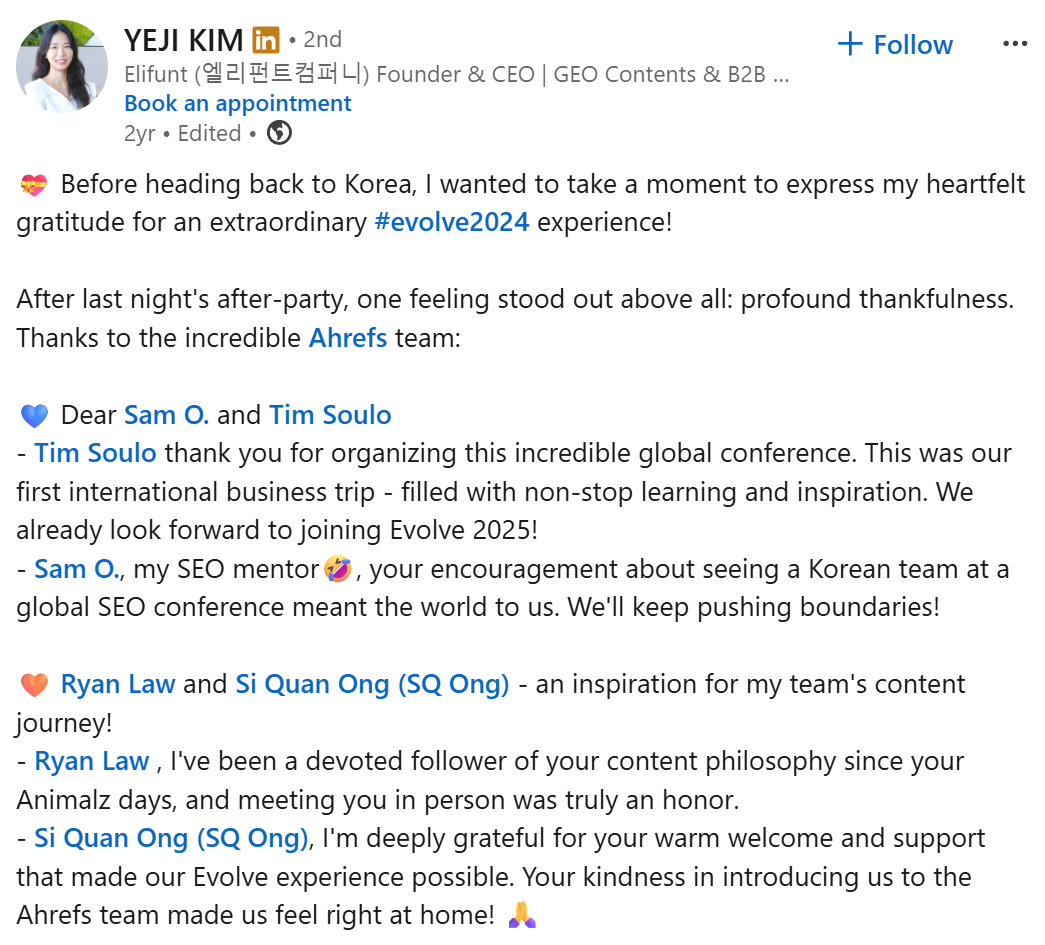
After Ahrefs Evolve, attendees shared their experiences on LinkedIn, from the speakers and sessions to the networking and organization. Those posts extended the conference's reach long after it ended.
To measure awareness and engagement, track:
Social mentions: Posts referencing the event or your company.
User-generated content: Attendee photos, videos, testimonials, and posts.
Social engagement: Reactions, comments, and shares.
Website traffic: Visits to event pages and related content.
Community growth: New members, repeat attendees, and participation in future activities.
Branded search interest: Changes in search demand for your event or company name.
Look at quality, not just volume. One thoughtful LinkedIn post about what someone learned can be worth more than thousands of passive impressions.
5. Attendee Feedback and Experience
Finally, check whether the event delivered on its promise.
For Ahrefs Evolve, post-event feedback and social conversations showed us what resonated most: the speakers, the sessions, and the networking.
Gather feedback through surveys, informal conversations, and your team's own observations. Focus on:
Overall satisfaction: How attendees rated the event.
Content relevance: Whether sessions addressed their interests and challenges.
Networking value: Whether they made meaningful connections.
Event organization: Registration, communication, venue, catering, and logistics.
Likelihood of returning: Interest in future editions.
Areas for improvement: What they'd change next time.
Ask speakers, sponsors, partners, and internal stakeholders too. They often spot issues attendees miss. For recurring events, this feedback tells you what to keep, improve, or rethink.
Bringing Your Event Marketing Metrics Together
Here's a quick cheat sheet for matching metrics to your event goals:
Event goal
Metrics to prioritize
Brand awareness
Relevant social mentions, content engagement, event website traffic
Lead generation
Qualified leads, target account engagement, meetings
Pipeline acceleration
Opportunity progression, pipeline influenced, sales follow-up
Customer education
Attendance, content feedback, relevant product engagement
Community building
Repeat attendance, participation, ongoing engagement
Ticketed conference
Ticket revenue, attendance targets, sponsorships, profitability
Customer experience
Satisfaction, feedback, likelihood of returning
Once the event wraps, share a clear post-event report. Sales, marketing, finance, customer success, and leadership will each care about different results, so make it easy for everyone to see what worked and what to improve.
Common Event Marketing Mistakes to Avoid
1. Not Agreeing on KPIs From the Beginning
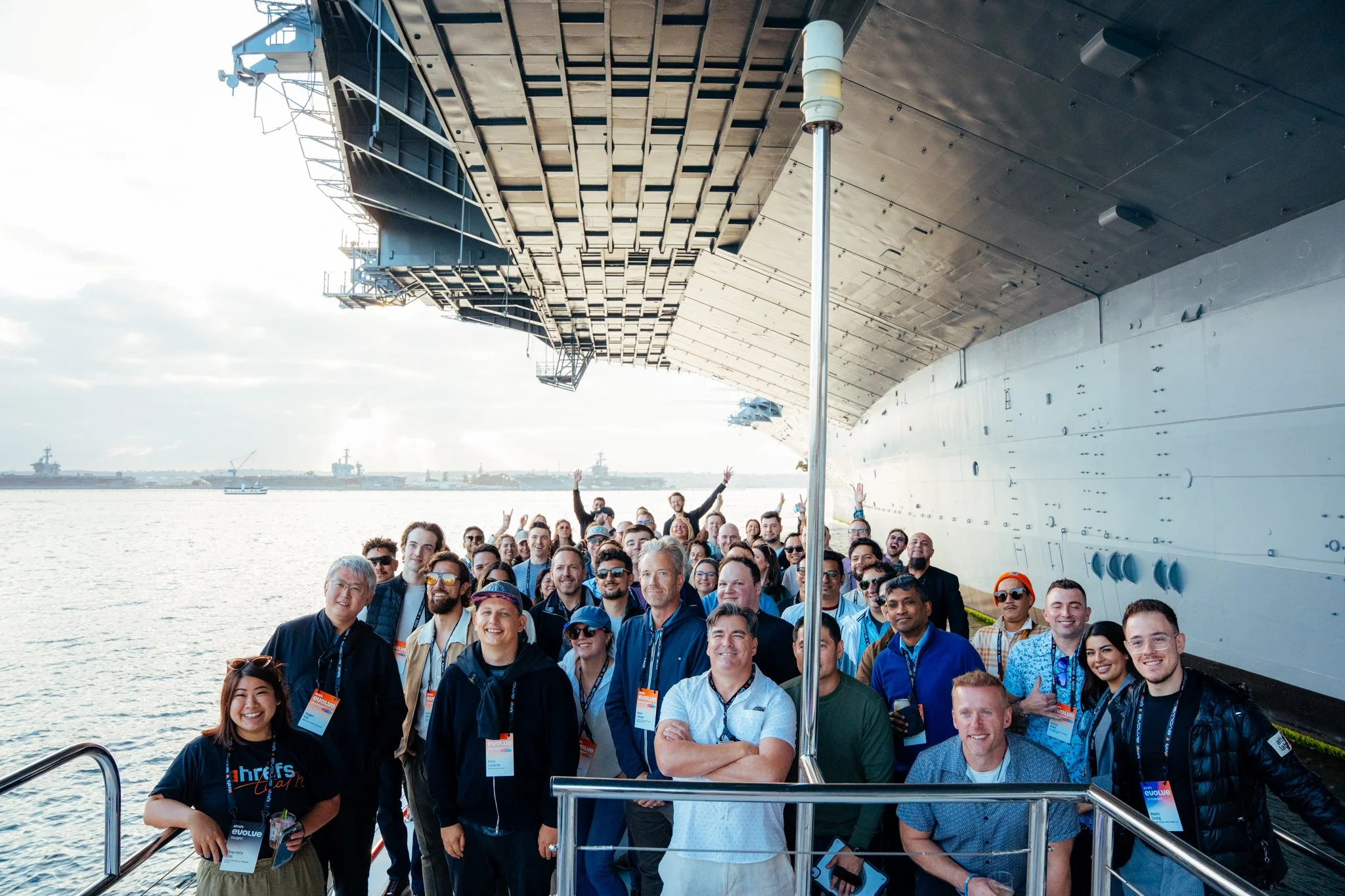
A common event marketing mistake is starting to plan before stakeholders agree on what success looks like. Without agreed KPIs, it's hard to judge an event's performance or make decisions when plans change.
I've seen this happen when event goals are too broad or hard to measure. Marketing might define success as attendance and brand awareness. Sales might care more about engaging strategic accounts and progressing deals. Leadership might focus on revenue or overall investment. These goals don't have to conflict, but they do need to be prioritized.
How to avoid it:
Agree on the event's objectives with marketing, sales, and leadership before major planning starts.
Choose one primary KPI and a few secondary ones, so you know which goal wins when trade-offs come up.
2. Failing to Define Your Budget Clearly
Another event marketing mistake is setting a budget as an estimated total without knowing what sits inside it. Event costs shift as planning moves along, and a vague budget makes overruns hard to spot.
One lesson I've learned is that you need to know where the money is going, which costs are fixed, and where you have flexibility. Venue commitments, catering minimums, AV production, fabrication, and unexpected onsite requirements can all change an event's final cost.
How to avoid it:
Set clear spending limits and review supplier quotes carefully.
Track costs throughout planning, not just at the end.
For ticketed conferences, regularly compare expected ticket and sponsorship revenue against projected costs.
3. Focusing on Attendance Numbers Instead of the Right Audience
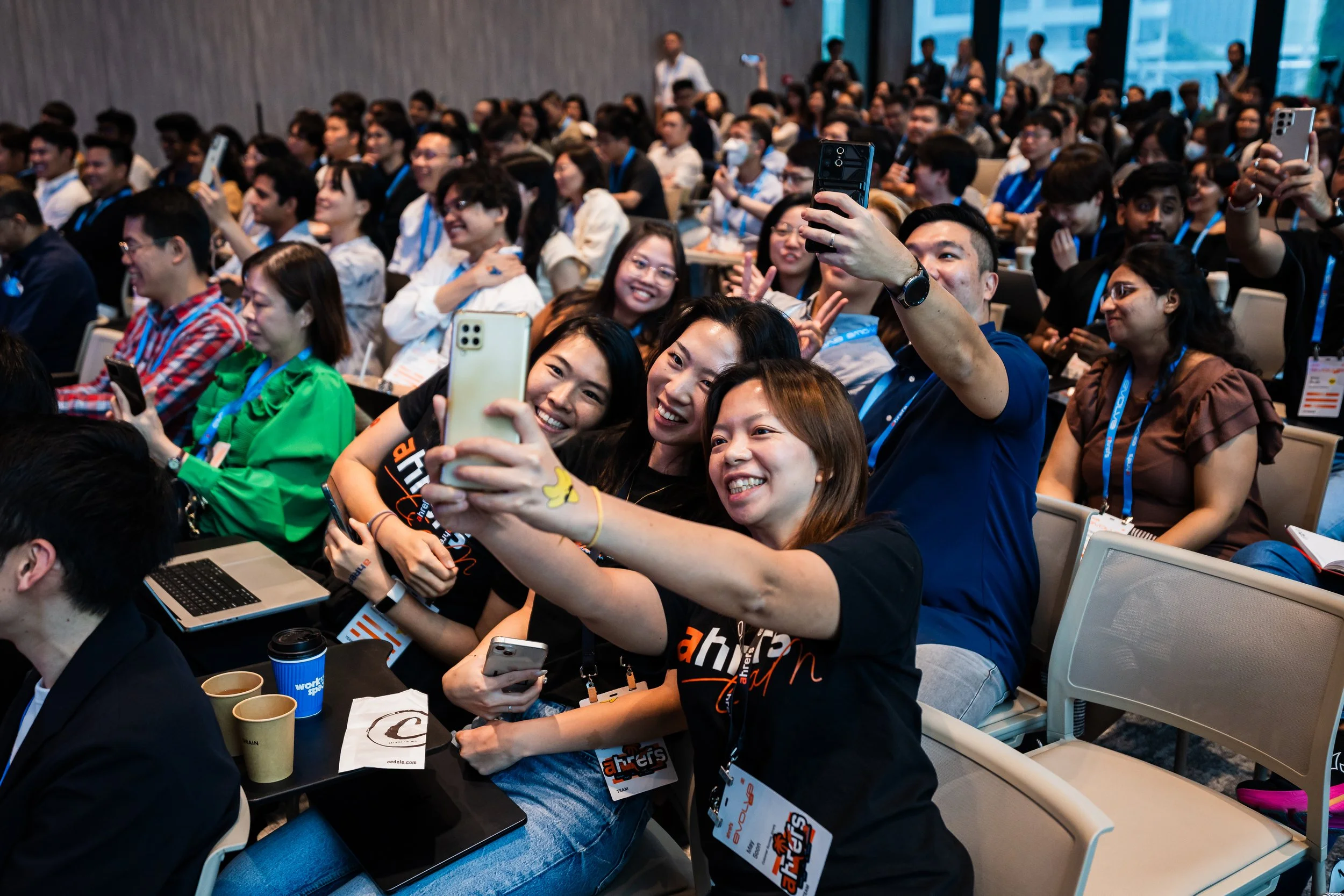
A full room doesn't always mean a successful event. Getting hundreds of people into a conference won't help if they aren't the audience the event was built for.
If your goal is to reach enterprise customers, for example, the relevance of each attendee matters far more than the size of the crowd. And trying to attract everyone with the same message usually makes an event less relevant to the people you want most.
How to avoid it:
Define your ideal attendees early, and understand what motivates them to come.
Build the event experience and your promotion around their needs.
Judge success on audience quality, not just registration volume.
4. Neglecting Relationships After the Event
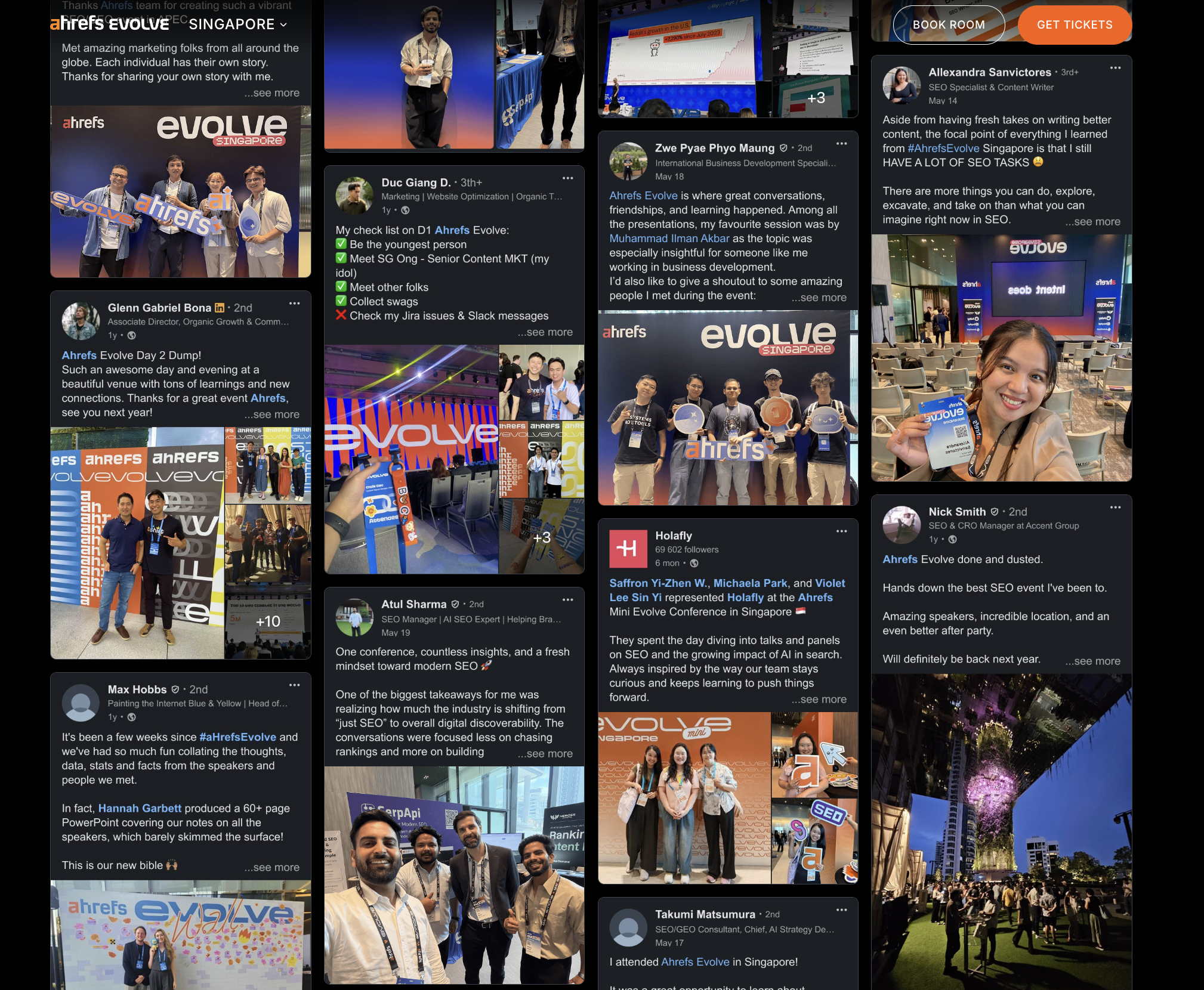
An event shouldn't be the end of your relationship with attendees.
An event shouldn't be the finish line. Attendees may still have questions about your product, want to connect with your team, or be interested in your next event.
One thing I particularly enjoyed at Ahrefs was seeing conversations carry on long after our conferences ended. An event's value doesn't stop when the venue closes, as long as you give people a reason to stay engaged.
How to avoid it:
Prepare your follow-up process before the event, especially if you're using events to generate leads.
Share useful resources and keep relevant conversations going.
5. Underestimating the Time and Resources Needed to Deliver an Event
One mistake I'd encourage event marketers to avoid is underestimating how much work an event takes, especially when scaling from small gatherings to international conferences. Bigger events need far more coordination across teams, suppliers, and timelines.
At Ahrefs, we ran a lean events team. We handled most of the planning, creative work, and marketing in-house, and outsourced specialist production to external suppliers. With everyone juggling responsibilities across departments, coordinating the event website, promotional materials, and onsite production was a real challenge.
How to avoid it:
Assess your team's capacity early and set realistic deadlines.
Outsource specialist work where you need to.
Run fewer, high-quality events rather than stretching your team too thin.
Turn Events Into a Marketing Channel
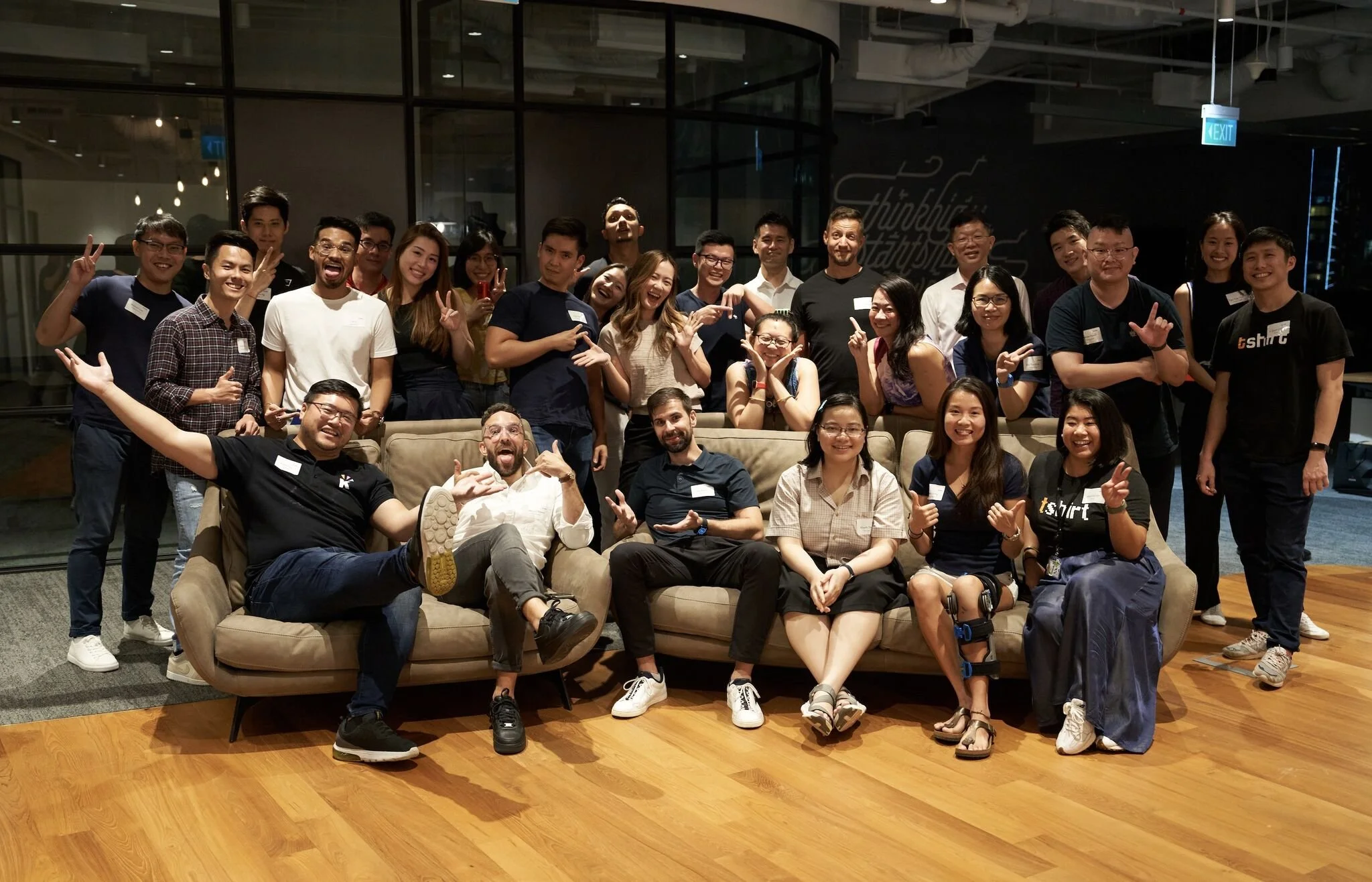
You don't need to start with a massive conference.
At Ahrefs, our events grew from small networking sessions into international conferences. Along the way, they became a way to educate customers, grow the SEO community, build brand awareness, and support enterprise sales.
Smaller events are the perfect place to learn about your audience, build relationships, and test ideas before you scale up.
The bottom line is this: event marketing isn't about getting the most people into a room. It's about getting the right people into the room, giving them an experience worth remembering, and connecting it to your business goals.