
What is a Brand Identity & How to Develop One
What is a Brand Identity & How to Develop One
When people think about brand identity, they often think about a logo. A logo is certainly part of it, but it is only one component of a much larger system.
To me, brand identity is ultimately about communication. It is how a business presents itself, what it wants people to understand and how it creates a consistent impression across every touchpoint.
A strong brand identity should make it easier for people to recognise who you are, what you offer and why they should trust you. The process begins with strategy, followed by the visual identity and, finally, the application of that identity across different platforms and materials.
Why Is Brand Identity Important?
It Communicates What the Business Represents
Every business has many things it wants to say, but a brand cannot communicate everything at once.
A clear brand identity helps the business identify the most important message and present it in a way that people can understand quickly.
That message may be about the quality of the product, the reliability of the company, the experience it offers or the type of customer it serves.
The purpose of the identity is to distil these ideas into something clear and recognisable.
It Builds Recognition and Trust
People are more likely to trust a business when it presents itself clearly and consistently.
A strong identity makes the brand feel more established because its website, logo, marketing materials and other touchpoints appear connected.
The audience should not have to repeatedly work out what the company does or what it stands for. The identity should make that information easier to understand.
It Helps the Brand Stand Out

Most businesses operate in crowded markets where customers have many alternatives.
A distinctive brand identity helps a company separate itself from competitors that may offer similar products or services.
This distinction does not always have to come from complicated visuals. It can come from a clear message, a recognisable personality or a specific way of presenting the business.
What Are the Main Elements of a Brand Identity?
Brand Strategy
The process should begin with a strategy.
Before thinking about colours, fonts or logos, I need to understand the business, its objectives and the position it wants to occupy in the market.
This includes looking at who the audience is, what the business wants to communicate and how it should be perceived.
The strategy provides the reasoning behind every creative decision that follows.
Audience and Market Positioning
A brand identity should be created for a specific audience.
You need to understand who the business is trying to reach, what those people value and how they are likely to interpret the brand.
The identity also needs to reflect the company’s market positioning.
A luxury brand should not necessarily look or communicate like a mass-market product. A fast-moving consumer brand may need a different identity from a business offering highly bespoke services.
Brand Personality
A brand needs a recognisable personality.
It may be professional, playful, premium, approachable, bold or understated. The right personality depends on the audience, positioning and nature of the business.
This personality should influence both the visual direction and the way the brand communicates.
Visual Identity
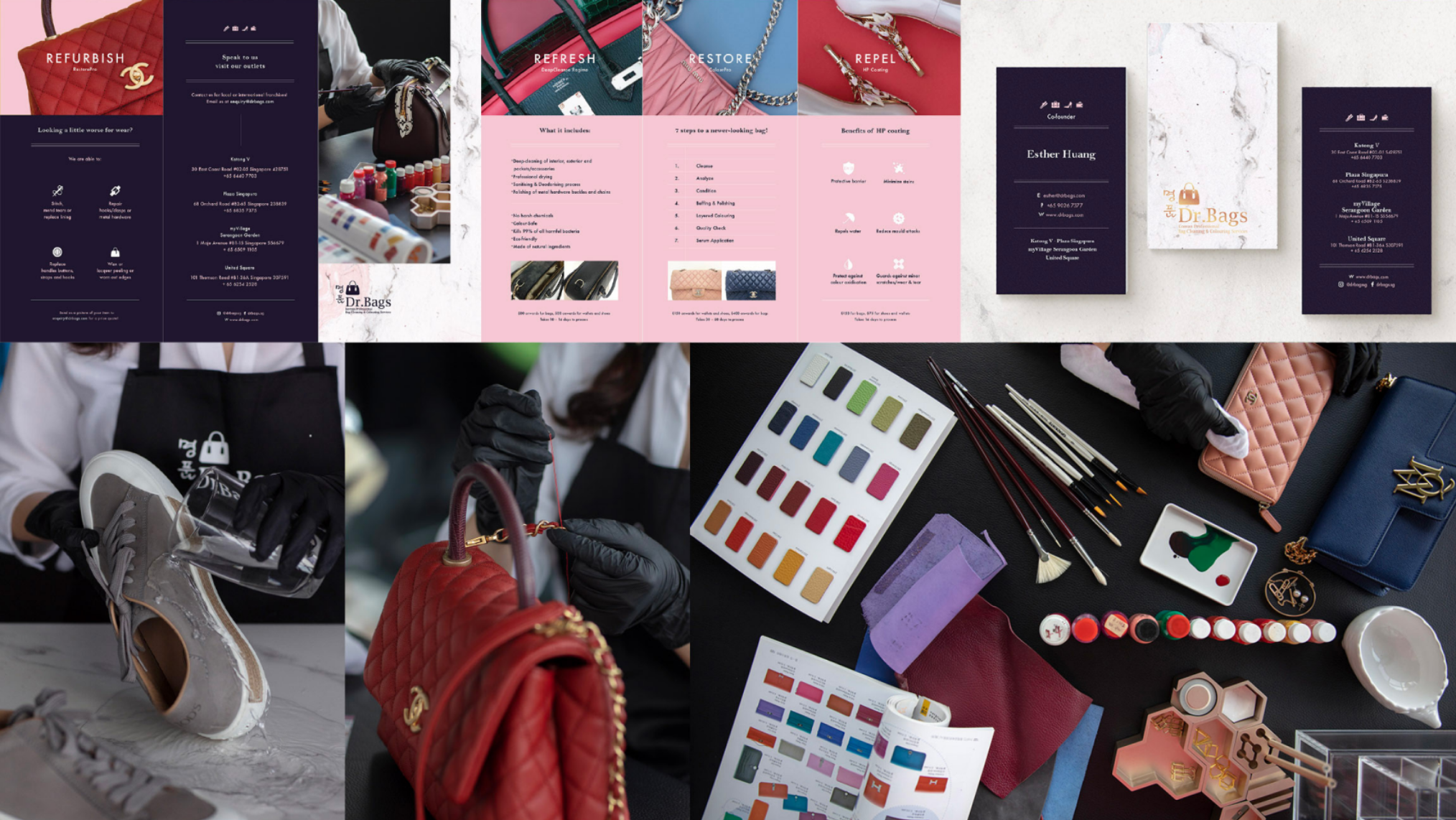
Rebranding work Sixmoredays did for Dr Bag.
Once the strategy is clear, it can be translated into a visual identity.
This may include the logo, colour palette, typography, imagery and other design elements associated with the brand.
These elements should not be selected only because they look attractive. They should support the positioning and personality established during the strategy stage.
Brand Applications
A brand identity needs to work beyond the initial design presentation.
It should be applied consistently across the different places where customers encounter the business, including websites, social media, printed materials, advertisements, and other communication channels.
These applications show how the identity works in real situations rather than as an isolated logo or visual concept.
What Makes a Strong Brand Identity?
Clarity at First Glance
A strong brand identity should make it easier for people to understand who you are and what you do.
The role of the brand identity is not to say everything. It is to communicate the most important ideas clearly and allow the rest of the brand experience to provide additional detail.
When someone visits your website or sees your brand for the first time, they should not need a lengthy explanation before they understand the business.
The identity should communicate the essential information as quickly as possible.
Effectiveness Over Complexity
A brand identity does not need to be sophisticated or abstract to be effective.
For example, some people may consider a burger symbol in a restaurant logo too obvious. However, if customers can immediately recognise what the business sells, the identity may still be doing its job well.
The key question is not whether the design appears clever. The key question is whether it communicates effectively to the intended audience.
Consistency Between Strategy and Design
The visual identity should make sense based on the strategy.
If a brand claims to be premium but its visual direction appears cheap or inconsistent, the identity will feel disconnected.
The audience, positioning, personality and visual design should support one another. The brand becomes stronger when every element communicates the same overall message.
How to Craft a Brand Identity
Start with the Brand Strategy
The process begins with strategy rather than design.
Before creating the visual identity, I need to understand how the business intends to market itself and what it wants people to know.
This prevents the visual direction from being developed without a clear purpose.
Identify the Key Audience
The next step is to understand the main audience the brand wants to reach.
The identity needs to make sense to the people the business is trying to communicate with.
Knowing the audience provides clearer direction for the rest of the branding process.
Establish the Market Positioning
The business also needs to define where it sits in the market.
It may be high-end, mass-market, fast-moving or highly bespoke.
The identity should reflect this positioning so that the visual direction makes sense for the type of business being presented.
Define the Brand Personality
The brand’s personality should also be considered before moving into design.
This helps determine how the business should present and communicate itself.
The personality forms another part of the strategy that will eventually shape the visual identity.
Distil the Strategy into a Visual Identity
Once the audience, positioning and personality have been established, the information can be distilled into the visual identity.
The final design should make sense based on what was discovered during the strategy stage.
The visual work should not be separated from the business strategy behind it.
Apply the Identity Across Different Interfaces
After the visual identity has been completed, it needs to be applied across the places where the brand communicates.
This may involve digital interfaces, print graphics or other brand materials.
The application stage demonstrates how the identity works beyond the initial design itself.
Keep the Message Simple
Throughout the process, it is important to avoid trying to communicate too many things at once.
Businesses often have thousands of things they want to say, but the identity needs to focus on the essential message.
Being able to communicate what the business does at one glance is simple in theory, but often difficult in practice.
Trust the People You Hire
Many businesses hire branding professionals because they are unsure what they want or cannot communicate it clearly.
Once they have chosen someone to handle the branding, they also need to trust that person’s expertise.
Trust is an important part of the process because the agency has been hired to help clarify and communicate the brand effectively.
The Best Brand Identities Make Their Message Clear
It is about communicating what a business does, what it represents and what people need to understand about it.
The process begins with strategy. You need to identify the audience, positioning and personality before translating those ideas into a visual identity and applying it across different interfaces.
Ultimately, a strong brand identity should be simple and effective. If people can understand who you are and what you do at a glance, the identity is already doing an important part of its job.