
Best Marketing Strategies for Edtech Companies
Marketing an EdTech company is not as simple as running ads and waiting for sign-ups to come in. Education is a high-trust, high-consideration purchase, particularly when parents, students, schools, and teachers all have a significant influence on the final decision.
Unlike many consumer products, people do not usually buy education on impulse. They need to believe that the programme is credible, the learning experience is effective, and the investment will lead to real progress. This is why EdTech marketing requires more than one strong channel.
In this article, I’ll share what I’ve learned from marketing in the education space, including the channels, customer behaviours, and trust-building strategies that matter most for EdTech companies.
What Makes EdTech Marketing Different From Other Industries?
The Buyer and the User Are Often Not the Same Person
One of the biggest differences in EdTech marketing is that the person paying for the product is not always the person using it.

Parents may buy an English, coding, or exam prep course for their children, which means the child is the user while the parent is the buyer.
This creates two messaging angles: students need to see that the learning experience is enjoyable and engaging, while parents need to know that the course is credible, outcome-driven, and worth the investment.
That is why EdTech companies often need parallel content strategies — one focused on the learning experience and the other on results, trust, and return on investment.
The Customer Journey Is Longer and More Trust-Based
Education is not usually an impulse purchase because parents and learners are investing in someone’s future.
A parent might first hear about a brand through a school workshop, see testimonials on social media, search for reviews, compare course pathways, attend a trial class, and speak with a consultant before deciding to enrol.
Each touchpoint helps reduce risk and build trust, which is why EdTech marketing cannot rely on one channel alone. SEO, paid ads, social media, communities, offline events, PR, and sales consultations all need to work together.
Seasonality Plays a Bigger Role in Campaign Planning
EdTech marketing is heavily shaped by the academic calendar, especially for K-12 education.
In Vietnam, there are usually two major high seasons: summer, when companies promote short courses, camps, and holiday programmes, and the back-to-school season around September, when parents consider longer-term courses for the new academic year.
This affects everything from product packaging to ad messaging. EdTech marketers need to plan around when customers are most ready to make education decisions, not just when the company wants to sell.
Top Marketing Strategies for Edtech Companies
SEO: Target High-Intent and Long-Tail Keywords
SEO is one of the most important channels for EdTech companies, but the strategy has to be very intentional.
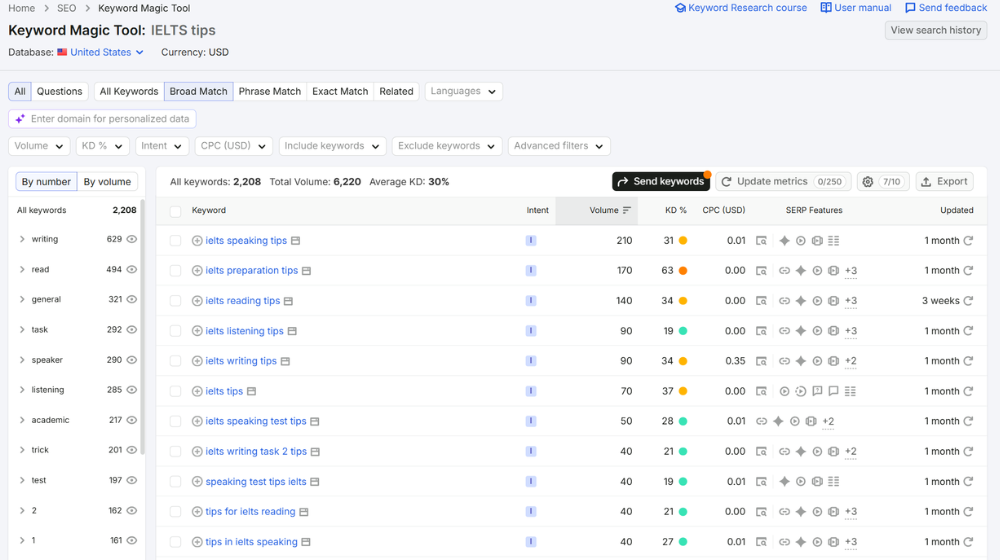
In a competitive education market, I would not only focus on broad keywords. For example, if you are marketing an IELTS course, you should not only target keywords like “IELTS course” or “English class”. Those keywords are important, but you also need to understand the different stages of the learner’s journey.
Some users are already looking for a school. Others are only looking for free materials, exam tips, or self-study resources. Both groups are valuable, but they need different types of content.
Focus on Search Intent
For high-intent keywords, the user is usually closer to making a decision.
If someone searches for “IELTS course for beginners” or “IELTS class near me”, they are probably comparing providers. In this case, the landing page should clearly explain the course structure, learning pathway, teacher credentials, expected outcomes, trial class options, and how to register.
For lower-intent keywords, the user may still be in the self-learning stage. They may search for free IELTS materials, vocabulary tips, mock test examples, or study plans. These users may not convert immediately, but they can still become leads later.
Use Free Learning Resources as Lead Magnets
Free learning resources can be very effective for EdTech SEO.
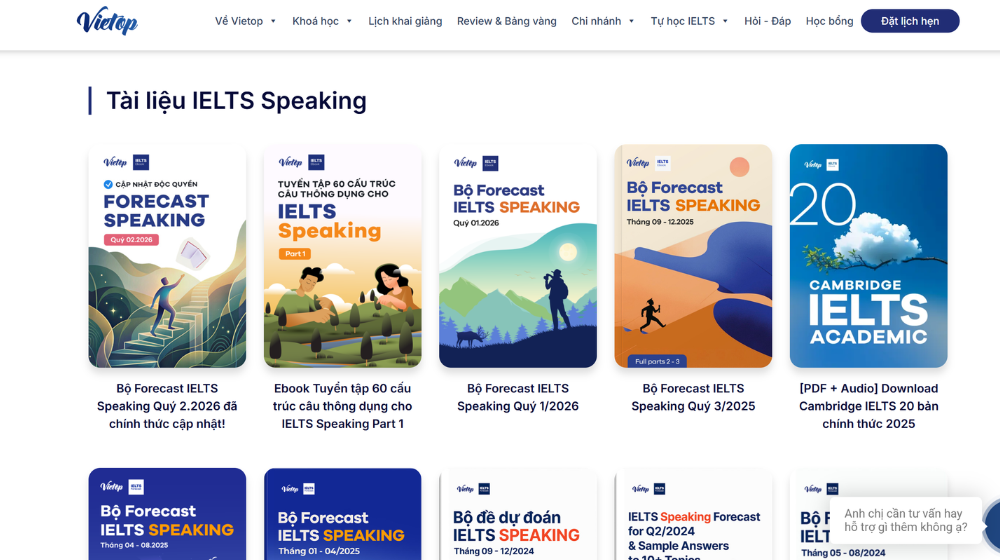
In one company I worked with, we built a separate website just for free IELTS materials. The site attracted a lot of traffic because many students in Vietnam were already used to searching online for self-study resources.
But the goal was not only to generate traffic. We used that traffic to direct users to a relevant conversion point, such as registering for a free IELTS trial class.
So, for EdTech, SEO content should not stop at answering questions. It should also guide users toward the next step, whether that is downloading a resource, joining a community, booking a trial, or speaking to an advisor.
Adjust Your SEO Strategy for AI Search
AI has affected some types of SEO traffic, especially informational content.
For example, content about IELTS vocabulary tips, study tips, or simple learning advice may lose traffic because users can now get those answers quickly from AI tools.
But I do not think high-conversion education keywords are affected in the same way. When someone searches for an IELTS course or English school, they are not just looking for information. They are looking for a provider.
That is why EdTech companies should still invest in SEO, but they need to be more careful about which keywords are meant for traffic, which are meant for lead generation, and which are meant for direct conversion.
Paid Ads: Capture Demand at the Right Stage of the Funnel
Paid ads are still one of the strongest conversion channels for many EdTech companies.
However, paid ads usually work best when the customer already has some level of trust in the brand. In education, people are not always ready to leave their information the first time they see an ad.
That is why paid ads should not be treated as a standalone strategy. They work better when they are supported by SEO, social media, events, communities, testimonials, and brand reputation.
Use Paid Ads to Convert Existing Interest
In many cases, paid ads capture demand that was created earlier.
For example, a parent may first encounter the brand through a school workshop. Then they may hear about it from another parent, see testimonials on Facebook, or search for the brand online.
Later, when they see a paid ad, they are more likely to click because the brand already feels familiar.
So the ad may be the final touchpoint that creates the lead, but the trust was built before that.
Match the Ad Message to the Audience
For parents, the ad message should focus on outcomes, credibility, and investment value.
They want to know whether the course will help their child improve, whether the teachers are qualified, how the learning pathway works, and whether the provider is trustworthy.
For students, the message can focus more on the learning experience. Is the course engaging? Is it practical? Is the platform easy to use? Will it help them reach a specific goal?
This is why EdTech companies often need different ad angles for different audiences.
Choose Platforms Based on Conversion Behaviour
In Vietnam, Facebook is usually a strong platform for education lead generation.
Parents are more likely to interact, ask questions, and leave their information on Facebook. For courses targeting university students or adult learners, Facebook can still work well, especially when the offer and pathway are clearly explained.
TikTok can be useful for awareness, especially among younger audiences. But from my experience, it is usually not as strong as a direct conversion platform. People may watch educational content on TikTok, but they are less likely to submit their information there compared to Facebook or a website.
Social Media Marketing: Use Storytelling, Testimonials, and Parallel Content Angles
Social media is important for EdTech because education is a trust-based purchase.
People want to see what the learning experience looks like. They want to hear from other students. They want to understand the teachers, the classroom environment, the app, the results, and the overall feeling of the programme.
But in EdTech, the social media strategy cannot only focus on the student. It also needs to address the buyer.
Create Separate Content for Buyers and Users
One of the most important things to understand is that the buyer and the user are not always the same person.
If parents are buying a course for their children, the child is the user, but the parent is the buyer. That means the content needs to speak to both of them.
For students, the content should be enjoyable, easy to follow, and motivating.
For parents, the content should show that the course is credible, structured, and worth the investment.
Use Testimonials to Build Trust
Testimonials are one of the most effective types of social media content for EdTech companies.
Education is not something people want to be hard-sold into. They want to hear from other people who have already experienced the course.
Student reviews, parent reviews, peer feedback, and even influencer reviews can help potential customers feel more confident. In Vietnam, people often trust reviews from the community, so testimonial-led content can work very well.
The key is to make testimonials feel real and specific. Generic praise is not enough. The content should show the learner’s problem, their experience, and what changed after taking the course.
Use Visual Storytelling to Show the Learning Experience
Social media also allows EdTech brands to show the product in action.
This could include classroom clips, teacher explanations, student reactions, app walkthroughs, learning activities, mock test sessions, or behind-the-scenes content.
This is important because education can feel abstract. When people can see what the learning experience looks like, it becomes easier for them to understand the value of the course.
Community Marketing: Nurture Learners Before They Are Ready to Buy
Community marketing can be very effective for EdTech companies, especially in Vietnam.
Because education has a long customer journey, not everyone is ready to become a lead immediately. Some people need to be nurtured over time before they trust the brand enough to sign up.
That is where communities can help.
Build Communities Around Learning Goals
For example, an IELTS brand can create a Facebook group for IELTS self-study.
The group does not have to be named directly after the brand. It can be built around the learner’s goal, such as improving IELTS skills, preparing for an English exam, or accessing free study materials.
Inside the group, the brand can share tips, ebooks, mock tests, livestreams, and learning activities. This gives people value before asking them to buy anything.
Use Lead Magnets Inside the Community
Once the audience is engaged, the brand can introduce lead magnets.
This could be a free trial class, a mock test, a consultation, a study plan, or a discount for an exam preparation course.
The important thing is that the lead magnet should feel relevant to the community. If people joined the group to improve their IELTS skills, the offer should help them move closer to that goal.
Do Not Measure Communities Only by Immediate Conversions
Community marketing does not always produce high conversion rates immediately.
You can have a very large group, but only a small percentage of people may become leads at one time. However, that does not mean the community is not valuable.
A good community creates repeated exposure. It keeps the brand visible. It gives potential customers a reason to interact with the brand before they are ready to buy.
When they finally decide to enrol in a course, the brand is already familiar.
Local School Marketing and Offline Events: Build Trust Through Direct Interaction
For EdTech companies targeting K-12 students, local school marketing can be one of the most important strategies.
This is especially true in Vietnam, where parents often trust education providers more when they encounter them through schools or official learning environments.
Partner With Schools to Reach Parents
If you are selling an education product outside the official school curriculum, it can be difficult to build trust through ads alone.
For example, if you are promoting an IELTS course or an English enrichment programme, one of the best ways to reach parents is through local schools.
By partnering with schools, you can run workshops, learning activities, or parent-facing events. This gives the brand a trusted environment to introduce the programme.
Use Workshops to Demonstrate Value
Workshops are useful because parents and students can experience the brand directly.
Parents can meet the representatives, ask questions, observe the teaching approach, and understand what the programme offers.
Students can also experience the learning activity for themselves, which helps make the product feel more real.
The goal is not always to sell immediately at the event. Often, the goal is to build enough trust so that the parent continues the journey later.
Combine Offline and Online Touchpoints
Offline marketing works best when it is connected to digital channels.
A parent may first meet the brand at a school event. After that, they may search for the brand online, join a Facebook group, watch testimonial videos, or click a paid ad.
This is why EdTech companies should not separate offline and online marketing too much. In education, they often support each other.
PR and Thought Leadership: Build Reputation Through Academic Authority
Reputation is extremely important in EdTech.
If an education brand has a strong reputation, it can attract students more easily. But if the brand has a bad reputation, it can decline very quickly.
In education, people need to trust the people behind the brand, not just the product.
Promote the Right Spokesperson
For some EdTech companies, the founder becomes the face of the brand.
This can work very well if the founder has a strong academic background, a high social status, or a personal story that aligns with the company’s mission.
But in some cases, it may be better to promote the principal, academic director, or teachers instead. In education, people often trust someone with teaching experience or academic credibility more than someone who is only seen as a businessperson.
Use PR to Build Credibility
PR can help position the company as credible.
This could include interviews with the founder, teacher, principal, or academic representative. It could also include speaking at education conferences, school events, public talks, or industry panels.
The goal is to show that the brand is not just selling courses. It has real expertise behind it.
Make Academic Authority Part of the Brand
In Vietnam, academic credibility matters a lot.
Parents may feel more confident if the brand is represented by someone with strong credentials, teaching experience, or recognised expertise. This person becomes a trust signal for the company.
That is why thought leadership is not just a branding activity in EdTech. It can directly influence whether parents and students believe the company is worth trusting.
What Makes Marketing to EdTech Customers in Vietnam Unique?
Vietnamese Families Are Willing to Invest Heavily in Education
Vietnam is a competitive education market with strong demand. Many households are willing to spend 30 to 40% of their combined household income on education because they see it as an investment in the next generation.
But expectations are high. Parents want credible providers, clear value, and real learning outcomes — not just the cheapest course. For EdTech companies, the challenge is to prove why the programme is worth the money.
Trust Is Often Built Through Schools, Not Just Ads
Local school marketing is especially important in Vietnam, particularly for EdTech companies targeting K-12 students. School partnerships, workshops, and parent-facing activities can build trust faster than digital ads alone because parents are more likely to trust programmes introduced through familiar education environments.
Paid ads, SEO, and social media still matter, but offline trust often makes parents more willing to search, click, or enquire later.
Facebook and Zalo Communities Help Nurture Potential Students
Many education brands in Vietnam use Facebook groups and Zalo communities to nurture potential students before they are ready to become leads.
For example, an IELTS brand might run a self-study group, share free materials, host livestreams, conduct mock tests, and introduce trial classes through lead magnets. These communities may not convert quickly, but they create repeated exposure and brand familiarity, so the brand stays top of mind when learners are ready.
Reputation and Academic Credibility Matter a LOT
Reputation is powerful in Vietnam’s education market, especially when tied to academic credibility. A founder, principal, or teacher with strong credentials can become a major trust signal through PR interviews, school events, education conferences, or public talks. Parents want to know who is behind the provider, and they are more likely to trust brands represented by qualified teachers or academic leaders.
Paid Ads May Convert, But Trust Is Built Much Earlier
Paid ads can be a strong conversion channel in Vietnam, but they are rarely the first trust-building touchpoint.
A parent may first encounter the brand through a school event, referral, Facebook group, teacher livestream, or PR interview. Later, when they see a paid ad, they are more likely to click because the brand already feels familiar.
In EdTech, the final lead may come from an ad, but the decision is shaped by many touchpoints before it.
The Best EdTech Marketing Builds Trust Before It Sells
Marketing an EdTech company is not just about driving clicks, leads, or course sign-ups. It is about earning trust across a longer decision journey, especially when parents, students, schools, and educators may all influence the final choice.
The strongest EdTech brands combine channels such as SEO, paid ads, social media, communities, school partnerships, testimonials, and PR to make one thing clear: their programme is worth the investment.
For more practical marketing insights, campaign ideas, and brand growth breakdowns, explore more articles on the markonmag marketing blog